
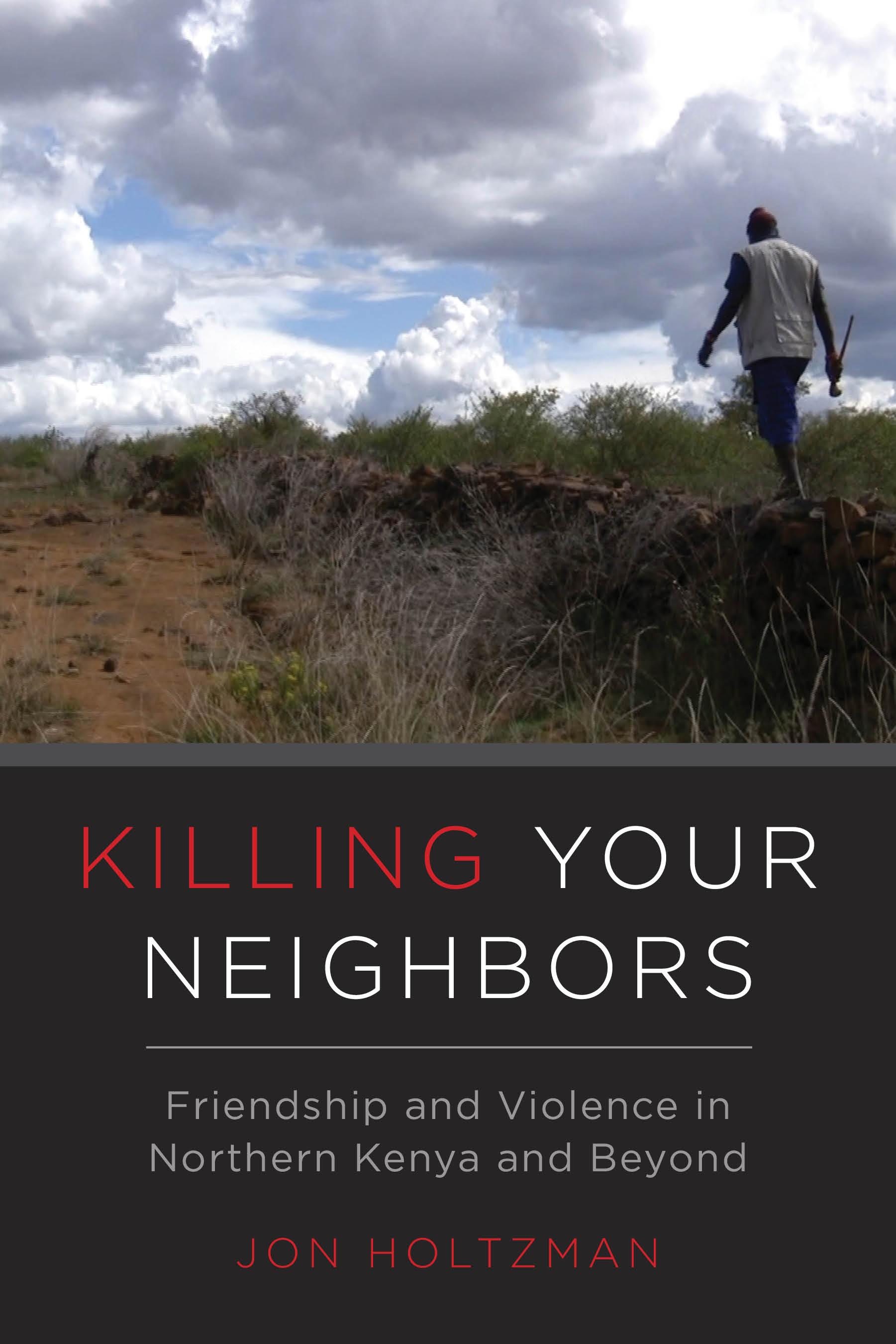
Neighboring communities who once lived together in peace have committed some of the most disturbing genocidal violence in recent decades: ethnic cleansing in the former Yugoslavia; the slaughter of Tutsis in Rwanda; or Sunni-versus-Shia violence in today’s Iraq. As these instances illustrate, lethal violence does not always come at the hands of outsiders or foreigners—it can come just as easily from someone who was once considered a friend.
Employing a multisited, multivocal approach to ethnography, Killing Your Neighbors examines how peaceful neighbors become involved in lethal violence. It engages with a set of interlocking case studies in northern Kenya, focusing on sometimes-peaceful, sometimes violent interactions between Samburu herders and neighboring groups, interweaving Samburu narratives of key violent events with the narratives of neighboring groups on the other side of the same encounters. The book is, on one hand, an ethnography of particular people in a particular place, vividly portraying the complex and confusing dynamics of interethnic violence through the lives, words and intimate experiences of individuals variously involved in and affected by these conflicts. At the same time, the book aims to use this particular case study to illustrate how the dynamics in northern Kenya provides comparative insights to well-known, compelling contexts of violence around the globe.
Employing a multisited, multivocal approach to ethnography, Killing Your Neighbors examines how peaceful neighbors become involved in lethal violence. It engages with a set of interlocking case studies in northern Kenya, focusing on sometimes-peaceful, sometimes violent interactions between Samburu herders and neighboring groups, interweaving Samburu narratives of key violent events with the narratives of neighboring groups on the other side of the same encounters. The book is, on one hand, an ethnography of particular people in a particular place, vividly portraying the complex and confusing dynamics of interethnic violence through the lives, words and intimate experiences of individuals variously involved in and affected by these conflicts. At the same time, the book aims to use this particular case study to illustrate how the dynamics in northern Kenya provides comparative insights to well-known, compelling contexts of violence around the globe.
Betal enkelt med kort, Klarna, Apple Pay eller Google Pay. Ikke fornøyd? Du har alltid 14 dagers angrerett. Les mer i våre vilkår. Har du spørsmål, send oss en e-post på hello@memmo.org.
Memmo gjør det enklere å studere – uansett hvor du er i verden. Hos oss samler du pensumbøker og smarte studieverktøy på ett og samme sted: sammendrag, quizer, podkaster og flashcards. Og så Ted, din studiekompis som svarer på alt du lurer på. Over 50 000 studenter studerer allerede her – bygget for at du skal lære raskere og stresse mindre.
Du vil kanskje også like
Kjøp boken0