
"...the best extant map of our sonic shadowlands, and it has changed how I listen."—Alex Ross, The New Yorker
"...an essential survey of contemporary music."—New York Times
"…sharp, provacative and always on the money. The listening list alone promises months of fresh discovery, the main text a fresh new way of navigating the world of sound."—The Wire
2017 Music Book of the Year—Alex Ross, The New Yorker
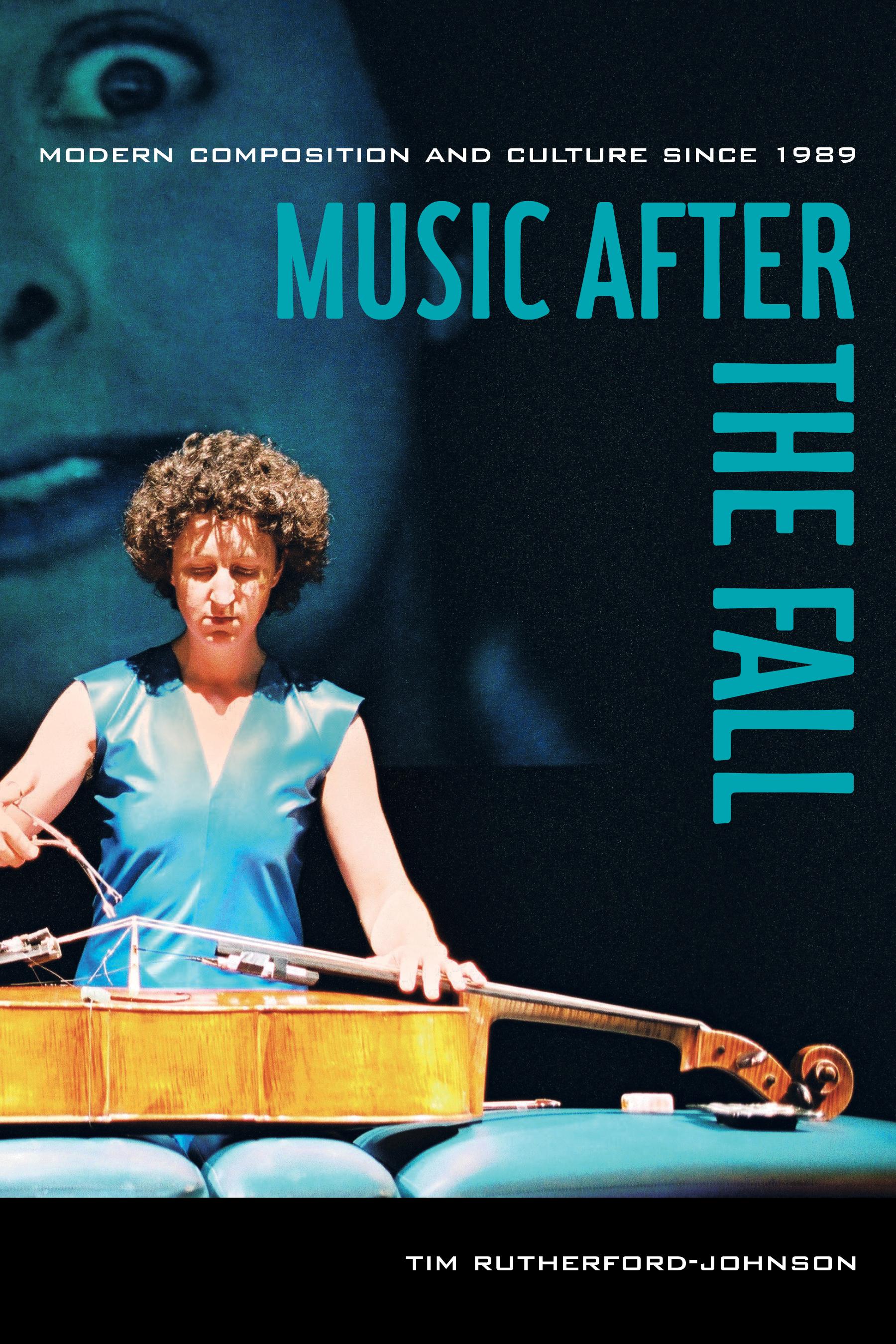
Music after the Fall is the first book to survey contemporary Western art music within the transformed political, cultural, and technological environment of the post–Cold War era. In this book, Tim Rutherford-Johnson considers musical composition against this changed backdrop, placing it in the context of globalization, digitization, and new media. Drawing connections with the other arts, in particular visual art and architecture, he expands the definition of Western art music to include forms of composition, experimental music, sound art, and crossover work from across the spectrum, inside and beyond the concert hall.
Each chapter is a critical consideration of a wide range of composers, performers, works, and institutions, and develops a broad and rich picture of the new music ecosystem, from North American string quartets to Lebanese improvisers, from electroacoustic music studios in South America to ruined pianos in the Australian outback. Rutherford-Johnson puts forth a new approach to the study of contemporary music that relies less on taxonomies of style and technique than on the comparison of different responses to common themes of permission, fluidity, excess, and loss.
"...an essential survey of contemporary music."—New York Times
"…sharp, provacative and always on the money. The listening list alone promises months of fresh discovery, the main text a fresh new way of navigating the world of sound."—The Wire
2017 Music Book of the Year—Alex Ross, The New Yorker
Music after the Fall is the first book to survey contemporary Western art music within the transformed political, cultural, and technological environment of the post–Cold War era. In this book, Tim Rutherford-Johnson considers musical composition against this changed backdrop, placing it in the context of globalization, digitization, and new media. Drawing connections with the other arts, in particular visual art and architecture, he expands the definition of Western art music to include forms of composition, experimental music, sound art, and crossover work from across the spectrum, inside and beyond the concert hall.
Each chapter is a critical consideration of a wide range of composers, performers, works, and institutions, and develops a broad and rich picture of the new music ecosystem, from North American string quartets to Lebanese improvisers, from electroacoustic music studios in South America to ruined pianos in the Australian outback. Rutherford-Johnson puts forth a new approach to the study of contemporary music that relies less on taxonomies of style and technique than on the comparison of different responses to common themes of permission, fluidity, excess, and loss.
Betal enkelt med kort, Klarna, Apple Pay eller Google Pay. Ikke fornøyd? Du har alltid 14 dagers angrerett. Les mer i våre vilkår. Har du spørsmål, send oss en e-post på hello@memmo.org.
Memmo gjør det enklere å studere – uansett hvor du er i verden. Hos oss samler du pensumbøker og smarte studieverktøy på ett og samme sted: sammendrag, quizer, podkaster og flashcards. Og så Ted, din studiekompis som svarer på alt du lurer på. Over 50 000 studenter studerer allerede her – bygget for at du skal lære raskere og stresse mindre.
Du vil kanskje også like
Kjøp boken0