
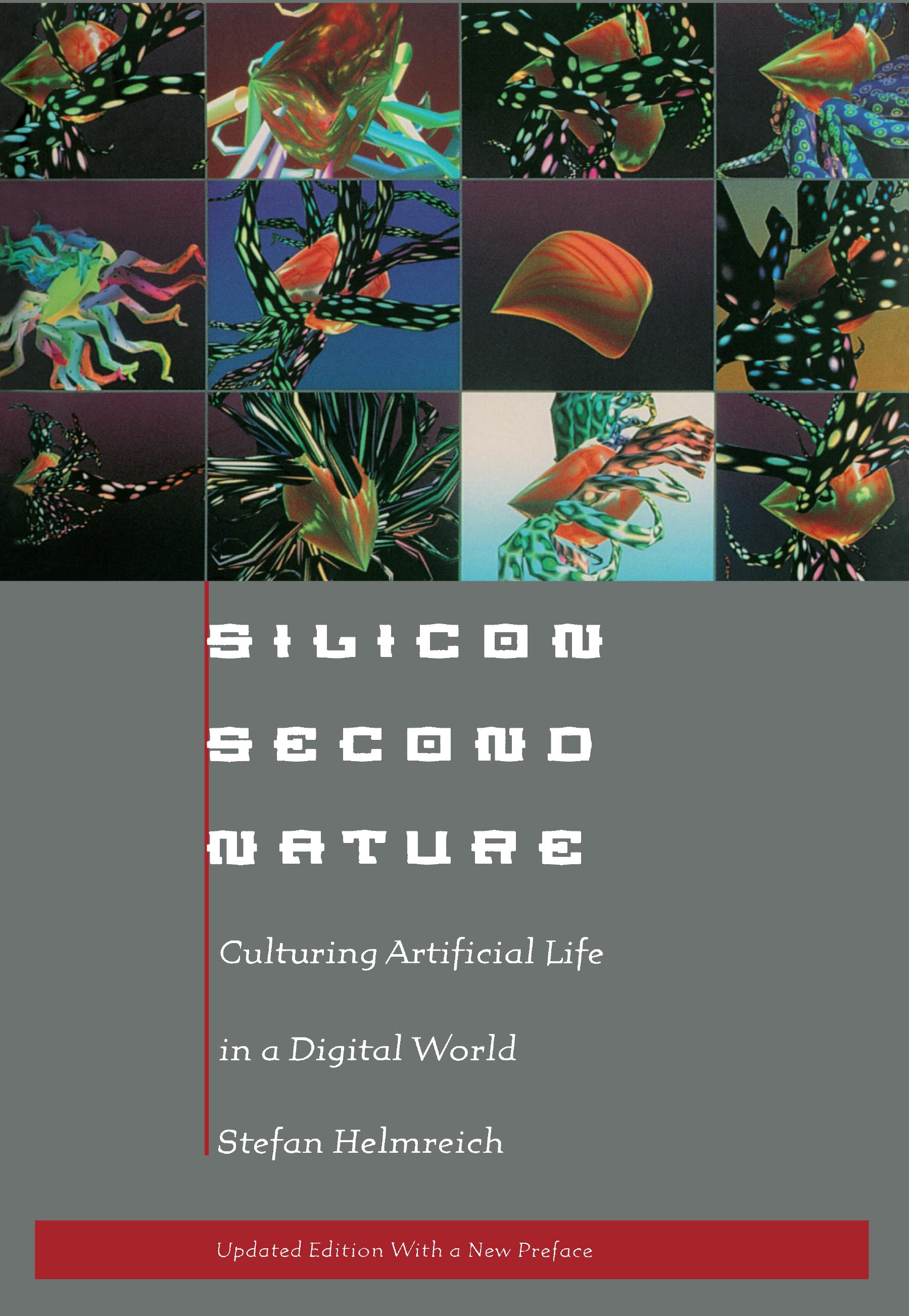
Silicon Second Nature takes us on an expedition into an extraordinary world where nature is made of bits and bytes and life is born from sequences of zeroes and ones. Artificial Life is the brainchild of scientists who view self-replicating computer programs—such as computer viruses—as new forms of life. Anthropologist Stefan Helmreich's look at the social and simulated worlds of Artificial Life—primarily at the Santa Fe Institute, a well-known center for studies in the sciences of complexity—introduces readers to the people and programs connected with this unusual hybrid of computer science and biology.
When biology becomes an information science, when DNA is downloaded into virtual reality, new ways of imagining "life" become possible. Through detailed dissections of the artifacts of Artifical Life, Helmreich explores how these novel visions of life are recombining with the most traditional tales told by Western culture. Because Artificial Life scientists tend to see themselves as masculine gods of their cyberspace creations, as digital Darwins exploring frontiers filled with primitive creatures, their programs reflect prevalent representations of gender, kinship, and race, and repeat origin stories most familiar from mythical and religious narratives.
But Artificial Life does not, Helmreich says, simply reproduce old stories in new software. Much like contemporary activities of cloning, cryonics, and transgenics, the practice of simulating and synthesizing life in silico challenges and multiplies the very definition of vitality. Are these models, as some would claim, actually another form of the real thing? Silicon Second Nature takes Artifical Life as a symptom and source of our mutating visions of life itself.
Many titles in the Voices Revived program are also newly available as books, offered at a discounted price to support wider access to scholarly work.
When biology becomes an information science, when DNA is downloaded into virtual reality, new ways of imagining "life" become possible. Through detailed dissections of the artifacts of Artifical Life, Helmreich explores how these novel visions of life are recombining with the most traditional tales told by Western culture. Because Artificial Life scientists tend to see themselves as masculine gods of their cyberspace creations, as digital Darwins exploring frontiers filled with primitive creatures, their programs reflect prevalent representations of gender, kinship, and race, and repeat origin stories most familiar from mythical and religious narratives.
But Artificial Life does not, Helmreich says, simply reproduce old stories in new software. Much like contemporary activities of cloning, cryonics, and transgenics, the practice of simulating and synthesizing life in silico challenges and multiplies the very definition of vitality. Are these models, as some would claim, actually another form of the real thing? Silicon Second Nature takes Artifical Life as a symptom and source of our mutating visions of life itself.
Many titles in the Voices Revived program are also newly available as books, offered at a discounted price to support wider access to scholarly work.
Betal enkelt med kort, Klarna, Apple Pay eller Google Pay. Ikke fornøyd? Du har alltid 14 dagers angrerett. Les mer i våre vilkår. Har du spørsmål, send oss en e-post på hello@memmo.org.
Memmo gjør det enklere å studere – uansett hvor du er i verden. Hos oss samler du pensumbøker og smarte studieverktøy på ett og samme sted: sammendrag, quizer, podkaster og flashcards. Og så Ted, din studiekompis som svarer på alt du lurer på. Over 50 000 studenter studerer allerede her – bygget for at du skal lære raskere og stresse mindre.
Du vil kanskje også like
Kjøp boken0