
"A keen and insightful window into a rich artistic legacy."—Publishers Weekly
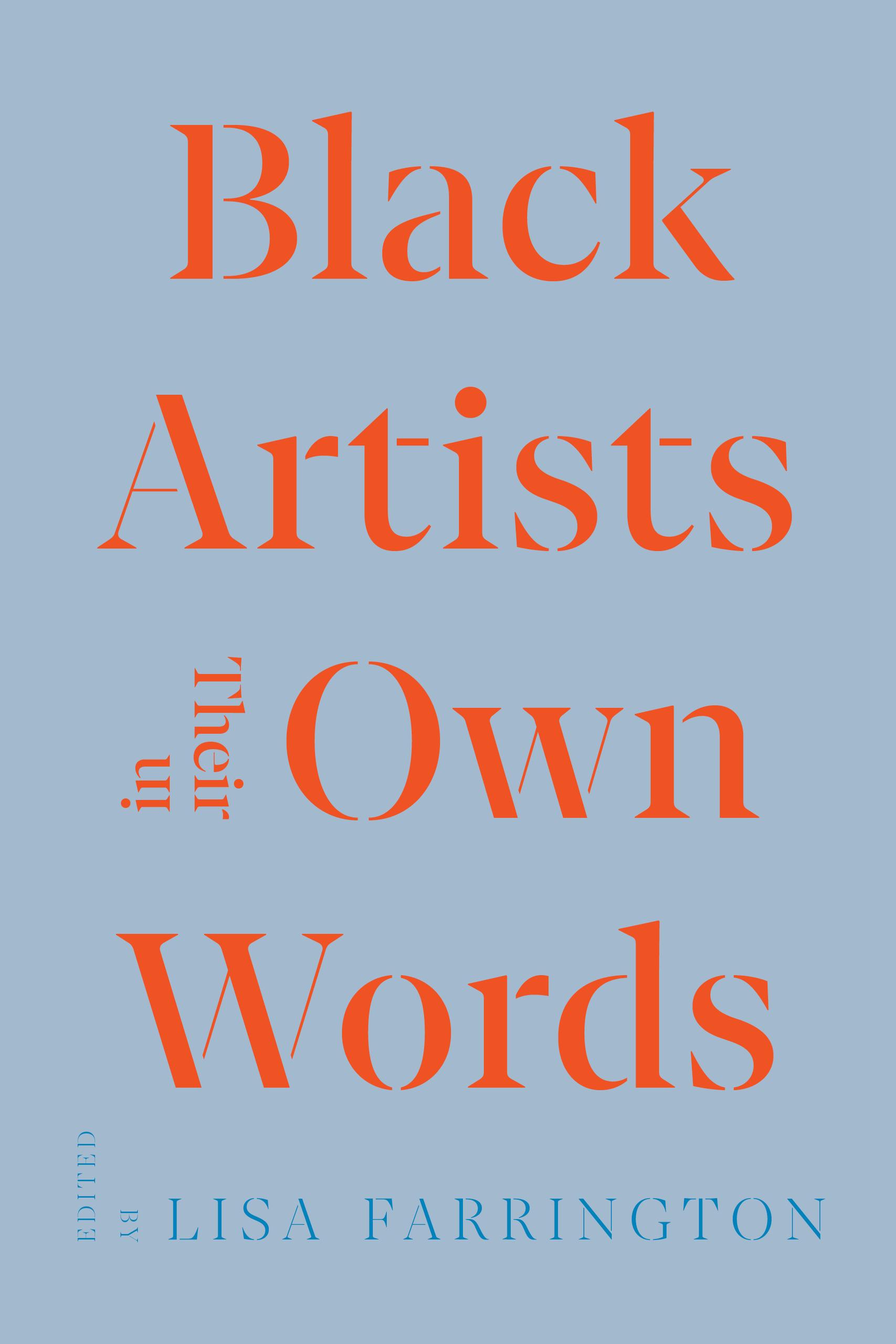
The first book to center Black artists' voices on Black aesthetics, revealing a century of evolving relationships to race, identity, and art.
What is Black art? No one has thought harder about that question than Black artists, yet their perspectives have been largely ignored. Instead, their stories have been told by intellectuals like W. E. B. Du Bois and Alain Locke, who defined "a school" of Black art in the early twentieth century. For the first time, Black Artists in Their Own Words offers an insightful corrective.
Esteemed art historian Lisa Farrington gathers writing spanning a century across the United States, the Caribbean, and the African continent—including from renowned artists Henry Tanner, Nancy Elizabeth Prophet, Romare Bearden, Wifredo Lam, Renee Cox, and many more—that reveals both evolutions and equivocations. Many artists, especially during the civil rights era, have embraced Black aesthetics as a source of empowerment. Others prefer to be artists first and Black second, while some have rejected racial identification entirely. Here, Black artists reclaim their work from reductive critical narratives, sharing the motivations underlying their struggles to create in a white-dominated art world.
The first book to center Black artists' voices on Black aesthetics, revealing a century of evolving relationships to race, identity, and art.
What is Black art? No one has thought harder about that question than Black artists, yet their perspectives have been largely ignored. Instead, their stories have been told by intellectuals like W. E. B. Du Bois and Alain Locke, who defined "a school" of Black art in the early twentieth century. For the first time, Black Artists in Their Own Words offers an insightful corrective.
Esteemed art historian Lisa Farrington gathers writing spanning a century across the United States, the Caribbean, and the African continent—including from renowned artists Henry Tanner, Nancy Elizabeth Prophet, Romare Bearden, Wifredo Lam, Renee Cox, and many more—that reveals both evolutions and equivocations. Many artists, especially during the civil rights era, have embraced Black aesthetics as a source of empowerment. Others prefer to be artists first and Black second, while some have rejected racial identification entirely. Here, Black artists reclaim their work from reductive critical narratives, sharing the motivations underlying their struggles to create in a white-dominated art world.
Betal enkelt med kort, Klarna, Apple Pay eller Google Pay. Ikke fornøyd? Du har alltid 14 dagers angrerett. Les mer i våre vilkår. Har du spørsmål, send oss en e-post på hello@memmo.org.
Memmo gjør det enklere å studere – uansett hvor du er i verden. Hos oss samler du pensumbøker og smarte studieverktøy på ett og samme sted: sammendrag, quizer, podkaster og flashcards. Og så Ted, din studiekompis som svarer på alt du lurer på. Over 50 000 studenter studerer allerede her – bygget for at du skal lære raskere og stresse mindre.
Du vil kanskje også like
Kjøp boken0