
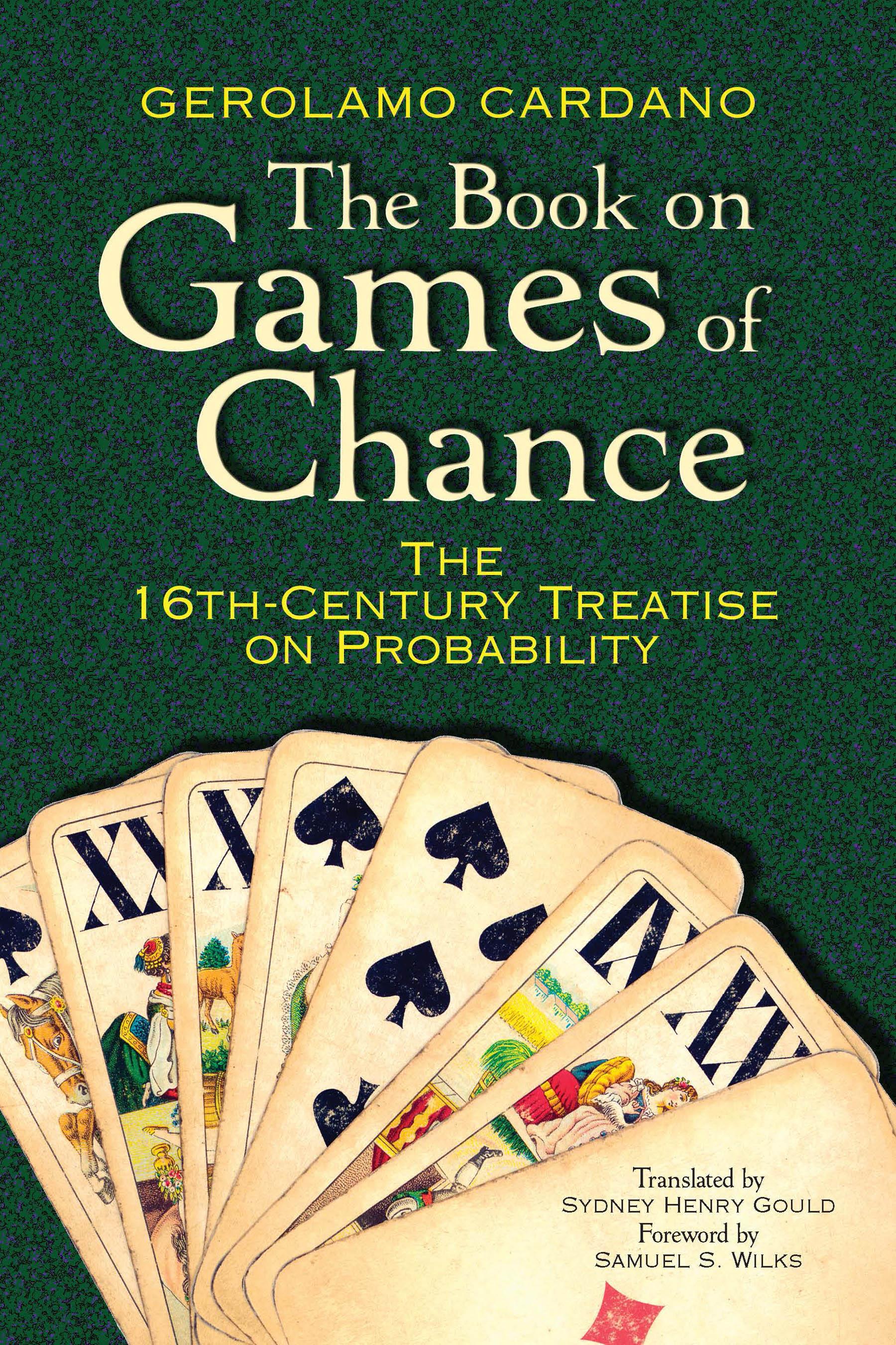
Mathematics was only one area of interest for Gerolamo Cardano ― the sixteenth-century astrologer, philosopher, and physician was also a prolific author and inveterate gambler. Gambling led Cardano to the study of probability, and he was the first writer to recognize that random events are governed by mathematical laws.
Published posthumously in 1663, Cardano's Liber de ludo aleae (Book on Games of Chance) is often considered the major starting point of the study of mathematical probability. The Italian scholar formulated some of the field's basic ideas more than a century before the better-known correspondence of Pascal and Fermat. Although his book had no direct influence on other early thinkers about probability, it remains an important antecedent to later expressions of the science's tenets.
Published posthumously in 1663, Cardano's Liber de ludo aleae (Book on Games of Chance) is often considered the major starting point of the study of mathematical probability. The Italian scholar formulated some of the field's basic ideas more than a century before the better-known correspondence of Pascal and Fermat. Although his book had no direct influence on other early thinkers about probability, it remains an important antecedent to later expressions of the science's tenets.
Betal enkelt med kort, Klarna, Apple Pay eller Google Pay. Ikke fornøyd? Du har alltid 14 dagers angrerett. Les mer i våre vilkår. Har du spørsmål, send oss en e-post på hello@memmo.org.
Memmo gjør det enklere å studere – uansett hvor du er i verden. Hos oss samler du pensumbøker og smarte studieverktøy på ett og samme sted: sammendrag, quizer, podkaster og flashcards. Og så Ted, din studiekompis som svarer på alt du lurer på. Over 50 000 studenter studerer allerede her – bygget for at du skal lære raskere og stresse mindre.
Du vil kanskje også like
Kjøp boken0