
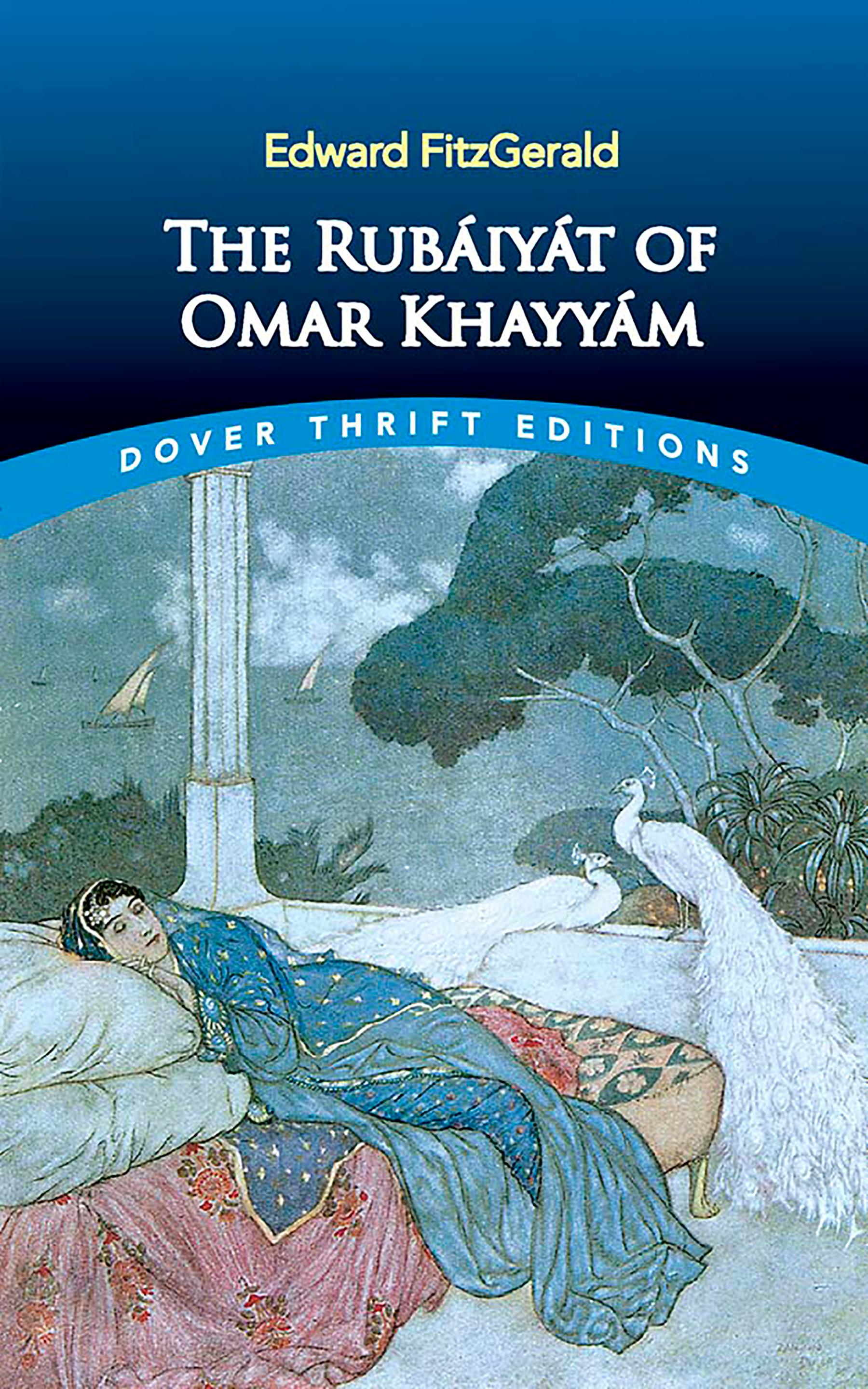
Omar Khayyám (1048–1122) was a Persian mathematician, astronomer, and a philosopher who was not known as a poet in his lifetime. Later, a body of quatrains became attached to his name, although not all were his works. These verses lay in obscurity until 1859, when Edward FitzGerald (1809–1883), an English country gentleman, published a free adaptation of this Persian poetry. After its discovery by D. G. Rossetti and others, the verse became extremely popular. Essentially a hedonist and a skeptic, Omar Khayyám, through FitzGerald, spoke with both an earthy and spiritual freedom that stirred a universal response. As a result, the Rubáiyát became one of the best-known and most often quoted English classics. The fifth edition, published posthumously in 1889, was based on FitzGerald's handwritten changes in a copy of the fourth edition, and is traditionally printed with the first edition.
Betal enkelt med kort, Klarna, Apple Pay eller Google Pay. Ikke fornøyd? Du har alltid 14 dagers angrerett. Les mer i våre vilkår. Har du spørsmål, send oss en e-post på hello@memmo.org.
Memmo gjør det enklere å studere – uansett hvor du er i verden. Hos oss samler du pensumbøker og smarte studieverktøy på ett og samme sted: sammendrag, quizer, podkaster og flashcards. Og så Ted, din studiekompis som svarer på alt du lurer på. Over 50 000 studenter studerer allerede her – bygget for at du skal lære raskere og stresse mindre.