
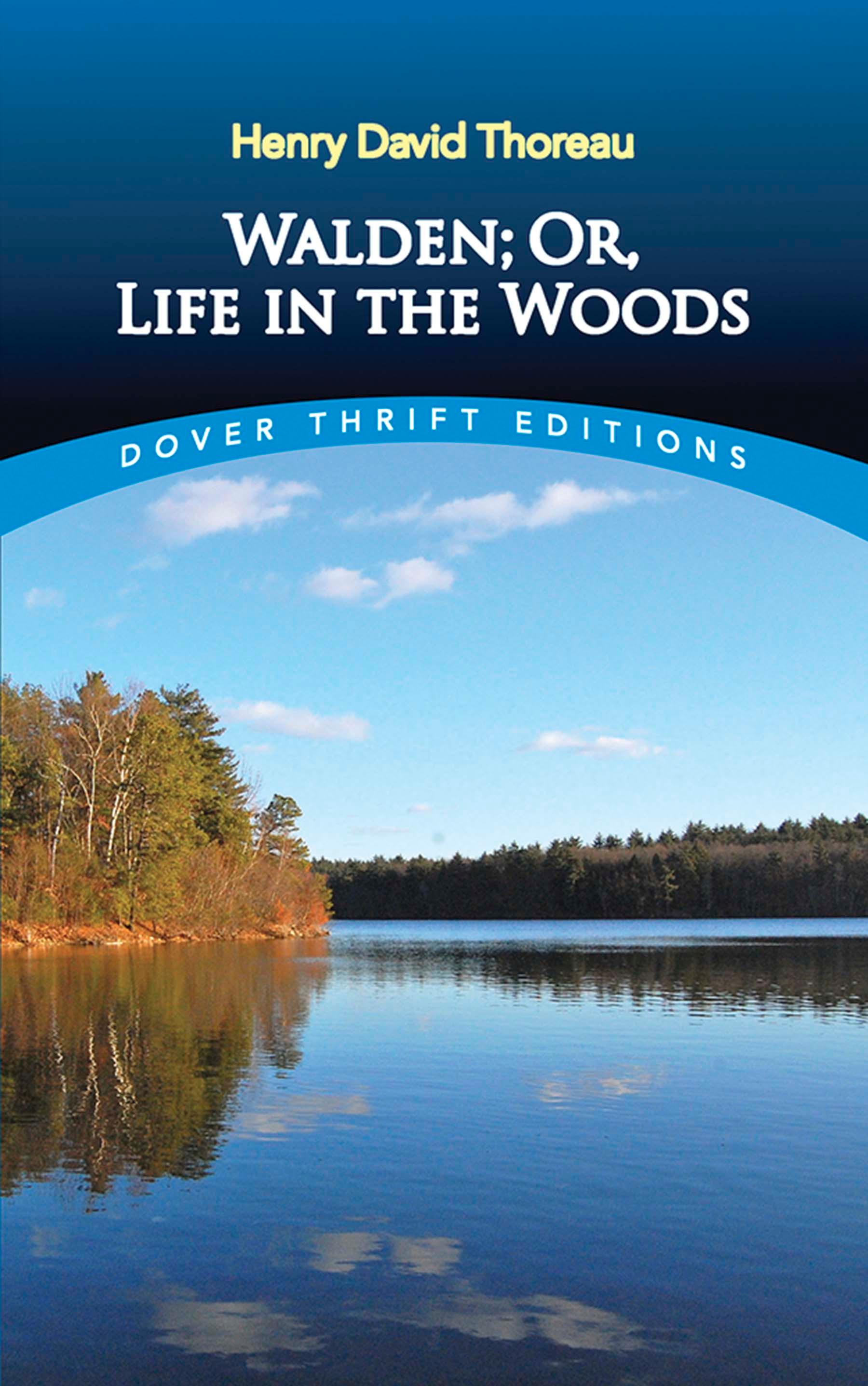
Nature was a form of religion for naturalist, essayist, and early environmentalist Henry David Thoreau (1817–62). In communing with the natural world, he wished to "live deliberately, to front only the essential facts of life, and … learn what it had to teach." Toward that end Thoreau built a cabin in the spring of 1845 on the shores of Walden Pond — on land owned by Ralph Waldo Emerson — outside Concord, Massachusetts. There he observed nature, farmed, built fences, surveyed, and wrote in his journal.
One product of his two-year sojourn was this book — a great classic of American letters. Interwoven with accounts of Thoreau's daily life (he received visitors and almost daily walked into Concord) are mediations on human existence, society, government, and other topics, expressed with wisdom and beauty of style.
Walden offers abundant evidence of Thoreau's ability to begin with observations on a mundane incident or the minutiae of nature and then develop these observations into profound ruminations on the most fundamental human concerns. Credited with influencing Tolstoy, Gandhi, and other thinkers, the volume remains a masterpiece of philosophical reflection.
A selection of the Common Core State Standards Initiative.
Betal enkelt med kort, Klarna, Apple Pay eller Google Pay. Ikke fornøyd? Du har alltid 14 dagers angrerett. Les mer i våre vilkår. Har du spørsmål, send oss en e-post på hello@memmo.org.
Memmo gjør det enklere å studere – uansett hvor du er i verden. Hos oss samler du pensumbøker og smarte studieverktøy på ett og samme sted: sammendrag, quizer, podkaster og flashcards. Og så Ted, din studiekompis som svarer på alt du lurer på. Over 50 000 studenter studerer allerede her – bygget for at du skal lære raskere og stresse mindre.