
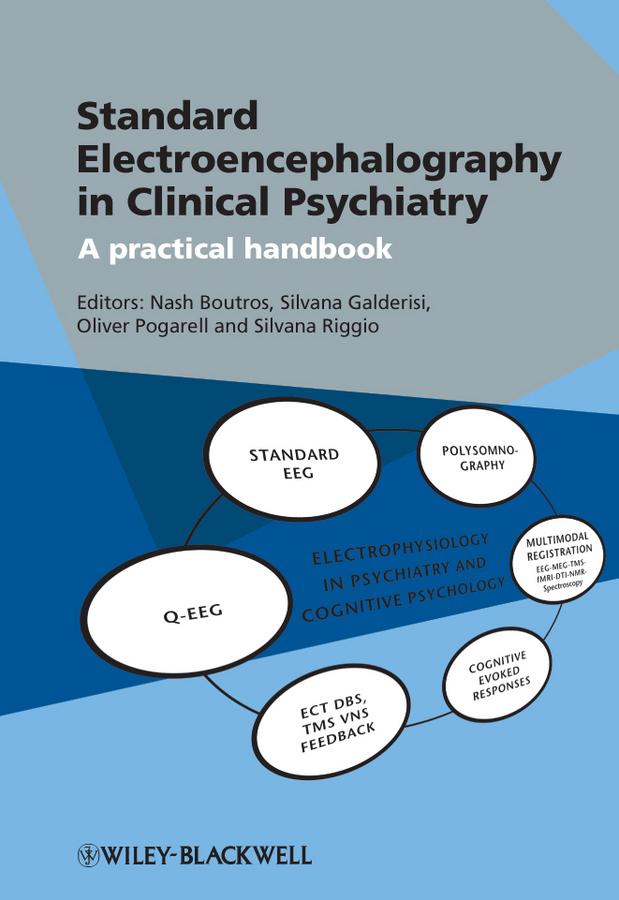
With the basic information in hand, the reader progresses to an account of the role of EEG in the diagnostic work up in psychiatry, covering nonconvulsive status epilepticus, frontal lobe seizures and non-epileptic seizures. The clinical application of EEG in both childhood and adult disorders follows, including many case vignettes. The effects of psychotropic drugs on EEG are highlighted.
The book closes with a discussion of currently available certification venues for Clinical Neurophysiology along with limitations of each venue. It calls for the development of training guidelines and certification processes specific to Psychiatric Electrophysiology.
The material is clearly presented throughout, with plenty of figures, tables with summaries of relevant findings, flow diagrams for diagnostic work-up, boxes with learning points, and short lists of key references.
We fully expect the book will become the standard teaching source for psychiatry residents and fellows, as well as a useful resource for practising psychiatrists and clinical psychologists.
Praise for the book:
"This distinguished group of editors has put together chapters that represent an excellent practical handbook on electroencephalography in clinical psychiatry, now a very important topic. I highly recommend it not only to psychiatrists, but also to anyone interested in neuroscience."
John R. Hughes, DM (Oxon), MD, PhD, Professor of Neurology, University of Illinois Medical Center, at Chicago, Illinois, USA
Betal enkelt med kort, Klarna, Apple Pay eller Google Pay. Ikke fornøyd? Du har alltid 14 dagers angrerett. Les mer i våre vilkår. Har du spørsmål, send oss en e-post på hello@memmo.org.
Memmo gjør det enklere å studere – uansett hvor du er i verden. Hos oss samler du pensumbøker og smarte studieverktøy på ett og samme sted: sammendrag, quizer, podkaster og flashcards. Og så Ted, din studiekompis som svarer på alt du lurer på. Over 50 000 studenter studerer allerede her – bygget for at du skal lære raskere og stresse mindre.