
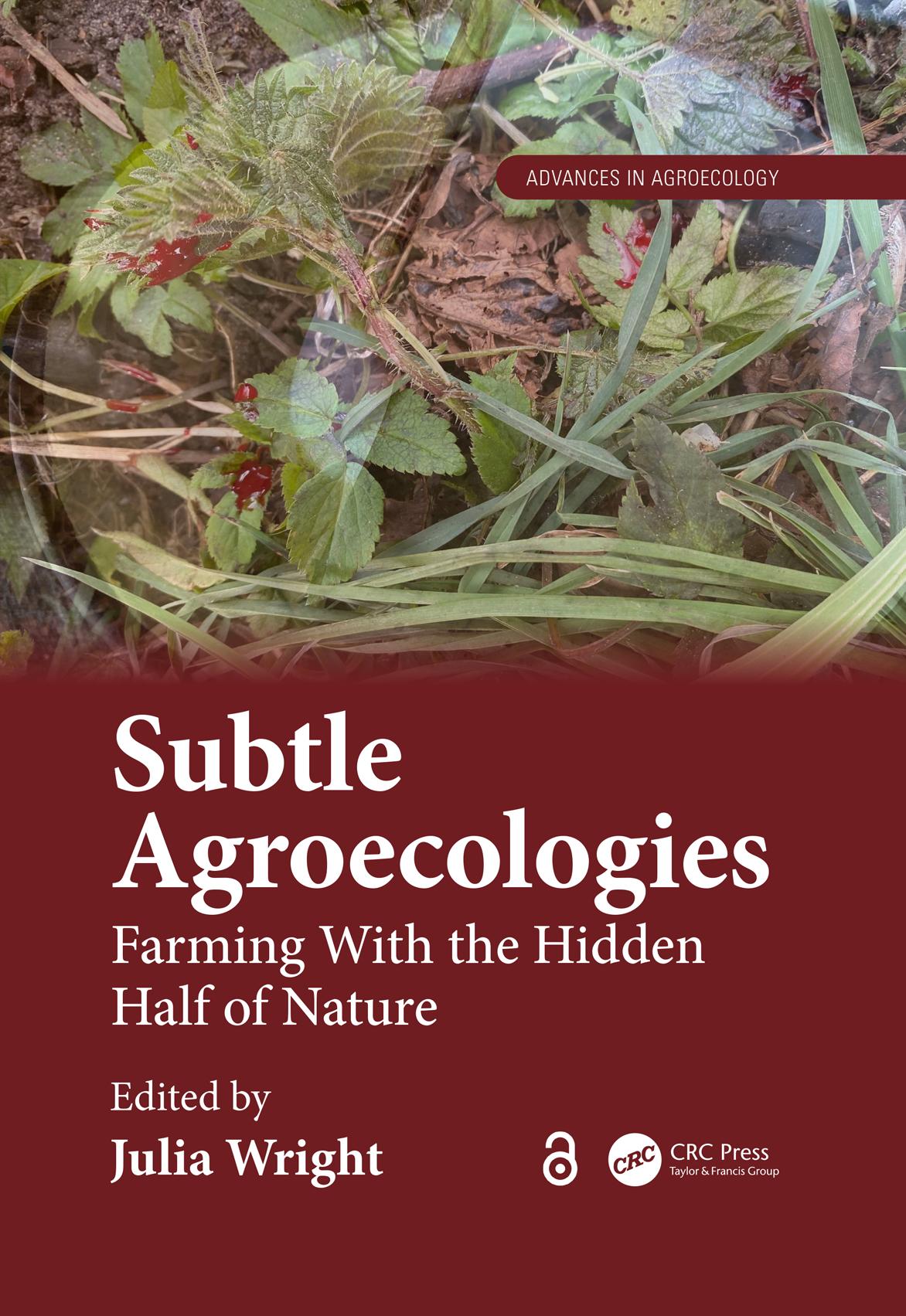
This book is about the invisible or subtle nature of food and farming, and also about the nature of existence. Everything that we know (and do not know) about the physical world has a subtle counterpart which has been scarcely considered in modernist farming practice and research. If you think this book isn’t for you, if it appears more important to attend to the pressing physical challenges the world is facing before having the luxury of turning to such subtleties, then think again. For it could be precisely this worldview – the one prioritises the physical-material dimension of reality - that helped get us into this situation in the first place. Perhaps we need a different worldview to get us out?
This book makes a foundational contribution to the discipline of Subtle Agroecologies, a nexus of indigenous epistemologies, multidisciplinary advances in wave-based and ethereal studies, and the science of sustainable agriculture. Not a farming system in itself, Subtle Agroecologies superimposes a non-material dimension upon existing, materially-based agroecological farming systems. Bringing together 43 authors from 12 countries and five continents, from the natural and social sciences as well as the arts and humanities, this multi-contributed book introduces the discipline, explaining its relevance and potential contribution to the field of Agroecology.
Research into Subtle Agroecologies may be described as the systematic study of the nature of the invisible world as it relates to the practice of agriculture, and to do this through adapting and innovating with research methods, in particular with those of a more embodied nature, with the overall purpose of bringing and maintaining balance and harmony. Such research is an open-minded inquiry, its grounding being the lived experiences of humans working on, and with, the land over several thousand years to the present. By reclaiming and reinterpreting the perennial relationship between humans and nature, the implications would revolutionise agriculture, heralding a new wave of more sustainable farming techniques, changing our whole relationship with nature to one of real collaboration rather than control, and ultimately transforming ourselves.
Betal enkelt med kort, Klarna, Apple Pay eller Google Pay. Ikke fornøyd? Du har alltid 14 dagers angrerett. Les mer i våre vilkår. Har du spørsmål, send oss en e-post på hello@memmo.org.
Memmo gjør det enklere å studere – uansett hvor du er i verden. Hos oss samler du pensumbøker og smarte studieverktøy på ett og samme sted: sammendrag, quizer, podkaster og flashcards. Og så Ted, din studiekompis som svarer på alt du lurer på. Over 50 000 studenter studerer allerede her – bygget for at du skal lære raskere og stresse mindre.