
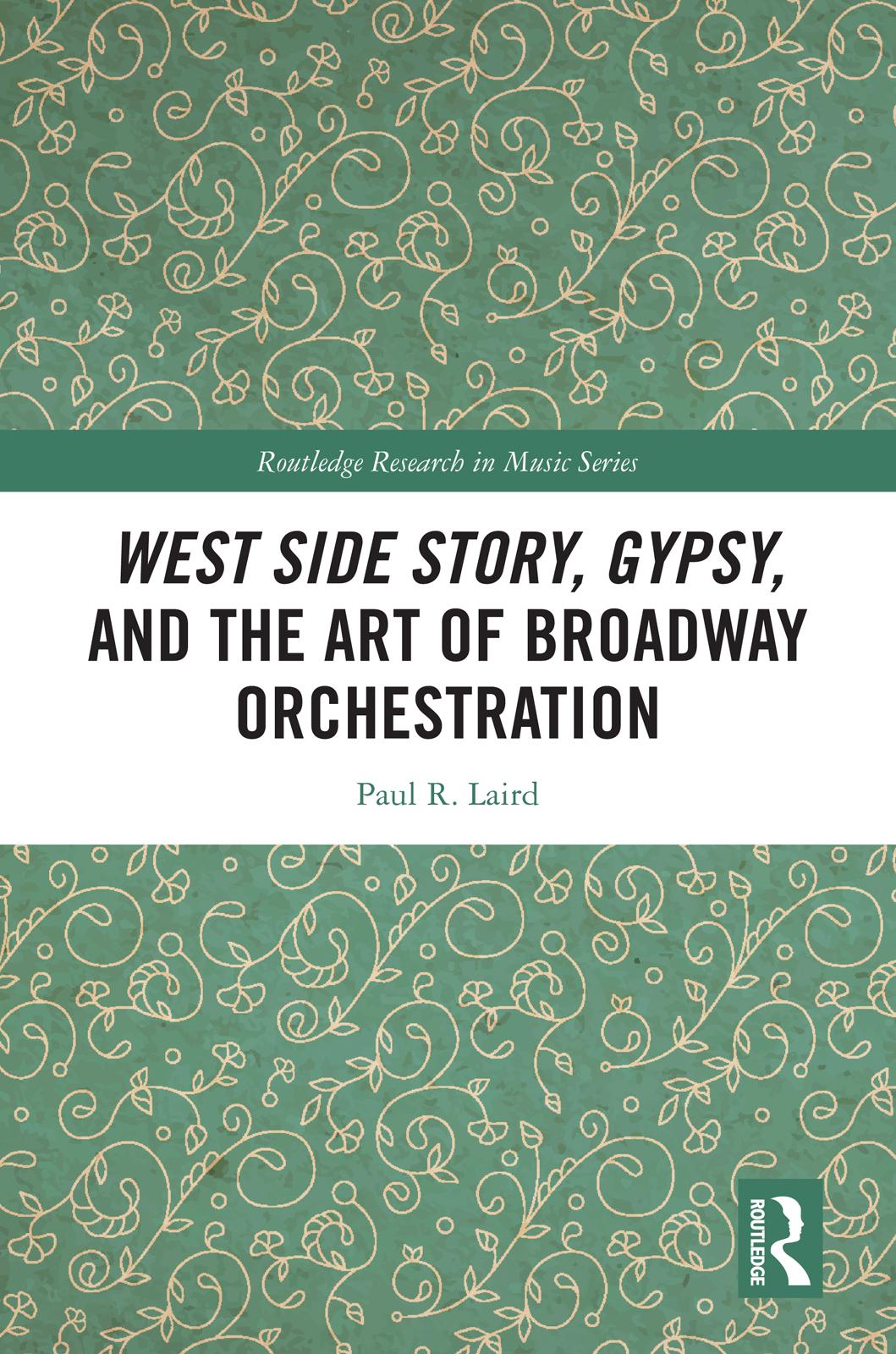
In this ground-breaking study, Paul Laird examines the process and effect of orchestration in West Side Story and Gypsy, two musicals that were among the most significant Broadway shows of the 1950s, and remain important in the modern repertory. Drawing on extensive archival research with original manuscripts, Laird provides a detailed account of the process of orchestration for these musicals, and their context in the history of Broadway orchestration. He argues that the orchestration plays a vital role in the characterization and plot development in each major musical number, opening a new avenue for analysis that deepens our understanding of the musical as an art form.
The orchestration of the score in Broadway musicals deeply shapes their final soundscapes, but only recently has it begun to receive real attention. Linked by a shared orchestrator, in other ways West Side Story and Gypsy offer a study in contrasts. Breaking down how the two composers, Leonard Bernstein and Jules Styne, collaborated with orchestrators Sid Ramin, Irwin Kostal, and Robert Ginzler, Laird’s study enables us to better understand both of these two iconic shows, and the importance of orchestration within musical theatre in general.
Betal enkelt med kort, Klarna, Apple Pay eller Google Pay. Ikke fornøyd? Du har alltid 14 dagers angrerett. Les mer i våre vilkår. Har du spørsmål, send oss en e-post på hello@memmo.org.
Memmo gjør det enklere å studere – uansett hvor du er i verden. Hos oss samler du pensumbøker og smarte studieverktøy på ett og samme sted: sammendrag, quizer, podkaster og flashcards. Og så Ted, din studiekompis som svarer på alt du lurer på. Over 50 000 studenter studerer allerede her – bygget for at du skal lære raskere og stresse mindre.