
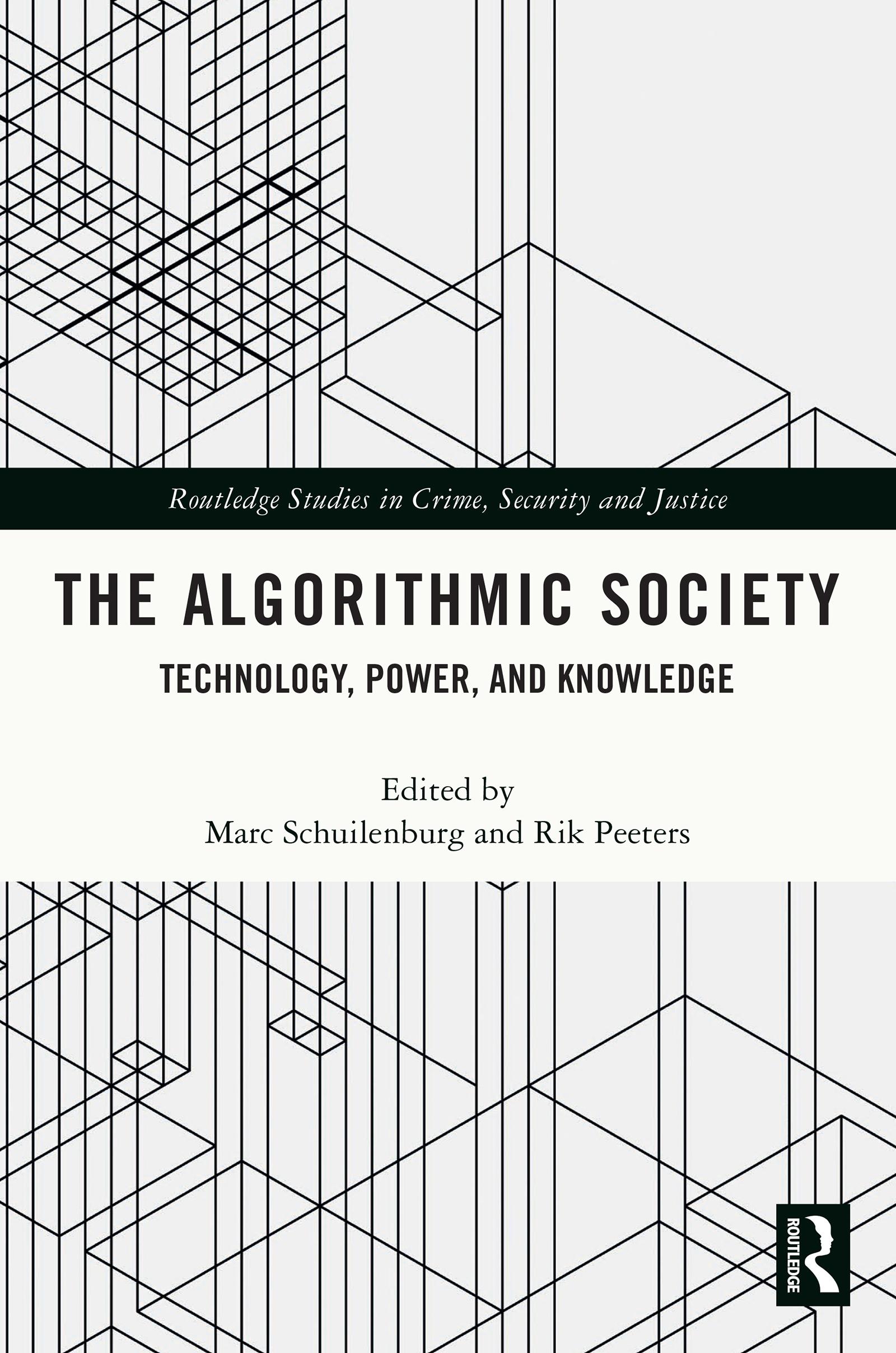
We live in an algorithmic society. Algorithms have become the main mediator through which power is enacted in our society. This book brings together three academic fields – Public Administration, Criminal Justice and Urban Governance – into a single conceptual framework, and offers a broad cultural-political analysis, addressing critical and ethical issues of algorithms.
Governments are increasingly turning towards algorithms to predict criminality, deliver public services, allocate resources, and calculate recidivism rates. Mind-boggling amounts of data regarding our daily actions are analysed to make decisions that manage, control, and nudge our behaviour in everyday life. The contributions in this book offer a broad analysis of the mechanisms and social implications of algorithmic governance. Reporting from the cutting edge of scientific research, the result is illuminating and useful for understanding the relations between algorithms and power.Topics covered include:
- Algorithmic governmentality
- Transparency and accountability
- Fairness in criminal justice and predictive policing
- Principles of good digital administration
- Artificial Intelligence (AI) in the smart city
This book is essential reading for students and scholars of Sociology, Criminology, Public Administration, Political Sciences, and Cultural Theory interested in the integration of algorithms into the governance of society.
Betal enkelt med kort, Klarna, Apple Pay eller Google Pay. Ikke fornøyd? Du har alltid 14 dagers angrerett. Les mer i våre vilkår. Har du spørsmål, send oss en e-post på hello@memmo.org.
Memmo gjør det enklere å studere – uansett hvor du er i verden. Hos oss samler du pensumbøker og smarte studieverktøy på ett og samme sted: sammendrag, quizer, podkaster og flashcards. Og så Ted, din studiekompis som svarer på alt du lurer på. Over 50 000 studenter studerer allerede her – bygget for at du skal lære raskere og stresse mindre.