
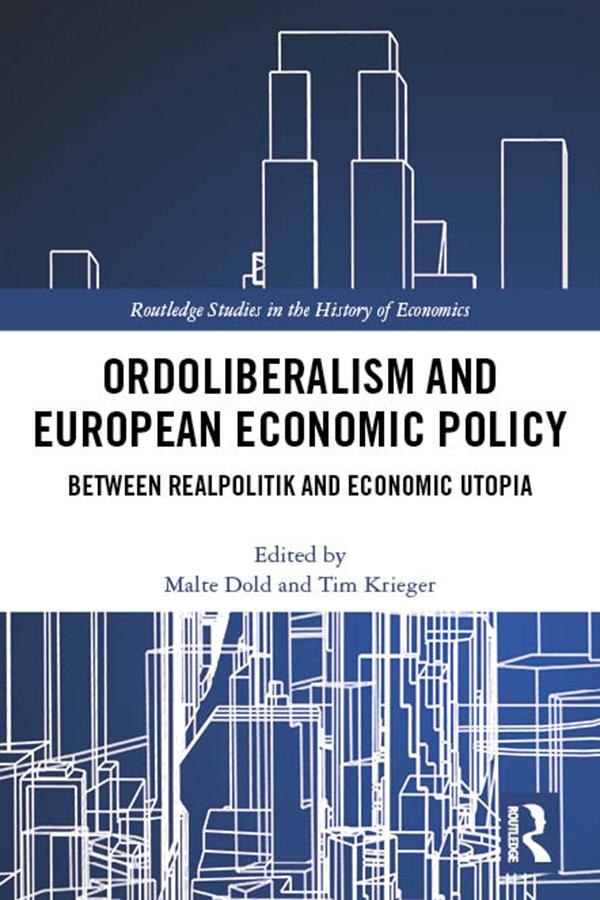
This volume takes a broad perspective on the recent debate on the role of German ordoliberalism in shaping European economic policy before and after the eurozone crisis. It shows how ordoliberal scholars explain the institutional origins of the eurozone crisis, and presents creative policy proposals for the future of the European economy.
Ordoliberal discourse both attempts to offer political solutions to socioeconomic challenges, and to find an ideal market order that fosters individual freedom and social cohesion. This tension between realpolitik and economic utopia reflects the wider debate on how far economic theory shapes, and is shaped by, historical contingencies and institutions.
The volume will be of interest to policymakers as well as research scholars, and graduate students from various disciplines ranging from economics to political science, history, and philosophy.
Betal enkelt med kort, Klarna, Apple Pay eller Google Pay. Ikke fornøyd? Du har alltid 14 dagers angrerett. Les mer i våre vilkår. Har du spørsmål, send oss en e-post på hello@memmo.org.
Memmo gjør det enklere å studere – uansett hvor du er i verden. Hos oss samler du pensumbøker og smarte studieverktøy på ett og samme sted: sammendrag, quizer, podkaster og flashcards. Og så Ted, din studiekompis som svarer på alt du lurer på. Over 50 000 studenter studerer allerede her – bygget for at du skal lære raskere og stresse mindre.