
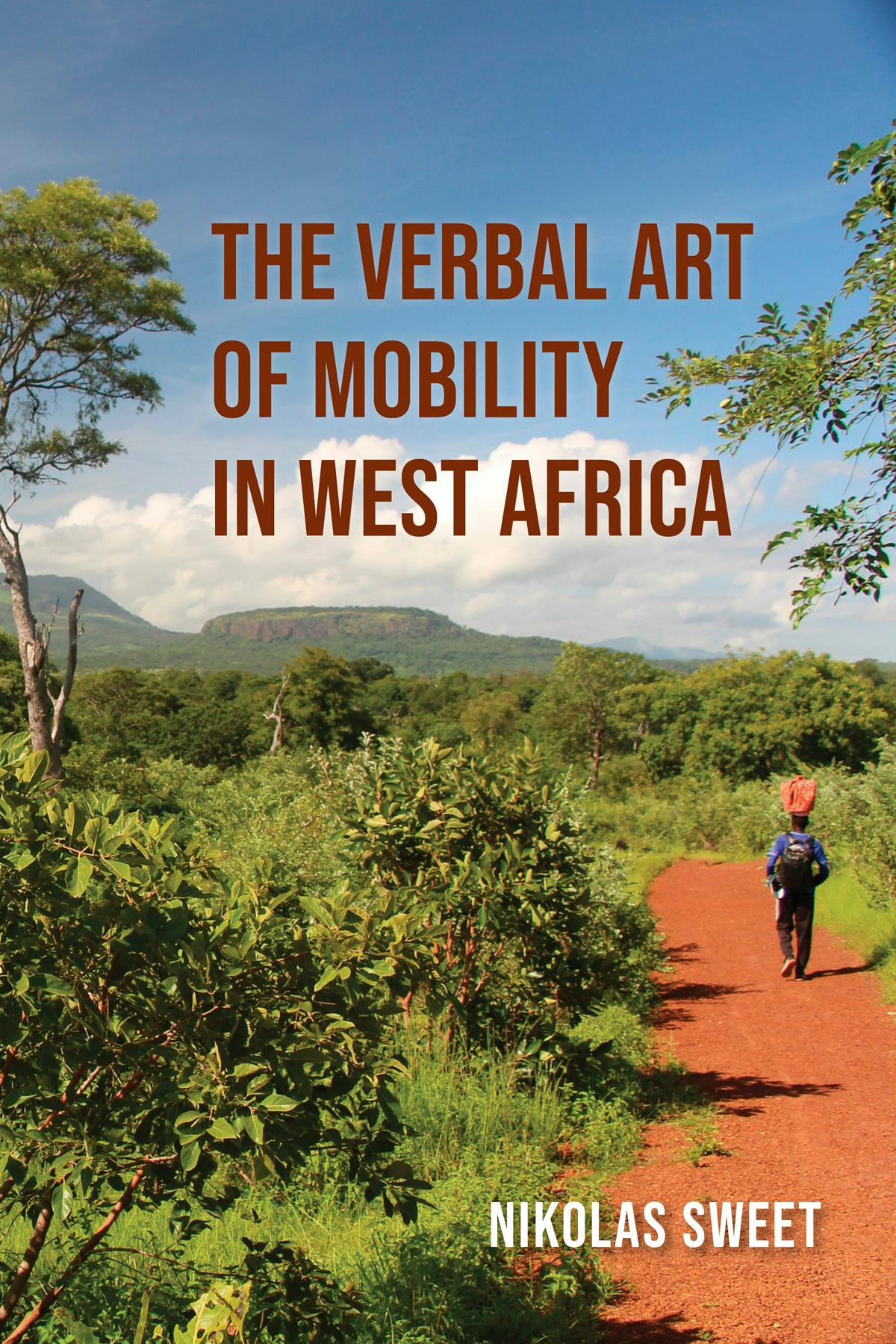
In recent years, migration across urban centers and national borders has radically reshaped West African societies and sparked a global debate on the legal and cultural processes of immigration. Along newly constructed international highways in southeastern Senegal, young men and women travel between regional centers and their hometowns in the wake of a gold-mining boom that has brought new opportunities as well as risks.
Previous scholarship on migration has often emphasized the movement of bodies and things. In The Verbal Art of Mobility in West Africa, instead of considering language primarily as a way to describe mobility as it happened, author Nikolas Sweet positions language as an essential infrastructure through which individuals forge material connections and communication channels across space and borders. This reinterpretation of migration emphasizes that language is a form of social action in its own right—one that does not merely reflect experiences in the world but can bring things into being. Mobility emerges not only from an individual's given mobile history, but also through an attention to the linguistic resources deployed in everyday interactions with others.
Based on ethnographic research on social interaction, verbal creativity, and mobility in southeastern Senegal, The Verbal Art of Mobility in West Africa reveals how migrants use language to build social networks and mitigate risk amid socioeconomic and environmental precarity.
Betal enkelt med kort, Klarna, Apple Pay eller Google Pay. Ikke fornøyd? Du har alltid 14 dagers angrerett. Les mer i våre vilkår. Har du spørsmål, send oss en e-post på hello@memmo.org.
Memmo gjør det enklere å studere – uansett hvor du er i verden. Hos oss samler du pensumbøker og smarte studieverktøy på ett og samme sted: sammendrag, quizer, podkaster og flashcards. Og så Ted, din studiekompis som svarer på alt du lurer på. Over 50 000 studenter studerer allerede her – bygget for at du skal lære raskere og stresse mindre.