
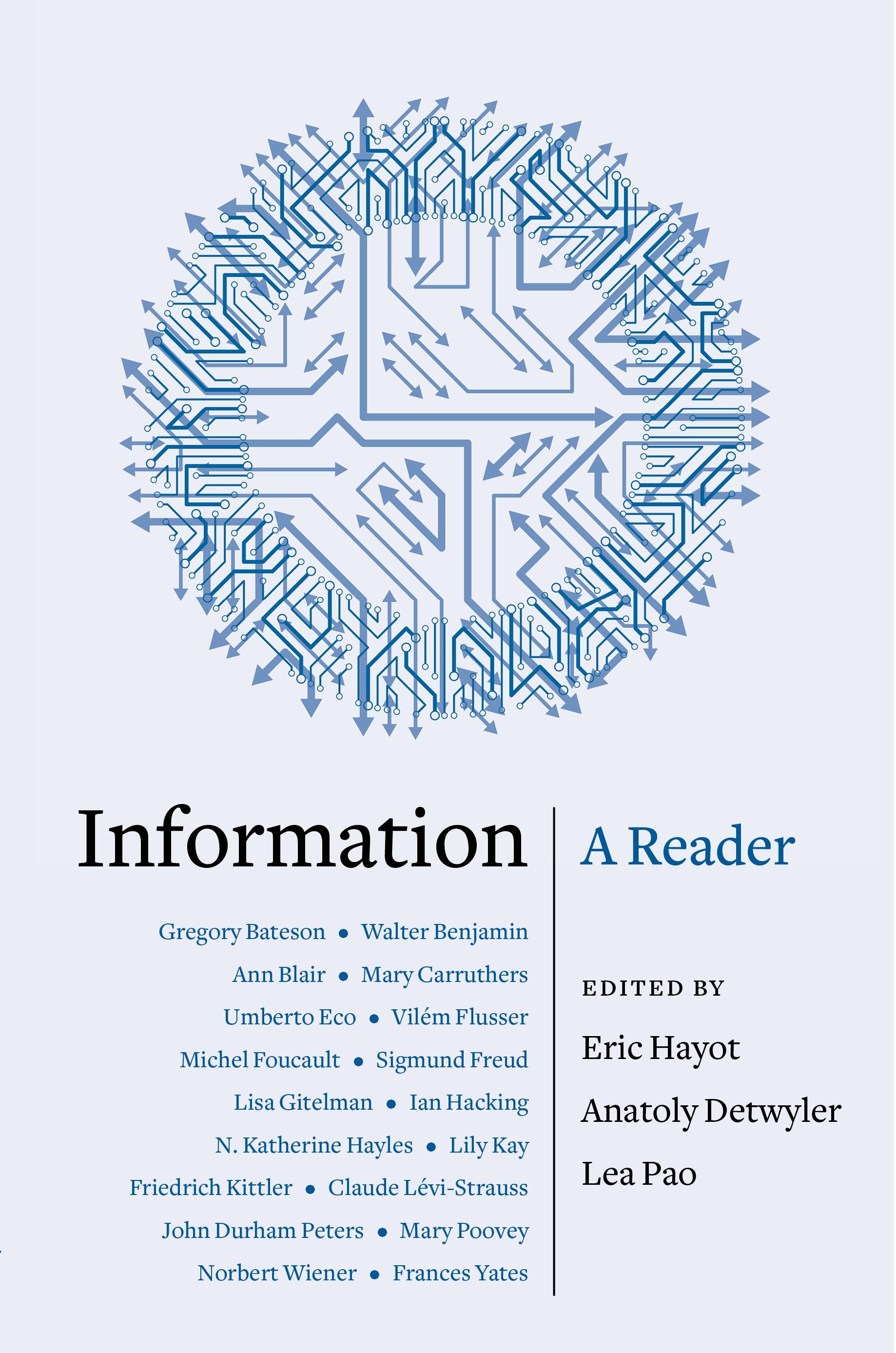
For decades, we have been told we live in the “information age”—a time when disruptive technological advancement has reshaped the categories and social uses of knowledge and when quantitative assessment is increasingly privileged. Such methodologies and concepts of information are usually considered the provenance of the natural and social sciences, which present them as politically and philosophically neutral. Yet the humanities should and do play an important role in interpreting and critiquing the historical, cultural, and conceptual nature of information.
This book is one of two companion volumes that explore theories and histories of information from a humanistic perspective. They consider information as a long-standing feature of social, cultural, and conceptual management, a matter of social practice, and a fundamental challenge for the humanities today.
Information: A Reader provides an introduction to the concept of information in historical, literary, and cultural studies. It features excerpts from more than forty texts by theorists and critics—including Walter Benjamin, Umberto Eco, Lisa Gitelman, Ian Hacking, N. Katherine Hayles, Friedrich Kittler, and Norbert Wiener—who have helped establish the notion of the “information age” or expand upon it. The reader establishes a canonical framework for thinking about information in humanistic terms. Together with Information: Keywords, it sets forth a major humanistic vision of the concept of information.
Betal enkelt med kort, Klarna, Apple Pay eller Google Pay. Ikke fornøyd? Du har alltid 14 dagers angrerett. Les mer i våre vilkår. Har du spørsmål, send oss en e-post på hello@memmo.org.
Memmo gjør det enklere å studere – uansett hvor du er i verden. Hos oss samler du pensumbøker og smarte studieverktøy på ett og samme sted: sammendrag, quizer, podkaster og flashcards. Og så Ted, din studiekompis som svarer på alt du lurer på. Over 50 000 studenter studerer allerede her – bygget for at du skal lære raskere og stresse mindre.