
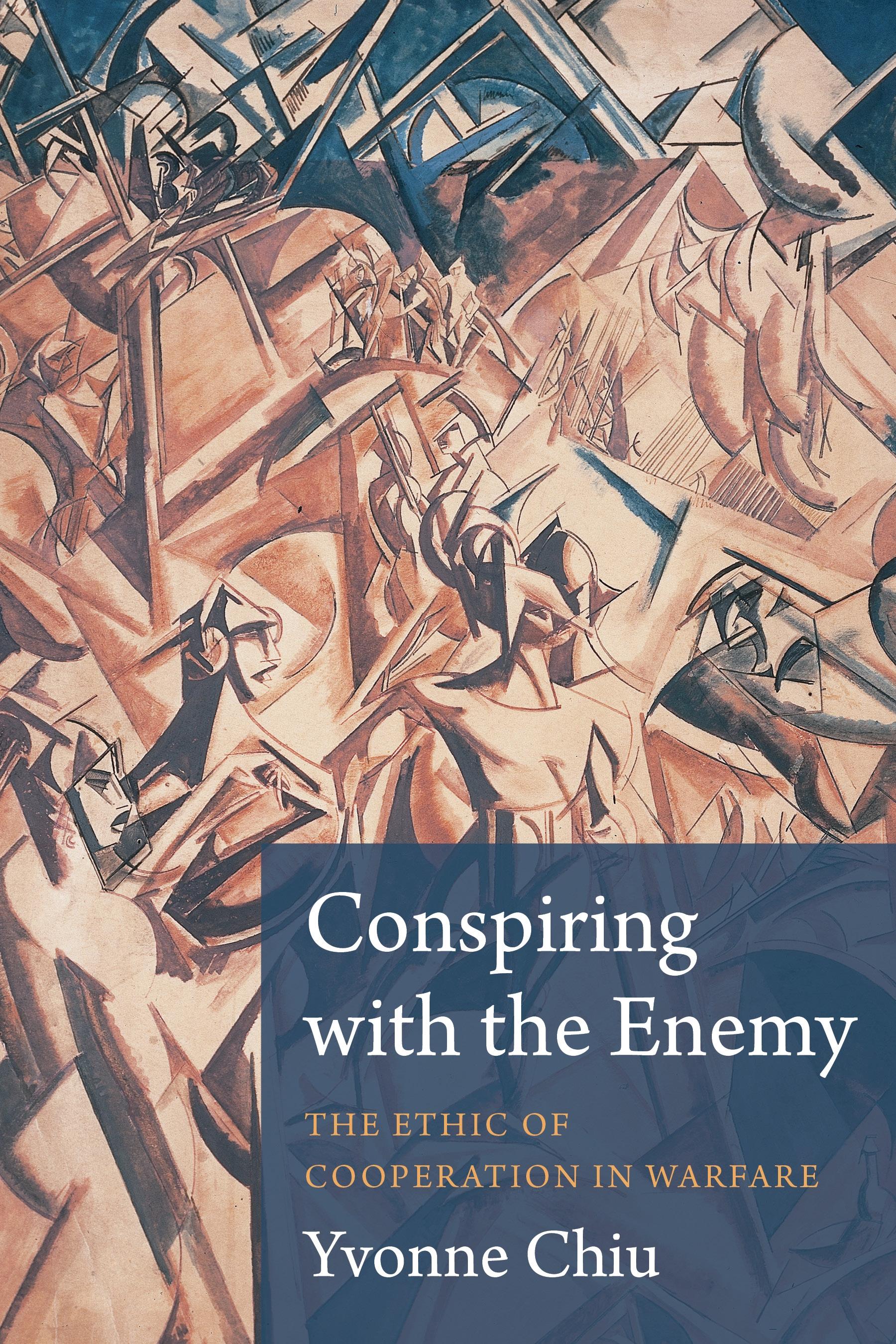
Despite the strong influence of just war theory in military law and practice, warfare is commonly considered devoid of morality. Yet even in the most horrific of human activities, there is frequent communication and cooperation between enemies. One remarkable example is the Christmas truce—unofficial ceasefires between German and English trenches in December 1914 in which soldiers even mingled in No Man’s Land.
In Conspiring with the Enemy, Yvonne Chiu offers a new understanding of why and how enemies work together to constrain violence in warfare. Chiu argues that what she calls an ethic of cooperation is found in modern warfare to such an extent that it is often taken for granted. The importance of cooperation becomes especially clear when wartime ethics reach a gray area: To whom should the laws of war apply? Who qualifies as a combatant? Should guerrillas or terrorists receive protections? Fundamentally, Chiu shows, the norms of war rely on consensus on the existence and content of the laws of war. In a wide-ranging consideration of pivotal instances of cooperation, Chiu examines weapons bans, treatment of prisoners of war, and the Geneva Conventions, as well as the tensions between the ethic of cooperation and the pillars of just war theory. An original exploration of a crucial but overlooked phenomenon, Conspiring with the Enemy is a significant contribution to military ethics and political philosophy.
Betal enkelt med kort, Klarna, Apple Pay eller Google Pay. Ikke fornøyd? Du har alltid 14 dagers angrerett. Les mer i våre vilkår. Har du spørsmål, send oss en e-post på hello@memmo.org.
Memmo gjør det enklere å studere – uansett hvor du er i verden. Hos oss samler du pensumbøker og smarte studieverktøy på ett og samme sted: sammendrag, quizer, podkaster og flashcards. Og så Ted, din studiekompis som svarer på alt du lurer på. Over 50 000 studenter studerer allerede her – bygget for at du skal lære raskere og stresse mindre.