
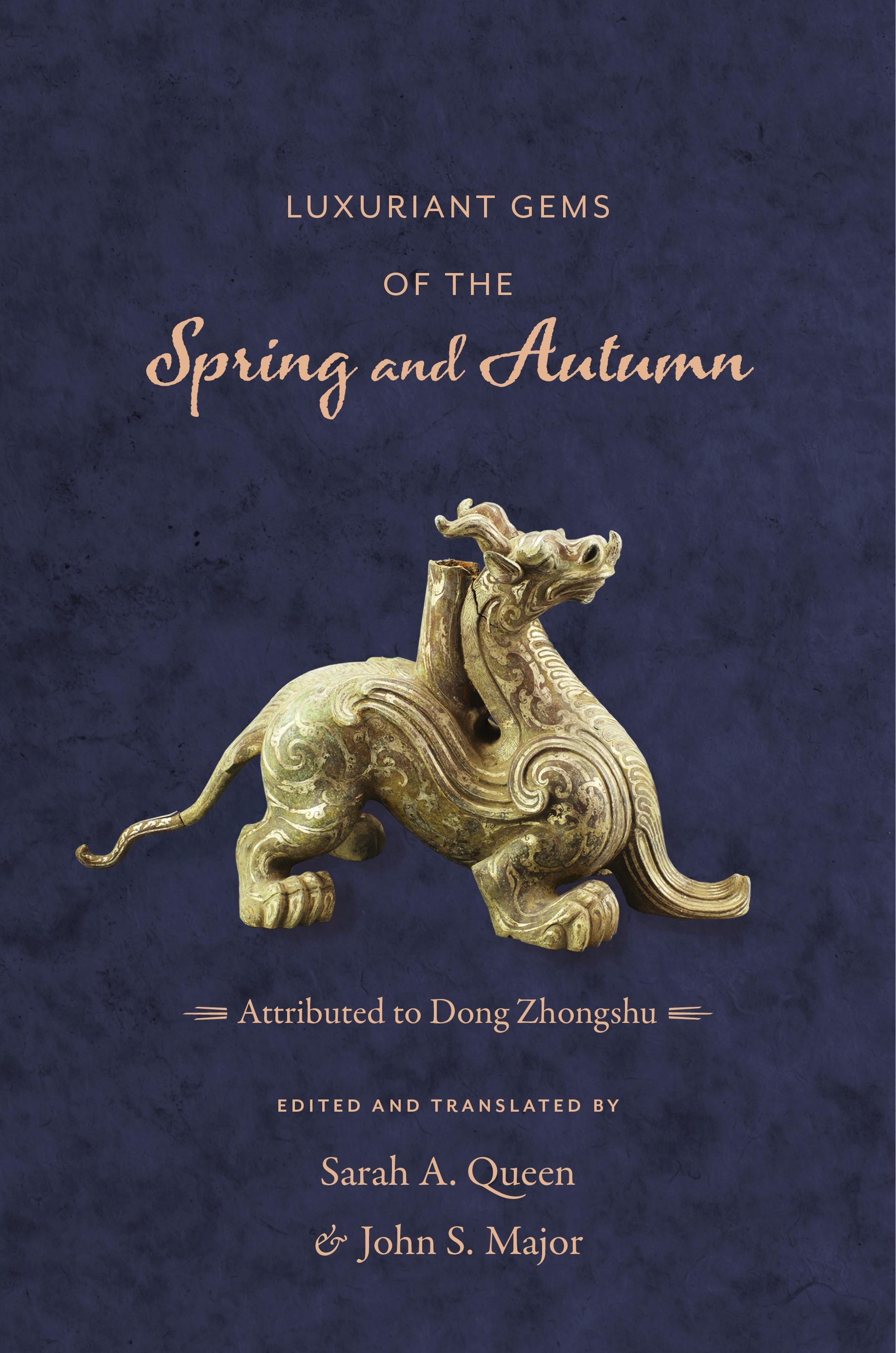
The Spring and Autumn (Chunqiu) is a chronicle kept by the dukes of the state of Lu from 722 to 481 B.C.E. Luxuriant Gems of the "Spring and Autumn" (Chunqiu fanlu) follows the interpretations of the Gongyang Commentary, whose transmitters sought to explicate the special language of the Spring and Autumn. The work is often ascribed to the Han scholar and court official Dong Zhongshu, but, as this study reveals, the text is in fact a compendium of writings by a variety of authors spanning several generations. It depicts a utopian vision of a flourishing humanity that they believed to be Confucius's legacy to the world.
The Gongyang masters thought that Confucius had written the Spring and Autumn, employing subtle phrasing to indicate approval or disapproval of important events and personages. Luxuriant Gems therefore augments Confucian ethical and philosophical teachings with chapters on cosmology, statecraft, and other topics drawn from contemporary non-Confucian traditions. A major resource, this book features the first complete English-language translation of Luxuriant Gems, divided into eight thematic sections with introductions that address dating, authorship, authenticity, and the relationship between the Spring and Autumn and the Gongyang approach. Critically illuminating early Chinese philosophy, religion, literature, and politics, this book conveys the brilliance of intellectual life in the Han dynasty during the formative decades of the Chinese imperial state.
Betal enkelt med kort, Klarna, Apple Pay eller Google Pay. Ikke fornøyd? Du har alltid 14 dagers angrerett. Les mer i våre vilkår. Har du spørsmål, send oss en e-post på hello@memmo.org.
Memmo gjør det enklere å studere – uansett hvor du er i verden. Hos oss samler du pensumbøker og smarte studieverktøy på ett og samme sted: sammendrag, quizer, podkaster og flashcards. Og så Ted, din studiekompis som svarer på alt du lurer på. Over 50 000 studenter studerer allerede her – bygget for at du skal lære raskere og stresse mindre.