
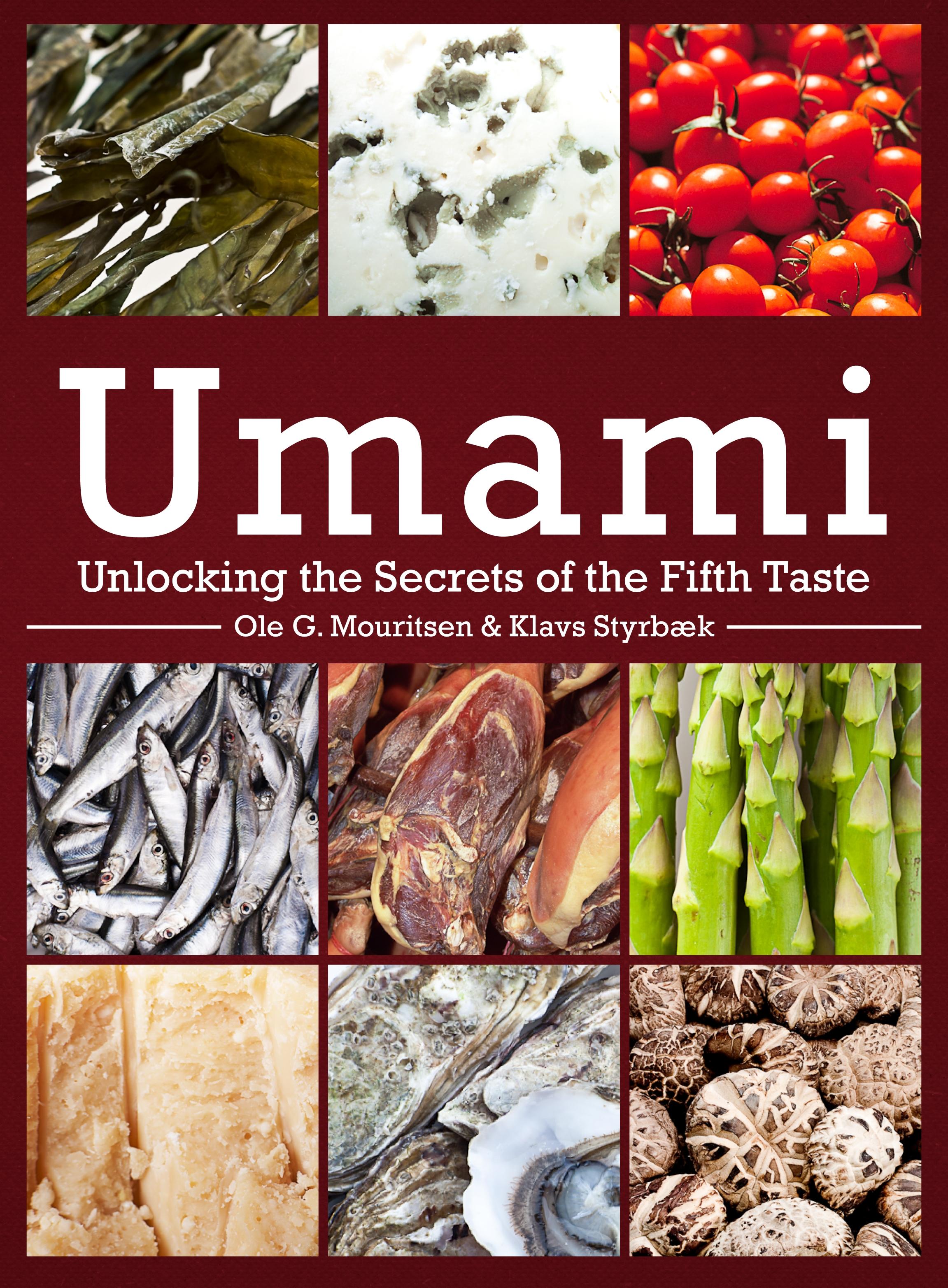
In the West, we have identified only four basic tastes—sour, sweet, salty, and bitter—that, through skillful combination and technique, create delicious foods. Yet in many parts of East Asia over the past century, an additional flavor has entered the culinary lexicon: umami, a fifth taste impression that is savory, complex, and wholly distinct.
Combining culinary history with recent research into the chemistry, preparation, nutrition, and culture of food, Mouritsen and Styrbæk encapsulate what we know to date about the concept of umami, from ancient times to today. Umami can be found in soup stocks, meat dishes, air-dried ham, shellfish, aged cheeses, mushrooms, and ripe tomatoes, and it can enhance other taste substances to produce a transformative gustatory experience. Researchers have also discovered which substances in foodstuffs bring out umami, a breakthrough that allows any casual cook to prepare delicious and more nutritious meals with less fat, salt, and sugar. The implications of harnessing umami are both sensuous and social, enabling us to become more intimate with the subtleties of human taste while making better food choices for ourselves and our families.
This volume, the product of an ongoing collaboration between a chef and a scientist, won the Danish national Mad+Medier-Prisen (Food and Media Award) in the category of academic food communication.
Betal enkelt med kort, Klarna, Apple Pay eller Google Pay. Ikke fornøyd? Du har alltid 14 dagers angrerett. Les mer i våre vilkår. Har du spørsmål, send oss en e-post på hello@memmo.org.
Memmo gjør det enklere å studere – uansett hvor du er i verden. Hos oss samler du pensumbøker og smarte studieverktøy på ett og samme sted: sammendrag, quizer, podkaster og flashcards. Og så Ted, din studiekompis som svarer på alt du lurer på. Over 50 000 studenter studerer allerede her – bygget for at du skal lære raskere og stresse mindre.