
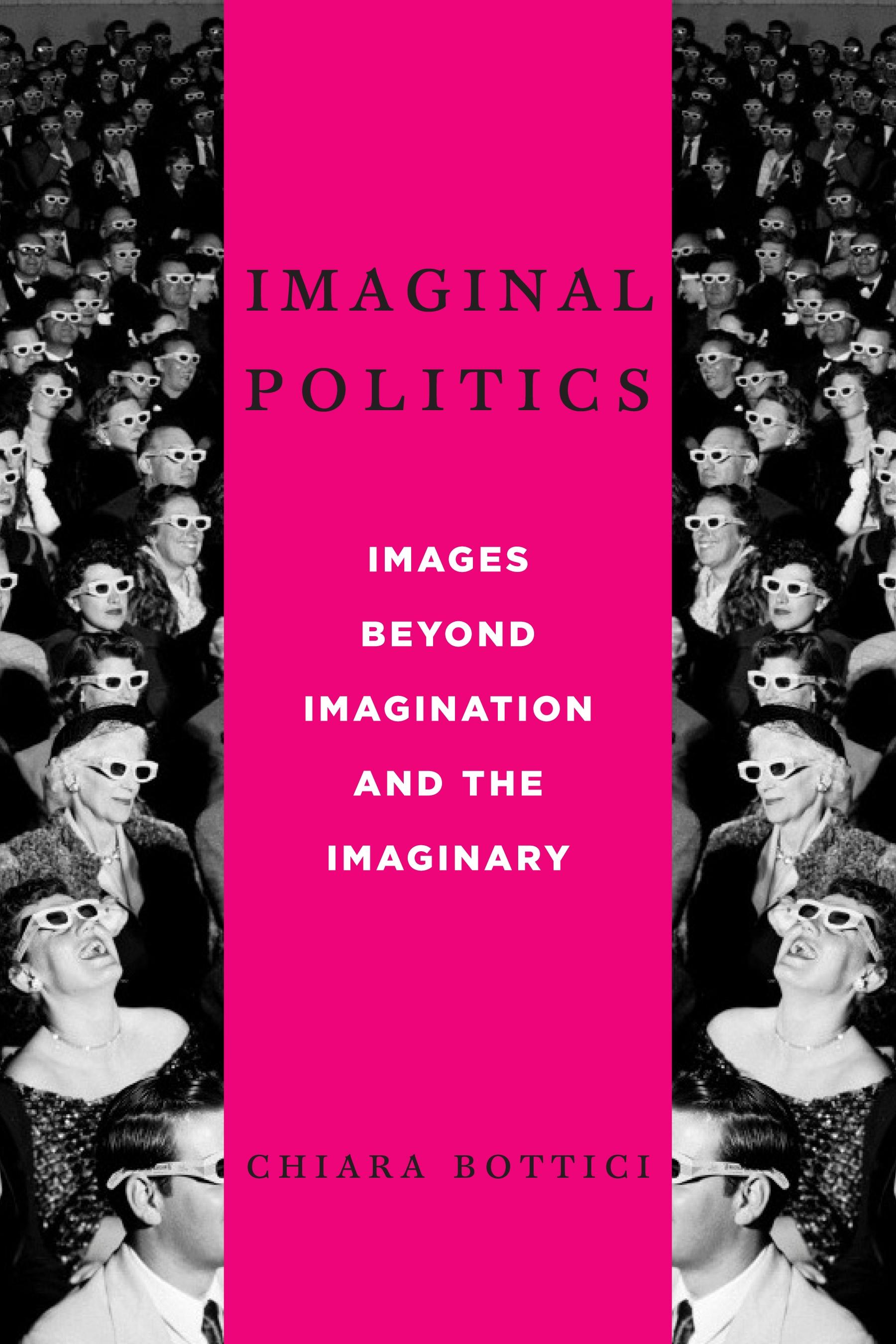
Between the radical, creative capacity of our imagination and the social imaginary we are immersed in is an intermediate space philosophers have termed the imaginal, populated by images or (re)presentations that are presences in themselves. Offering a new, systematic understanding of the imaginal and its nexus with the political, Chiara Bottici brings fresh perspective to the formation of political and power relationships and the paradox of a world rich in imagery yet seemingly devoid of imagination.
Bottici begins by defining the difference between the imaginal and the imaginary, locating the imaginal's root meaning in the image and its ability to both characterize a public and establish a set of activities within that public. She identifies the imaginal's critical role in powering representative democracies and its amplification through globalization. She then addresses the troublesome increase in images now mediating politics and the transformation of politics into empty spectacle. The spectacularization of politics has led to its virtualization, Bottici observes, transforming images into processes with an uncertain relationship to reality, and, while new media has democratized the image in a global society of the spectacle, the cloned image no longer mediates politics but does the act for us. Bottici concludes with politics' current search for legitimacy through an invented ideal of tradition, a turn to religion, and the incorporation of human rights language.
Betal enkelt med kort, Klarna, Apple Pay eller Google Pay. Ikke fornøyd? Du har alltid 14 dagers angrerett. Les mer i våre vilkår. Har du spørsmål, send oss en e-post på hello@memmo.org.
Memmo gjør det enklere å studere – uansett hvor du er i verden. Hos oss samler du pensumbøker og smarte studieverktøy på ett og samme sted: sammendrag, quizer, podkaster og flashcards. Og så Ted, din studiekompis som svarer på alt du lurer på. Over 50 000 studenter studerer allerede her – bygget for at du skal lære raskere og stresse mindre.