
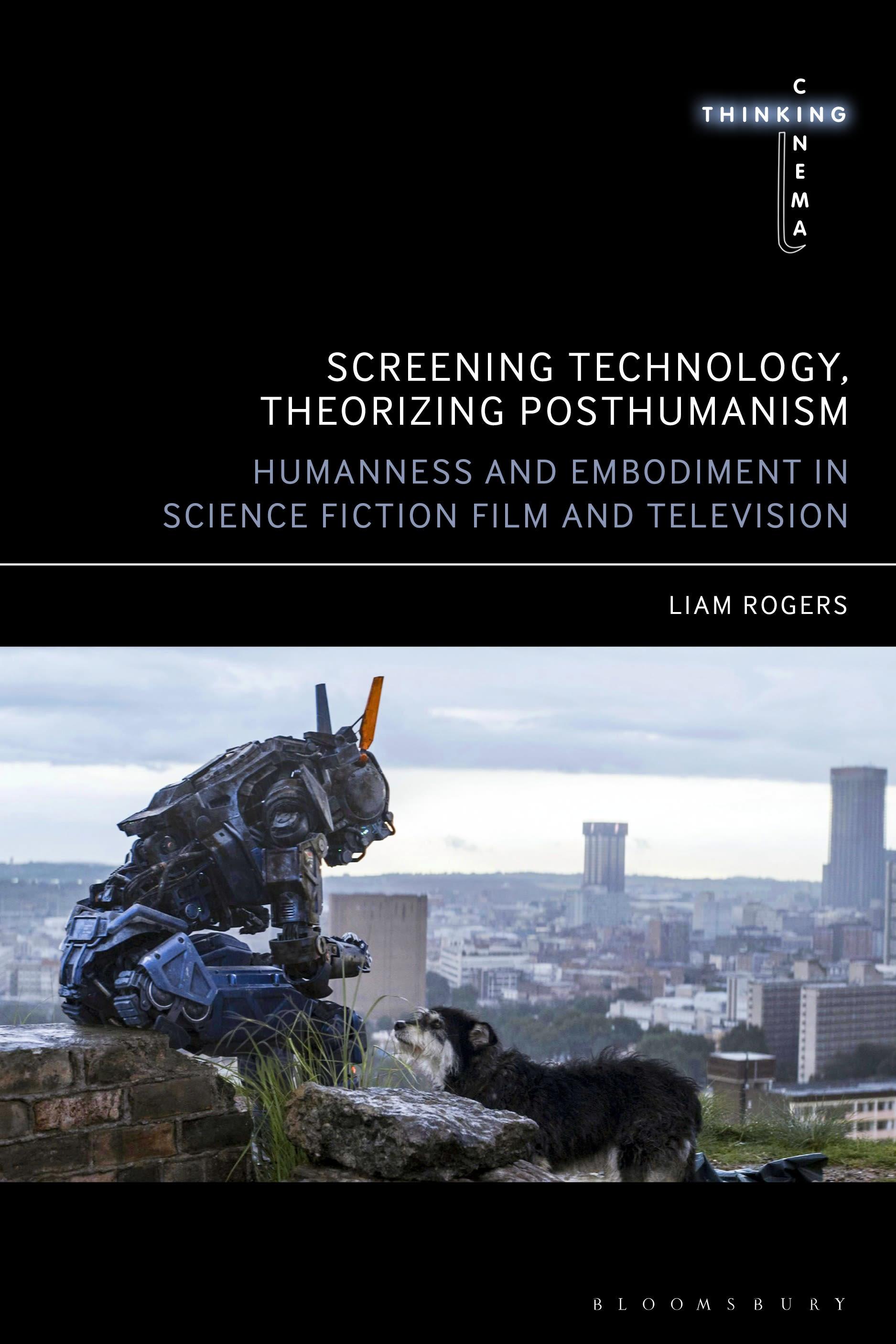
Screening Technology, Theorizing Posthumanism examines how different embodiments of technological life come to be inscribed with qualities of humanness across mainstream film and television, so as to understand the ways in which posthumanism emerges onscreen.
Now more than ever, we are being told that technologies capable of performing as though they were human are being developed at an unprecedented rate. In order to make sense of the wide-ranging social, ethical and philosophical ramifications of such technologies, cultural commentators, researchers and philosophers are turning to science fiction for answers. Rather than dismiss those who do so, this book builds upon this critical impulse to consider how film and television respond to the question: what does it mean to be human in an age of technological crisis?
Liam Rogers makes the case for a film-and-television-philosophy approach to examine what mainstream science fiction can offer posthumanism in its technoscientific visions of the future. Through close readings of popular films such as Her (2013), WALL-E (2008) and CHAPPiE (2015), as well as series like Black Mirror (2011-present) and My Holo Love (2020), it considers what it might mean to theorize posthumanism onscreen, what screening technology looks like, and, more importantly, why it matters. In doing so, this book casts posthumanism's relationship to screened media in new light. Locating the posthumanist potential within voice-, touch- and movement-based humanness, this book demonstrates the audio-visual ways in which films and television series navigate us through the current technoscientific landscape by offering us distinctly paradoxical theorizations of what it means to be human. It is this paradoxicality that ultimately complicates, challenges and advances posthumanism as a philosophy.
Now more than ever, we are being told that technologies capable of performing as though they were human are being developed at an unprecedented rate. In order to make sense of the wide-ranging social, ethical and philosophical ramifications of such technologies, cultural commentators, researchers and philosophers are turning to science fiction for answers. Rather than dismiss those who do so, this book builds upon this critical impulse to consider how film and television respond to the question: what does it mean to be human in an age of technological crisis?
Liam Rogers makes the case for a film-and-television-philosophy approach to examine what mainstream science fiction can offer posthumanism in its technoscientific visions of the future. Through close readings of popular films such as Her (2013), WALL-E (2008) and CHAPPiE (2015), as well as series like Black Mirror (2011-present) and My Holo Love (2020), it considers what it might mean to theorize posthumanism onscreen, what screening technology looks like, and, more importantly, why it matters. In doing so, this book casts posthumanism's relationship to screened media in new light. Locating the posthumanist potential within voice-, touch- and movement-based humanness, this book demonstrates the audio-visual ways in which films and television series navigate us through the current technoscientific landscape by offering us distinctly paradoxical theorizations of what it means to be human. It is this paradoxicality that ultimately complicates, challenges and advances posthumanism as a philosophy.
Pages: 296
Catégorie: Film- & Medievetenskap
e-ISBN: 9798765162989
Poids d'expédition: 1.2 kg
Expédié sous: 1-2 jours
Payez facilement par carte, Klarna, Apple Pay ou Google Pay. Pas satisfait ? Vous avez toujours une garantie de remboursement de 14 jours. En savoir plus dans nos conditions. Si vous avez des questions, envoyez-nous un e-mail à hello@memmo.org.
Memmo facilite tes études, où que tu sois dans le monde. On rassemble tes manuels de cours et des outils d'étude intelligents au même endroit : résumés, quiz, podcasts et flashcards. Et il y a Ted, ton compagnon d'étude qui répond à toutes tes questions. Plus de 50 000 étudiants étudient déjà ici – conçu pour t'aider à apprendre plus vite et à moins stresser.