
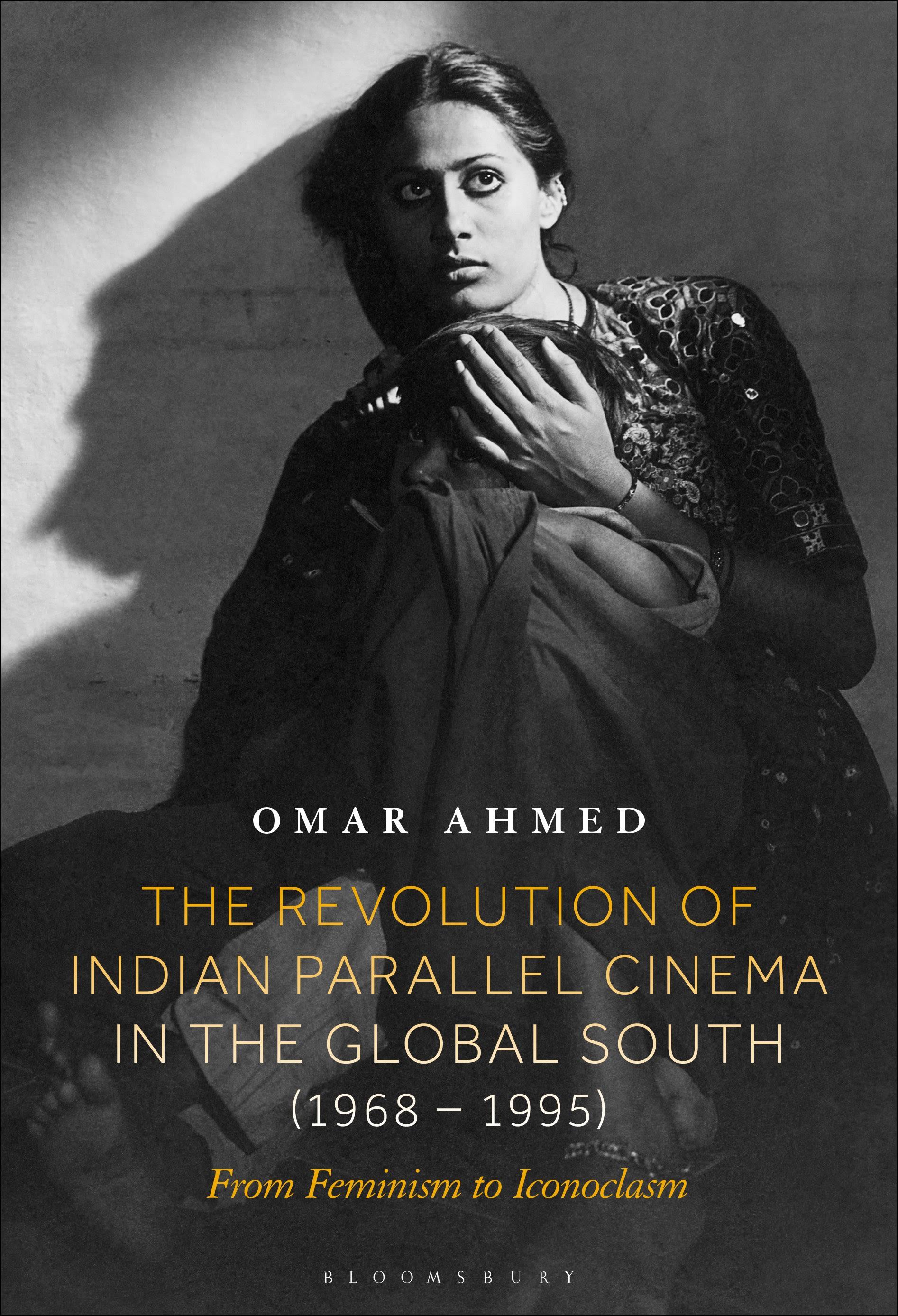
Drawing from over a decade of research and writings, this book takes you on an epic journey through the history of Indian Parallel Cinema (1968 – 1995).
India, the late 1960s. Something was in the air. A film manifesto penned by passionate cinephiles called for a new cinema. An exciting generation of iconoclastic filmmakers were on the march, the first to graduate from the newly incarnated Film and Television Institute of India, seizing the moment to forge one of the first major post-colonial film movements. What emerged was an unprecedented level of creativity, merging international influences with experimental, indigenous styles, and creating an aesthetic and thematic rupture, and that ultimately led to new ways of making films. But it is a story that has rarely been told, inextricably absent from the parochial, Euro-centric and linear histories of film. This is the story of Indian Parallel Cinema.
From auteurs like Mani Kaul and John Abraham to Smita Patil and Om Puri, The Revolution of Indian Parallel Cinema in the Global South explores the origins, evolution, demise and legacy of a film movement that produced a pantheon of innovative filmmakers, in excess of two hundred films and a distinctly regional identity in which film societies, state funding and political insurgency were catalysts for a defiant, radical dialogue, much of it anti-establishment, that broke all the rules. Most importantly, this publication considers the ways in which Parallel Cinema narrated a new 'history from below', using a range of case studies that includes Uski Roti, Mirch Masala and Amma Ariyan.
India, the late 1960s. Something was in the air. A film manifesto penned by passionate cinephiles called for a new cinema. An exciting generation of iconoclastic filmmakers were on the march, the first to graduate from the newly incarnated Film and Television Institute of India, seizing the moment to forge one of the first major post-colonial film movements. What emerged was an unprecedented level of creativity, merging international influences with experimental, indigenous styles, and creating an aesthetic and thematic rupture, and that ultimately led to new ways of making films. But it is a story that has rarely been told, inextricably absent from the parochial, Euro-centric and linear histories of film. This is the story of Indian Parallel Cinema.
From auteurs like Mani Kaul and John Abraham to Smita Patil and Om Puri, The Revolution of Indian Parallel Cinema in the Global South explores the origins, evolution, demise and legacy of a film movement that produced a pantheon of innovative filmmakers, in excess of two hundred films and a distinctly regional identity in which film societies, state funding and political insurgency were catalysts for a defiant, radical dialogue, much of it anti-establishment, that broke all the rules. Most importantly, this publication considers the ways in which Parallel Cinema narrated a new 'history from below', using a range of case studies that includes Uski Roti, Mirch Masala and Amma Ariyan.
Pages: 248
Catégorie: Film- & Medievetenskap
e-ISBN: 9798765101025
Poids d'expédition: 1.2 kg
Expédié sous: 1-2 jours
Payez facilement par carte, Klarna, Apple Pay ou Google Pay. Pas satisfait ? Vous avez toujours une garantie de remboursement de 14 jours. En savoir plus dans nos conditions. Si vous avez des questions, envoyez-nous un e-mail à hello@memmo.org.
Memmo facilite tes études, où que tu sois dans le monde. On rassemble tes manuels de cours et des outils d'étude intelligents au même endroit : résumés, quiz, podcasts et flashcards. Et il y a Ted, ton compagnon d'étude qui répond à toutes tes questions. Plus de 50 000 étudiants étudient déjà ici – conçu pour t'aider à apprendre plus vite et à moins stresser.