
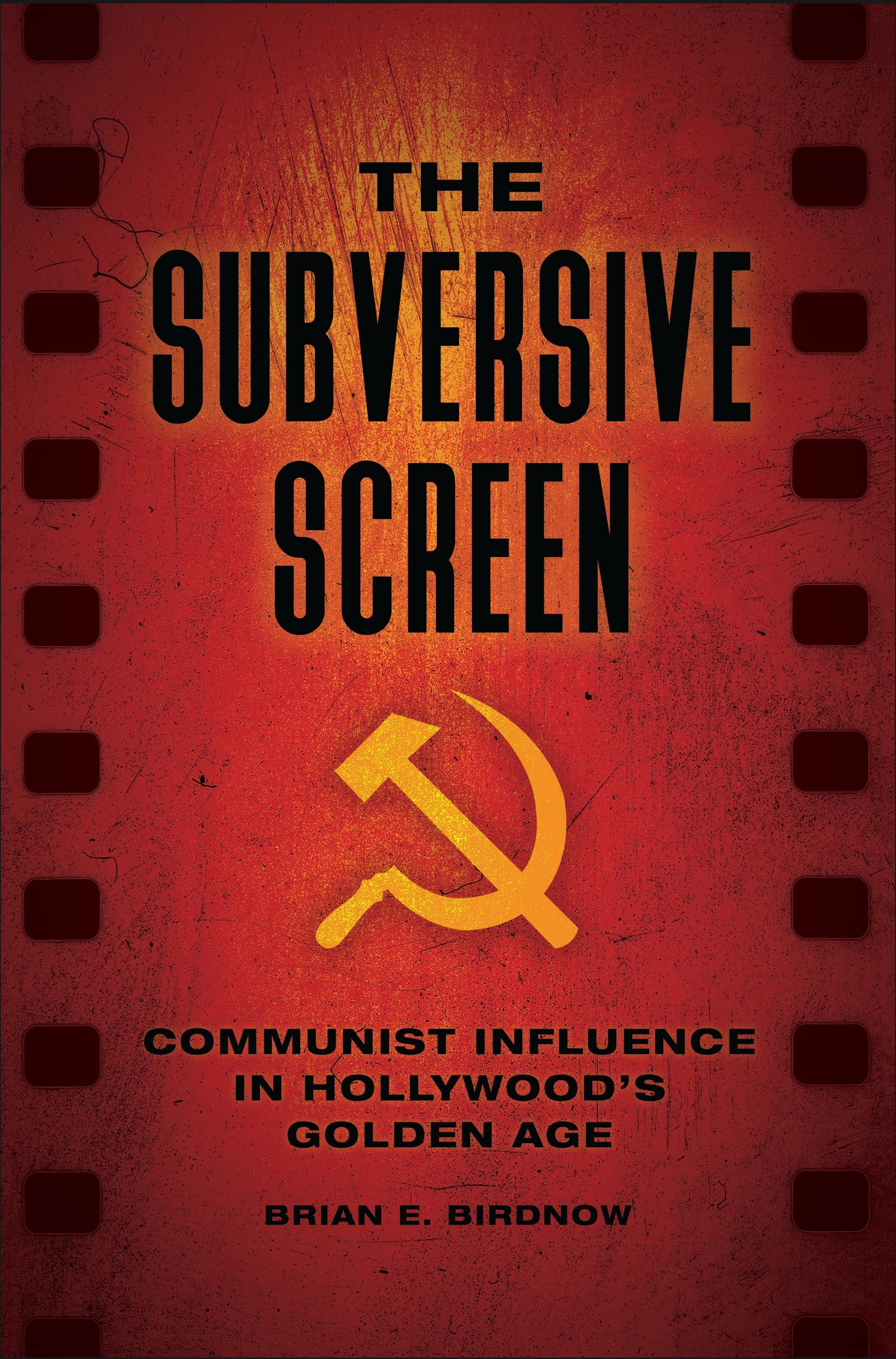
A riveting chronicle of Communist Party efforts to propagate Communism in the United States, concurrent with Hollywood's "Golden Age" of creativity that came to define classical Hollywood cinema.
From the Great Depression through World War II, the American Communist Party tried to take control of the motion picture industry. This comprehensive and chronological account of Communist influence in Hollywood surveys the topic from the Popular Front's fight against Fascism during the 1930s to the height of the House Un-American Activities Committee hearings in the late 1940s.
Birdnow, an established historian and chronicler of domestic Communism, outlines Communist International's organizational efforts promoting international communism, focusing on the work of Communist political activists such as Willi Münzenberg, a media mogul with an international network; Gerhart Eisler, patron of a Hollywood composer; and Otto Katz, a high-profile publicist of the party line involved in movies in the 1930s and 1940s.
The book explores the covert ways in which Hollywood Communists and Soviet sympathizers attempted to tailor movie scripts to suit the Soviet agenda and discusses Communist front groups such as the Hollywood Anti-Nazi League in great detail. Final chapters offer convincing proof that the directors, producers, and screenwriters blacklisted by studios for their possible Communist affiliations, known as the Hollywood Ten, were members of the Communist Party.
From the Great Depression through World War II, the American Communist Party tried to take control of the motion picture industry. This comprehensive and chronological account of Communist influence in Hollywood surveys the topic from the Popular Front's fight against Fascism during the 1930s to the height of the House Un-American Activities Committee hearings in the late 1940s.
Birdnow, an established historian and chronicler of domestic Communism, outlines Communist International's organizational efforts promoting international communism, focusing on the work of Communist political activists such as Willi Münzenberg, a media mogul with an international network; Gerhart Eisler, patron of a Hollywood composer; and Otto Katz, a high-profile publicist of the party line involved in movies in the 1930s and 1940s.
The book explores the covert ways in which Hollywood Communists and Soviet sympathizers attempted to tailor movie scripts to suit the Soviet agenda and discusses Communist front groups such as the Hollywood Anti-Nazi League in great detail. Final chapters offer convincing proof that the directors, producers, and screenwriters blacklisted by studios for their possible Communist affiliations, known as the Hollywood Ten, were members of the Communist Party.
Payez facilement par carte, Klarna, Apple Pay ou Google Pay. Pas satisfait ? Vous avez toujours une garantie de remboursement de 14 jours. En savoir plus dans nos conditions. Si vous avez des questions, envoyez-nous un e-mail à hello@memmo.org.
Memmo facilite tes études, où que tu sois dans le monde. On rassemble tes manuels de cours et des outils d'étude intelligents au même endroit : résumés, quiz, podcasts et flashcards. Et il y a Ted, ton compagnon d'étude qui répond à toutes tes questions. Plus de 50 000 étudiants étudient déjà ici – conçu pour t'aider à apprendre plus vite et à moins stresser.