
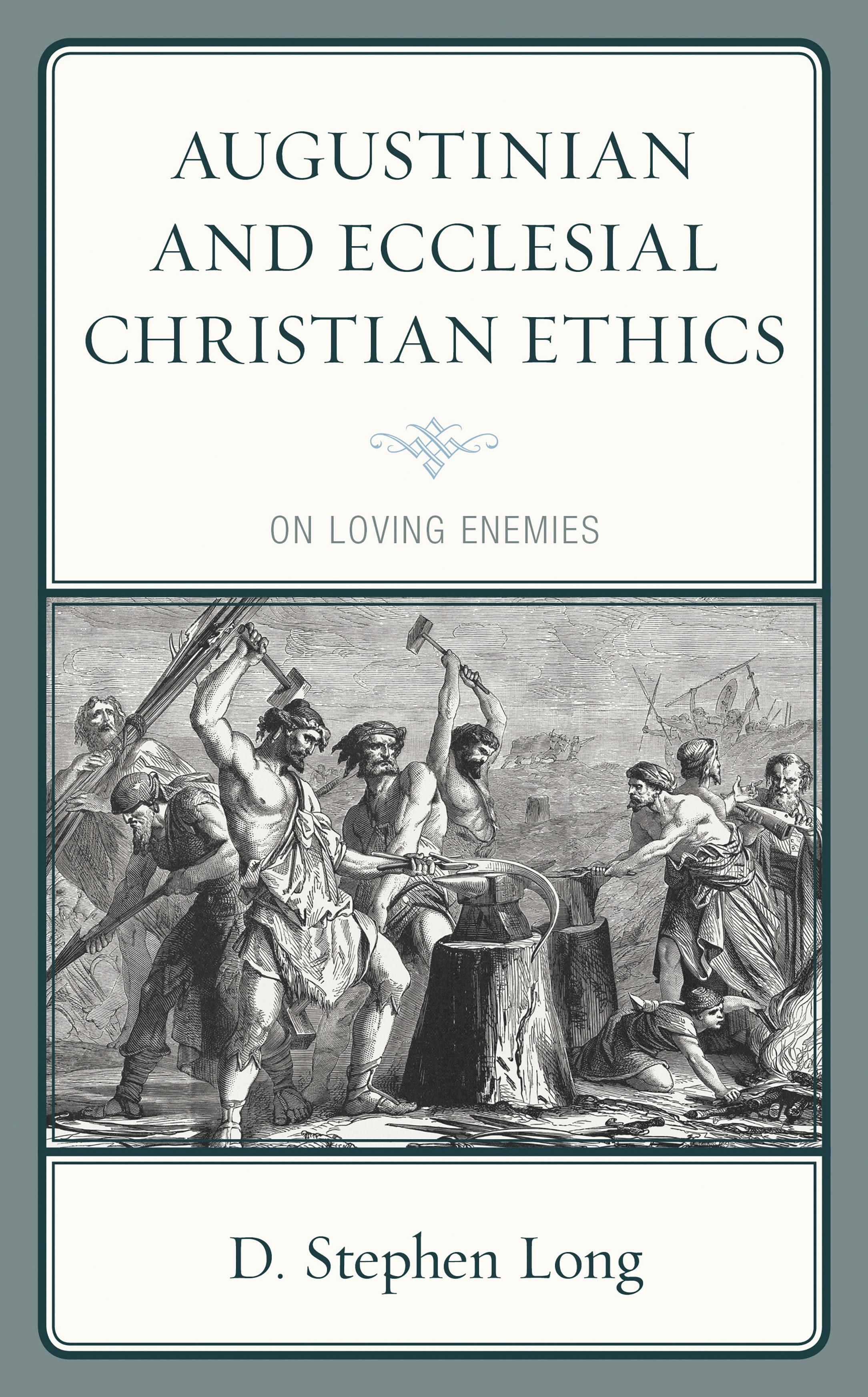
What is the relationship between the command to love one’s enemies and the use of violence and/or other coercive political means? This work examines this question by comparing and contrasting two important contemporary approaches to Christian ethics, neoAugustinian and the ecclesial or neoAnabaptist. It traces the complicated conversation that has taken place since John Howard Yoder took on Reinhold Niebuhr’s interpretation of the Anabaptists in the 1940’s. It consists of three parts. The first part traces the development of the Augustinian-Niebuhrian approach to ethics from Niebuhr through those who have advanced his work including Paul Ramsey, Timothy Jackson, Charles Mathewes, Eric Gregory, and Jennifer Herdt. It also examines the Augustinian ethics of Oliver O’Donovan, John Milbank and Nicholas Wolterstorff. Along with tracing the Augustinian approach and its trajectories through agapism, theology and the interpretation of Augustine, it identifies fifteen criticisms that this approach brings against the neoAnabaptists. The second part traces the origin of the ecclesial or neoAnabaptist approach, and then examines its relationship to, and criticism of, agapism, what theological doctrines are central and its interpretation of Augustine. Its purpose is primarily constructive by explaining the role that ecclesiology, Christology and eschatology have among the neoAnabaptists. The third part addresses the criticisms levied by Augustinians against the neoAnabaptists by drawing on the constructive theology in the second part. It intends to show where the Augustinian critics are correct, where they have missed key theological teachings, and where they misrepresent. It also assesses the summons to the nationalist project the Augustinians put to the neoAnabaptists. If this work is successful, this third part will not be defensive. It will instead illumine the reasons for the criticisms and suggest means by which the conversation that began between Yoder and Niebuhr can continue and possibly bear fruit for theological ethics in both its ecclesial and nationalist projects for generations to come.
Payez facilement par carte, Klarna, Apple Pay ou Google Pay. Pas satisfait ? Vous avez toujours une garantie de remboursement de 14 jours. En savoir plus dans nos conditions. Si vous avez des questions, envoyez-nous un e-mail à hello@memmo.org.
Memmo facilite tes études, où que tu sois dans le monde. On rassemble tes manuels de cours et des outils d'étude intelligents au même endroit : résumés, quiz, podcasts et flashcards. Et il y a Ted, ton compagnon d'étude qui répond à toutes tes questions. Plus de 50 000 étudiants étudient déjà ici – conçu pour t'aider à apprendre plus vite et à moins stresser.