
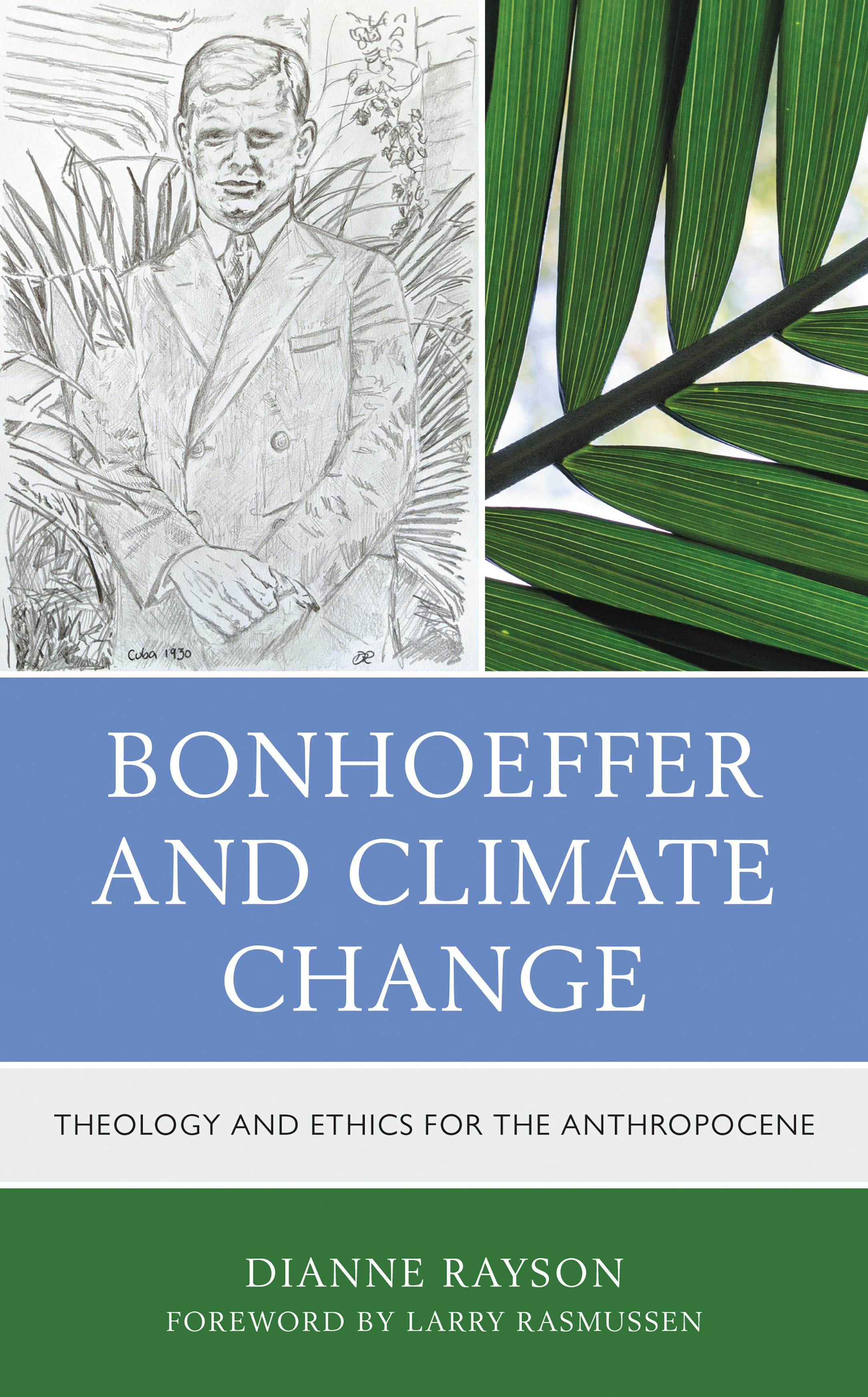
Where is the voice of theology in the public discourse around anthropogenic climate change? How do we understand the human relationship to Earth and the ecology of which we are a part? How can we account for the human attempt to dominate nature and the devastation we have caused to our own home?
Dianne Rayson addresses these questions. She uses the creation theology of Dietrich Bonhoeffer to examine what it means to be human in the post-Holocene age. Employing a range of Bonhoeffer’s texts, Rayson posits that Bonhoeffer’s Christological theology and this-worldly ethical orientation provide the tools for an Earthly Christianity. She responds to Bonhoeffer’s question, “who actually is Jesus Christ, for us, today?” and proposes a Bonhoefferian ecoethic.
Dianne Rayson addresses these questions. She uses the creation theology of Dietrich Bonhoeffer to examine what it means to be human in the post-Holocene age. Employing a range of Bonhoeffer’s texts, Rayson posits that Bonhoeffer’s Christological theology and this-worldly ethical orientation provide the tools for an Earthly Christianity. She responds to Bonhoeffer’s question, “who actually is Jesus Christ, for us, today?” and proposes a Bonhoefferian ecoethic.
Payez facilement par carte, Klarna, Apple Pay ou Google Pay. Pas satisfait ? Vous avez toujours une garantie de remboursement de 14 jours. En savoir plus dans nos conditions. Si vous avez des questions, envoyez-nous un e-mail à hello@memmo.org.
Memmo facilite tes études, où que tu sois dans le monde. On rassemble tes manuels de cours et des outils d'étude intelligents au même endroit : résumés, quiz, podcasts et flashcards. Et il y a Ted, ton compagnon d'étude qui répond à toutes tes questions. Plus de 50 000 étudiants étudient déjà ici – conçu pour t'aider à apprendre plus vite et à moins stresser.