
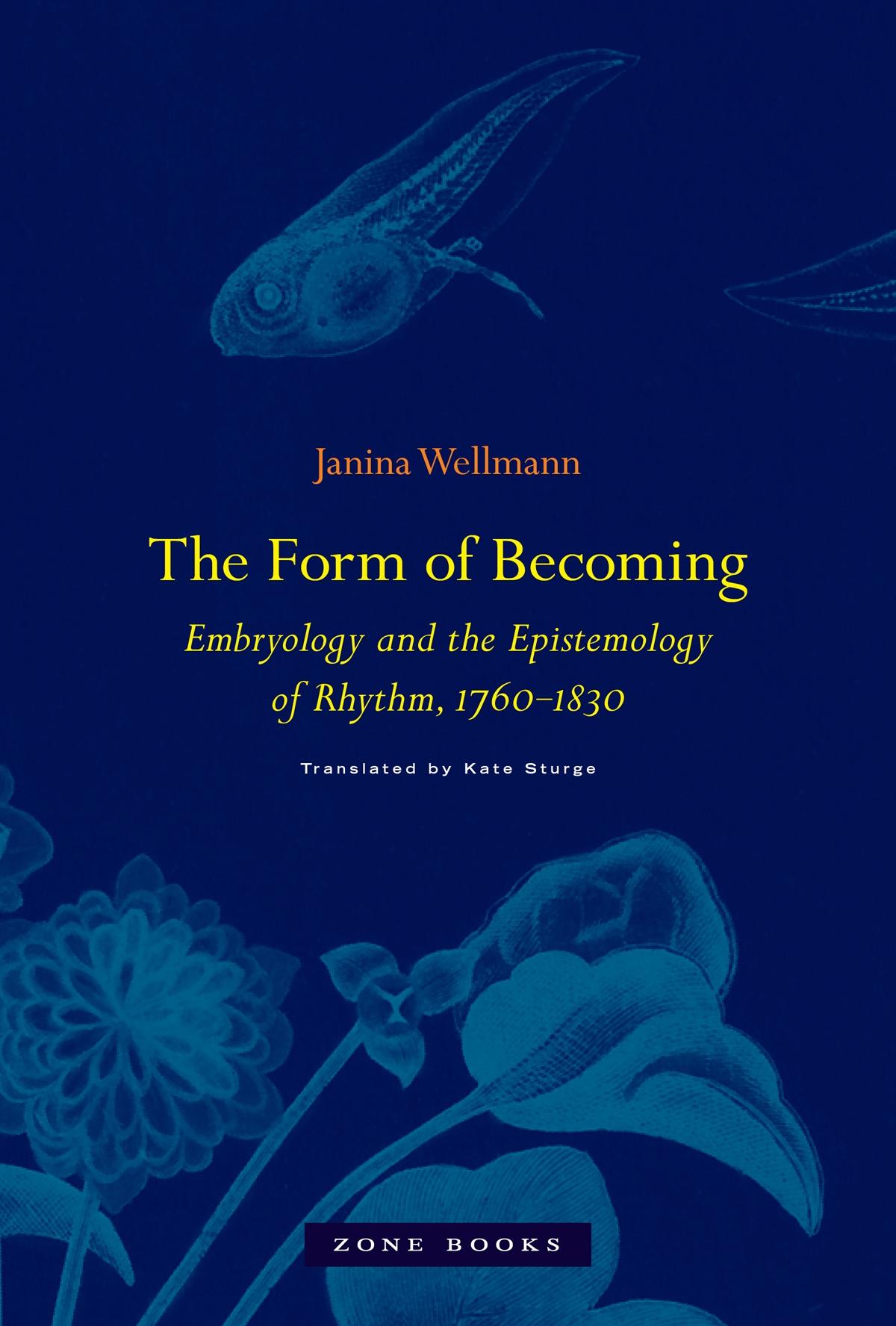
The Form of Becoming offers an innovative understanding of the emergence around 1800 of the science of embryology and a new notion of development, one based on the epistemology of rhythm. It argues that between 1760 and 1830, the concept of rhythm became crucial to many fields of knowledge, including the study of life and living processes.
The book juxtaposes the history of rhythm in music theory, literary theory, and philosophy with the concurrent turn in biology to understanding the living world in terms of rhythmic patterns, rhythmic movement, and rhythmic representations. Common to all these fields was their view of rhythm as a means of organizing time — and of ordering the development of organisms.
Janina Wellmann, a historian of science, has written the first systematic study of visualization in embryology. Embryological development circa 1800 was imagined through the pictorial technique of the series, still prevalent in the field today. Tracing the origins of the developmental series back to seventeenth-century instructional graphics for military maneuvers, dance, and craft work, The Form of Becoming reveals the constitutive role of rhythm and movement in the visualization of developing life.
Payez facilement par carte, Klarna, Apple Pay ou Google Pay. Pas satisfait ? Vous avez toujours une garantie de remboursement de 14 jours. En savoir plus dans nos conditions. Si vous avez des questions, envoyez-nous un e-mail à hello@memmo.org.
Memmo facilite tes études, où que tu sois dans le monde. On rassemble tes manuels de cours et des outils d'étude intelligents au même endroit : résumés, quiz, podcasts et flashcards. Et il y a Ted, ton compagnon d'étude qui répond à toutes tes questions. Plus de 50 000 étudiants étudient déjà ici – conçu pour t'aider à apprendre plus vite et à moins stresser.