
'While identifying two types of activity, namely econ-art and econ-science, he demonstrates why economists should acknowledge their artistic impulses and develop a more scientific conduct.' ARTbibliographies Modern
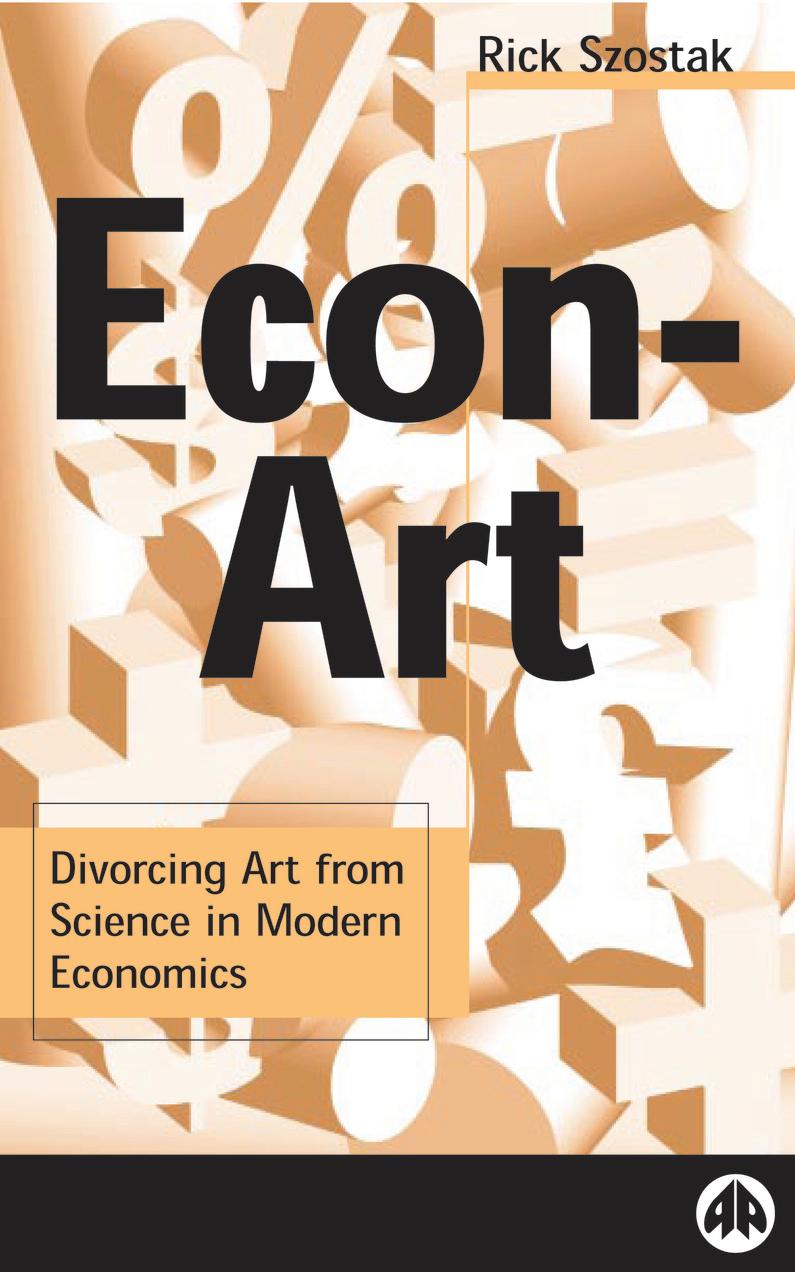
Historians of economic thought have long recognised the possibility that cultural influences might be important, but have never analysed them in any detail. In the first study of economics from the perspective of art history, Rick Szostak shows how the cultural influences identified by art historians have affected economic theory. He also reveals that not only has economic theory been informed by aesthetic considerations, but the very methods employed by economists are shown to serve primarily artistic goals.
Professor Szostak assesses the extent of these cultural and aesthetic effects through a wide-ranging study of the development of surrealism, cubism and abstract art, juxtaposed with examples drawn from virtually every field of economics. Two types of endeavour are identified, Econ-Art and Econ-Science. Szostak argues that the pursuit of econ-science would be much aided if economists first recognised their artistic impulses, and then developed more scientific standards of conduct. As the first economist to thoroughly address the question of whether Economics is Art, Professor Szostak raises some important philosophical issues with this volume. The result is a controversial and scholarly, yet accessible, examination of the influence of both culture and aesthetic considerations on economics.
Historians of economic thought have long recognised the possibility that cultural influences might be important, but have never analysed them in any detail. In the first study of economics from the perspective of art history, Rick Szostak shows how the cultural influences identified by art historians have affected economic theory. He also reveals that not only has economic theory been informed by aesthetic considerations, but the very methods employed by economists are shown to serve primarily artistic goals.
Professor Szostak assesses the extent of these cultural and aesthetic effects through a wide-ranging study of the development of surrealism, cubism and abstract art, juxtaposed with examples drawn from virtually every field of economics. Two types of endeavour are identified, Econ-Art and Econ-Science. Szostak argues that the pursuit of econ-science would be much aided if economists first recognised their artistic impulses, and then developed more scientific standards of conduct. As the first economist to thoroughly address the question of whether Economics is Art, Professor Szostak raises some important philosophical issues with this volume. The result is a controversial and scholarly, yet accessible, examination of the influence of both culture and aesthetic considerations on economics.
Payez facilement par carte, Klarna, Apple Pay ou Google Pay. Pas satisfait ? Vous avez toujours une garantie de remboursement de 14 jours. En savoir plus dans nos conditions. Si vous avez des questions, envoyez-nous un e-mail à hello@memmo.org.
Memmo facilite tes études, où que tu sois dans le monde. On rassemble tes manuels de cours et des outils d'étude intelligents au même endroit : résumés, quiz, podcasts et flashcards. Et il y a Ted, ton compagnon d'étude qui répond à toutes tes questions. Plus de 50 000 étudiants étudient déjà ici – conçu pour t'aider à apprendre plus vite et à moins stresser.
Tu pourrais aussi aimer
Acheter le livre0