
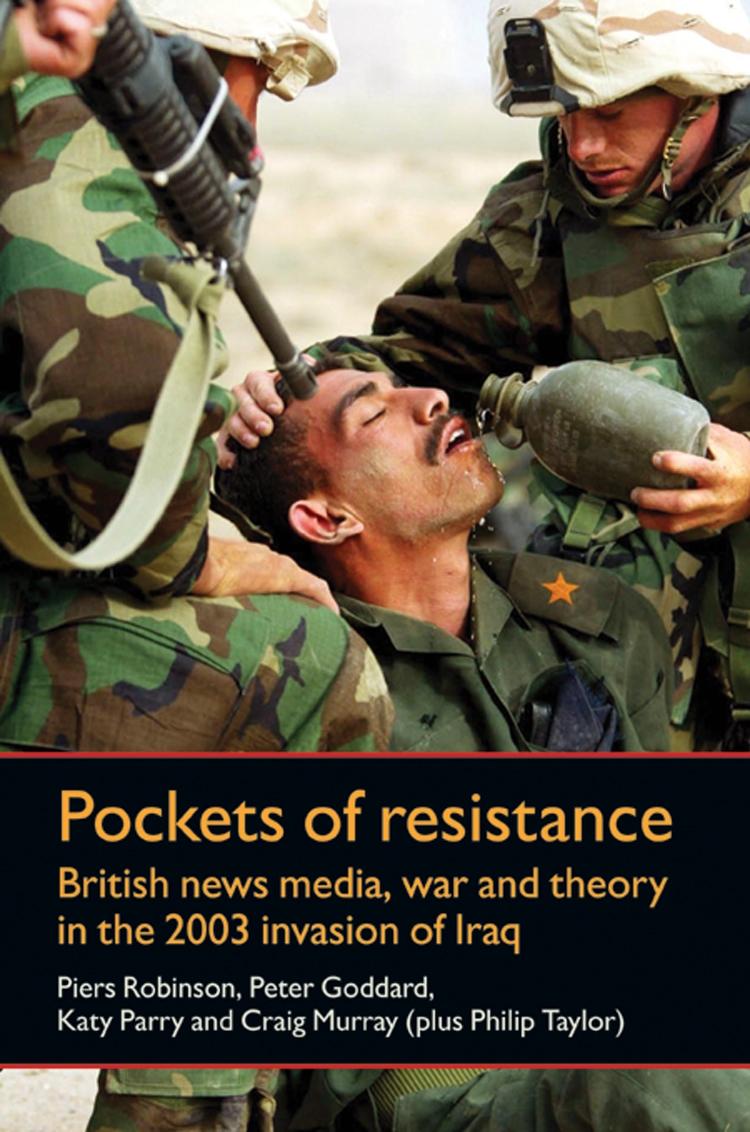
For scholars of media and war, the 2003 invasion of Iraq is a compelling case to study. As part of President Bush’s ‘war on terror’, the invasion was the most controversial British foreign policy decision since Suez, and its ramifications and aftermath have rarely been far from the news. In the many political and public debates regarding this conflict, arguments over the role of the media have been omnipresent. For some, media coverage was biased against the war, for others it became a cheerleader for the invasion. Where does the truth lie? Drawing upon a uniquely-detailed and rich content and framing analysis of television and press coverage, and on interviews with some of the journalists involved, Pockets of Resistance provides an authoritative assessment of how British news media reported the 2003 Iraq invasion and also of the theoretical implications of this case for our understanding of wartime media-state relations.
Pockets of Resistance examines the successes and failures of British television news as it sought to attain independence under the difficult circumstances of war, and describes and explains the emergence of some surprisingly vociferous anti-war voices within a diverse national press.
Payez facilement par carte, Klarna, Apple Pay ou Google Pay. Pas satisfait ? Vous avez toujours une garantie de remboursement de 14 jours. En savoir plus dans nos conditions. Si vous avez des questions, envoyez-nous un e-mail à hello@memmo.org.
Memmo facilite tes études, où que tu sois dans le monde. On rassemble tes manuels de cours et des outils d'étude intelligents au même endroit : résumés, quiz, podcasts et flashcards. Et il y a Ted, ton compagnon d'étude qui répond à toutes tes questions. Plus de 50 000 étudiants étudient déjà ici – conçu pour t'aider à apprendre plus vite et à moins stresser.