
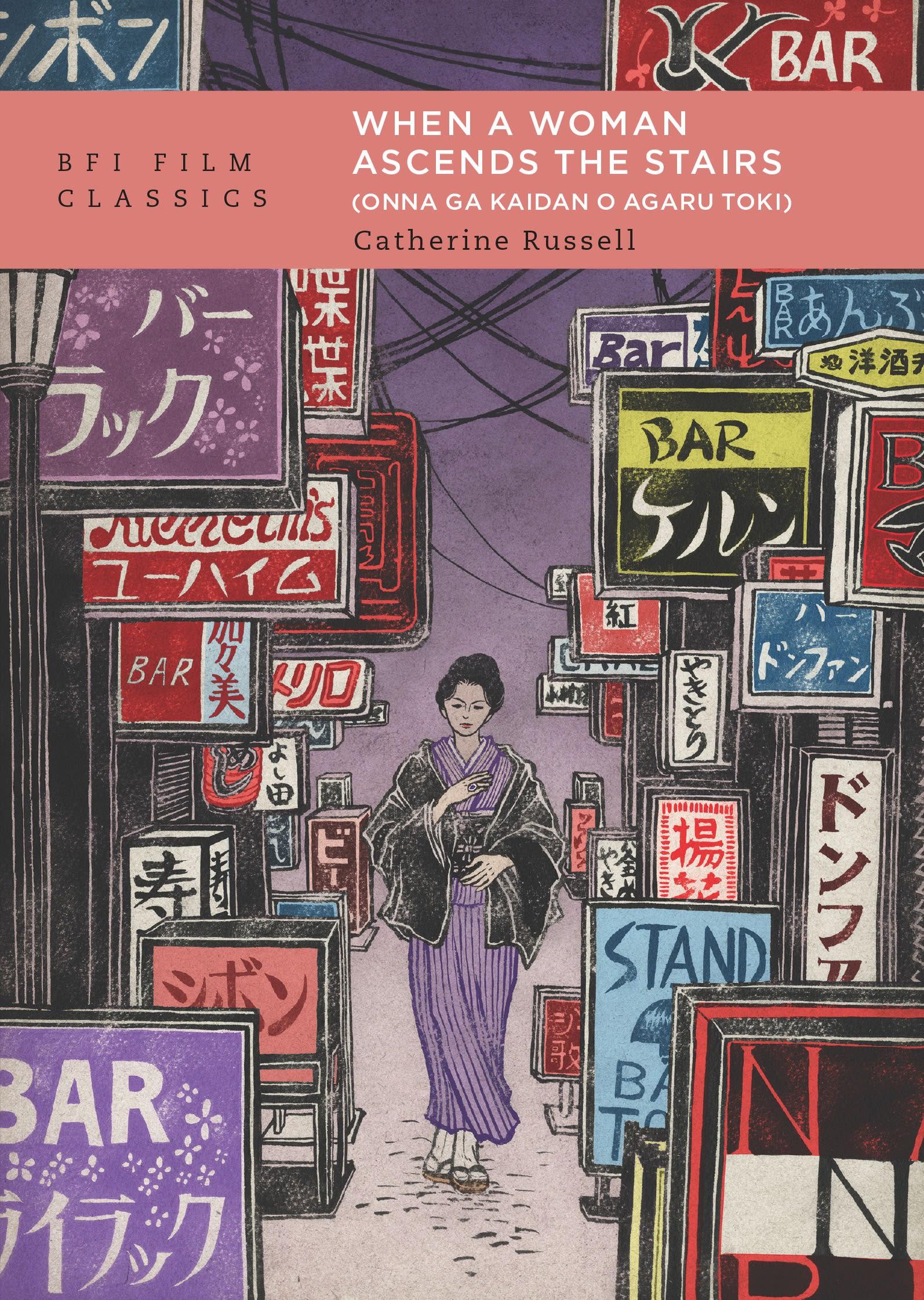
Mikio Naruse's When A Woman Ascends The Stairs (1960) combines high melodrama with modernist film language, telling the story of Keiko, a bar hostess struggling to succeed in Tokyo's Ginza district.
Catherine Russell's study of the film provides an in-depth analysis of Naruse's distinctive filmmaking, from his use of two-shots in confined spaces, unique lighting techniques, and his "invisible" and "rhythmic" editing style. She analyses the recurring motif of a woman's white-stockinged feet climbing stairs, considering how this symbolizes the social dynamics of the high-class Japanese sex industry that sustains hostess bar culture.
Russell goes on to argue that the film is a “late” woman's film which engages with the institutional barriers to woman's success in postwar Japan. She situates the film within the trajectory of Naruse's career and analyses how his social critique is balanced with an aestheticization of a harsh and brutally gendered world, creating an affective tension that is symptomatic of Naruse's own position as an industrial worker.
Catherine Russell's study of the film provides an in-depth analysis of Naruse's distinctive filmmaking, from his use of two-shots in confined spaces, unique lighting techniques, and his "invisible" and "rhythmic" editing style. She analyses the recurring motif of a woman's white-stockinged feet climbing stairs, considering how this symbolizes the social dynamics of the high-class Japanese sex industry that sustains hostess bar culture.
Russell goes on to argue that the film is a “late” woman's film which engages with the institutional barriers to woman's success in postwar Japan. She situates the film within the trajectory of Naruse's career and analyses how his social critique is balanced with an aestheticization of a harsh and brutally gendered world, creating an affective tension that is symptomatic of Naruse's own position as an industrial worker.
Pages: 88
Catégorie: Film- & Medievetenskap
e-ISBN: 9781839026447
Poids d'expédition: 1.2 kg
Expédié sous: 1-2 jours
Payez facilement par carte, Klarna, Apple Pay ou Google Pay. Pas satisfait ? Vous avez toujours une garantie de remboursement de 14 jours. En savoir plus dans nos conditions. Si vous avez des questions, envoyez-nous un e-mail à hello@memmo.org.
Memmo facilite tes études, où que tu sois dans le monde. On rassemble tes manuels de cours et des outils d'étude intelligents au même endroit : résumés, quiz, podcasts et flashcards. Et il y a Ted, ton compagnon d'étude qui répond à toutes tes questions. Plus de 50 000 étudiants étudient déjà ici – conçu pour t'aider à apprendre plus vite et à moins stresser.