
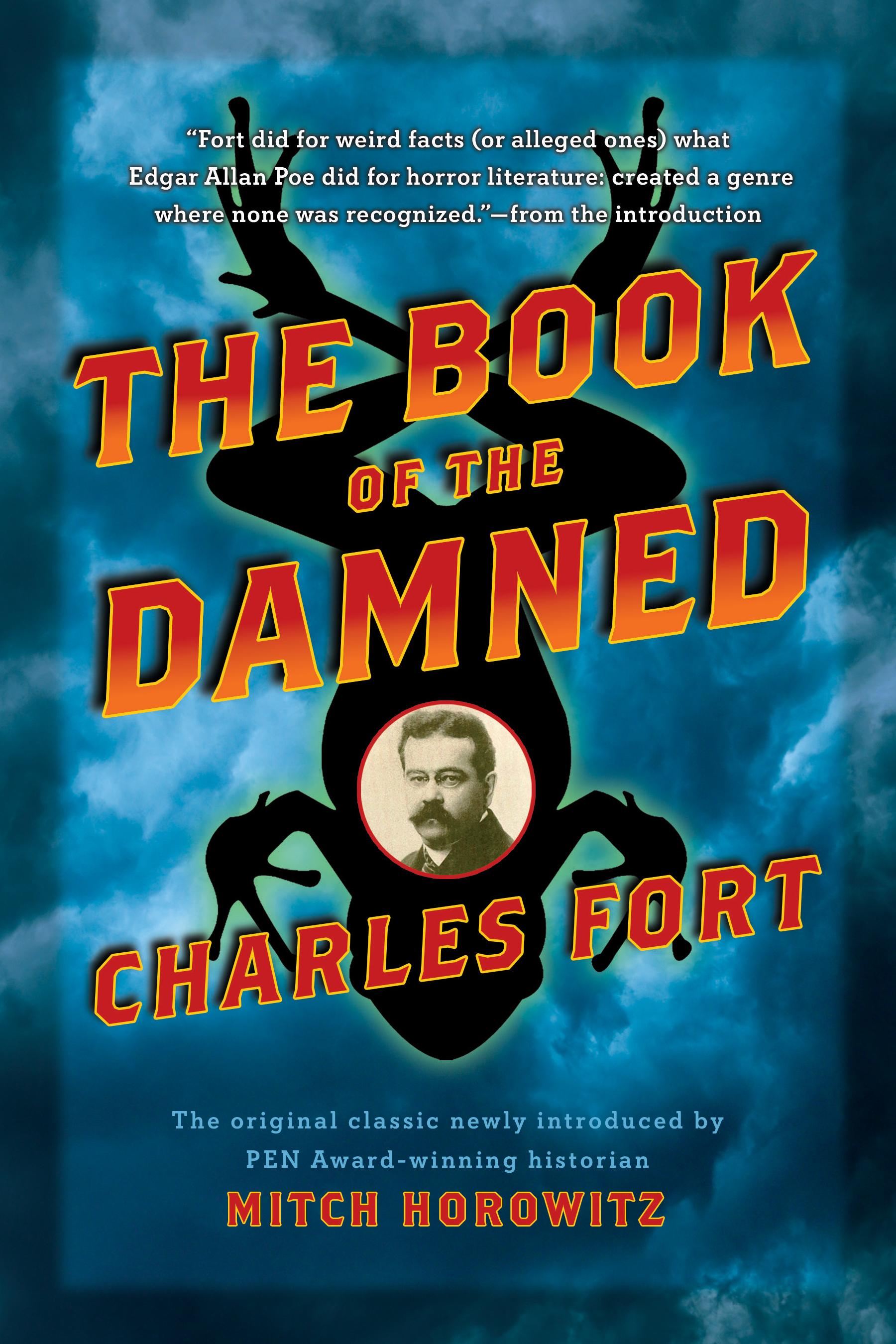
Charles Fort’s founding classic of the paranormal
newly introduced by esoteric scholar Mitch Horowitz
The Book of the Damned shot like a comet—or something unknown in the sky—across the horizon of a complacent industrial world and its new faith in orthodox science in post-World War I America.
Author Charles Fort (1874-1932) curated a registry of damned data: reports that philosophical materialism had excluded, such as strange airships in an era before UFOs; unknown beasts; blood, frogs, fishes, and stones falling to earth; floating islands; meteorites containing fossils; tools dropping from the skies; fairy coffins; lights on the moon; and strange figures moving across the sun.
Fort revealed how dogmas and orthodoxies once associated with religion were reemerging within triumphant science itself. Whatever authorities could not explain, they condemned, ridiculed, or ignored. But philosopher-compiler Fort illuminated enduring nether-realms that modern man, secure in his manufactured certainties, insisted did not exist.
With a new introductory essay, “Philosopher of the Damned,” historian of the esoteric Mitch Horowitz situates Fort in literary history as a figure who, like Edgar Allan Poe, defined a genre—one so unclassifiable, yet omnipresent, that it bears the author’s name: Fortean.
Mitch further explores how Fort’s insights into categories that physicalist science rejected presaged our own era—one of both new mysteries and new modes of insight. “Fort’s work,” he writes, “has not only endured into our age, but the outcast intellect influenced our quantum-entangled, binary-coded, multiversed conceptions of reality.”
newly introduced by esoteric scholar Mitch Horowitz
The Book of the Damned shot like a comet—or something unknown in the sky—across the horizon of a complacent industrial world and its new faith in orthodox science in post-World War I America.
Author Charles Fort (1874-1932) curated a registry of damned data: reports that philosophical materialism had excluded, such as strange airships in an era before UFOs; unknown beasts; blood, frogs, fishes, and stones falling to earth; floating islands; meteorites containing fossils; tools dropping from the skies; fairy coffins; lights on the moon; and strange figures moving across the sun.
Fort revealed how dogmas and orthodoxies once associated with religion were reemerging within triumphant science itself. Whatever authorities could not explain, they condemned, ridiculed, or ignored. But philosopher-compiler Fort illuminated enduring nether-realms that modern man, secure in his manufactured certainties, insisted did not exist.
With a new introductory essay, “Philosopher of the Damned,” historian of the esoteric Mitch Horowitz situates Fort in literary history as a figure who, like Edgar Allan Poe, defined a genre—one so unclassifiable, yet omnipresent, that it bears the author’s name: Fortean.
Mitch further explores how Fort’s insights into categories that physicalist science rejected presaged our own era—one of both new mysteries and new modes of insight. “Fort’s work,” he writes, “has not only endured into our age, but the outcast intellect influenced our quantum-entangled, binary-coded, multiversed conceptions of reality.”
Payez facilement par carte, Klarna, Apple Pay ou Google Pay. Pas satisfait ? Vous avez toujours une garantie de remboursement de 14 jours. En savoir plus dans nos conditions. Si vous avez des questions, envoyez-nous un e-mail à hello@memmo.org.
Memmo facilite tes études, où que tu sois dans le monde. On rassemble tes manuels de cours et des outils d'étude intelligents au même endroit : résumés, quiz, podcasts et flashcards. Et il y a Ted, ton compagnon d'étude qui répond à toutes tes questions. Plus de 50 000 étudiants étudient déjà ici – conçu pour t'aider à apprendre plus vite et à moins stresser.
Tu pourrais aussi aimer
Acheter le livre0