
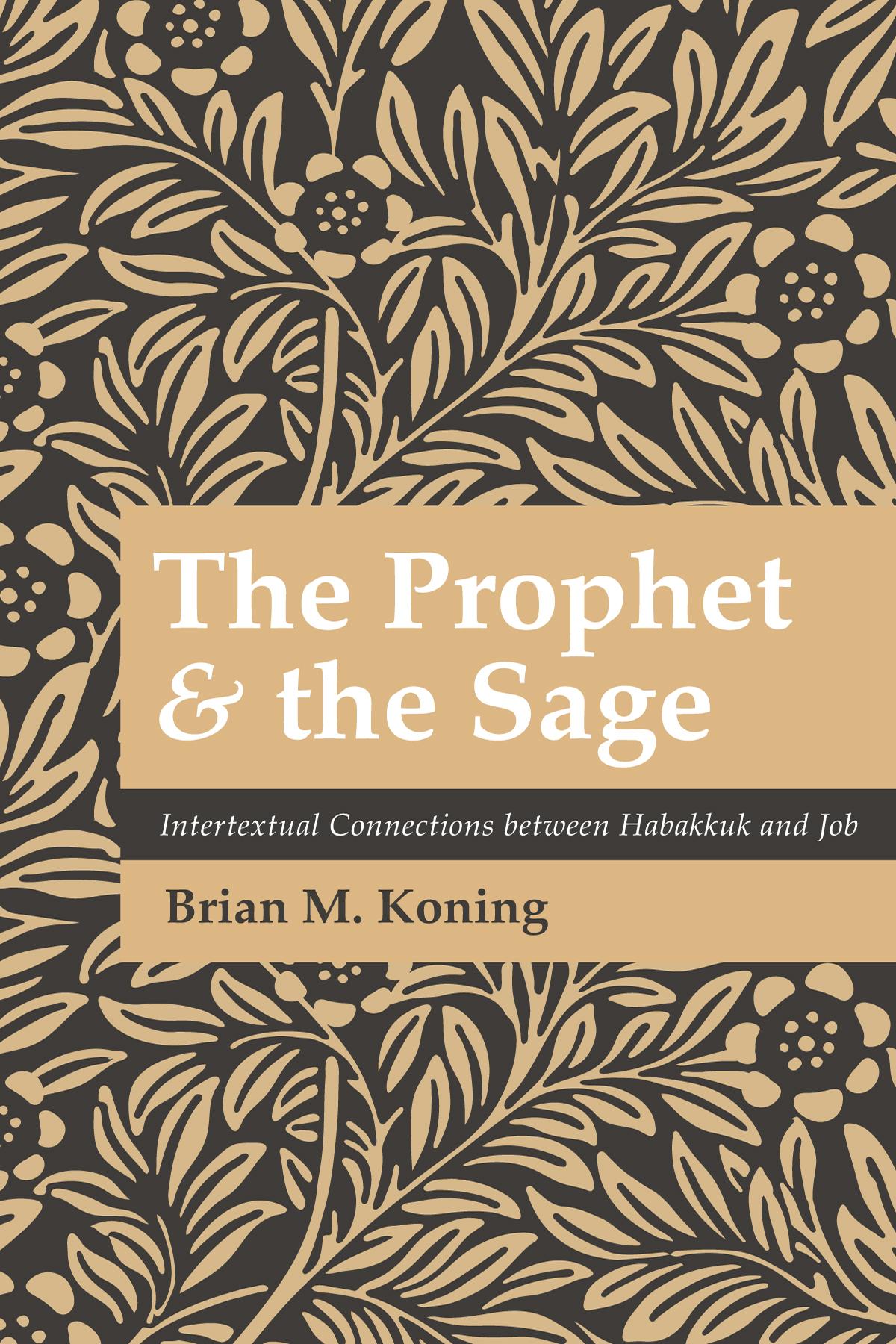
Job and Habakkuk represent the Bible's most focused interlocutors on the concepts of justice and theodicy. Both works center upon men chosen by God who see and suffer evil (Job 1:8, cf. Hab 1:1). Both books record the cries of these men as they wrestled to make sense of the world in which they lived (Job 3, cf. Hab 1:2-4). While they have a passing similarity, what if there is something more fundamental to their connection? What if these books are not merely two unconnected discourses on suffering, but linked in a significant way? By examining the texts themselves, this study explores the possibility that a textual relationship exists between portions of Habakkuk and Job and how the underlying transformation of Job's theodicy shapes Habakkuk's dialogue with God.
Payez facilement par carte, Klarna, Apple Pay ou Google Pay. Pas satisfait ? Vous avez toujours une garantie de remboursement de 14 jours. En savoir plus dans nos conditions. Si vous avez des questions, envoyez-nous un e-mail à hello@memmo.org.
Memmo facilite tes études, où que tu sois dans le monde. On rassemble tes manuels de cours et des outils d'étude intelligents au même endroit : résumés, quiz, podcasts et flashcards. Et il y a Ted, ton compagnon d'étude qui répond à toutes tes questions. Plus de 50 000 étudiants étudient déjà ici – conçu pour t'aider à apprendre plus vite et à moins stresser.
Tu pourrais aussi aimer
Acheter le livre0