
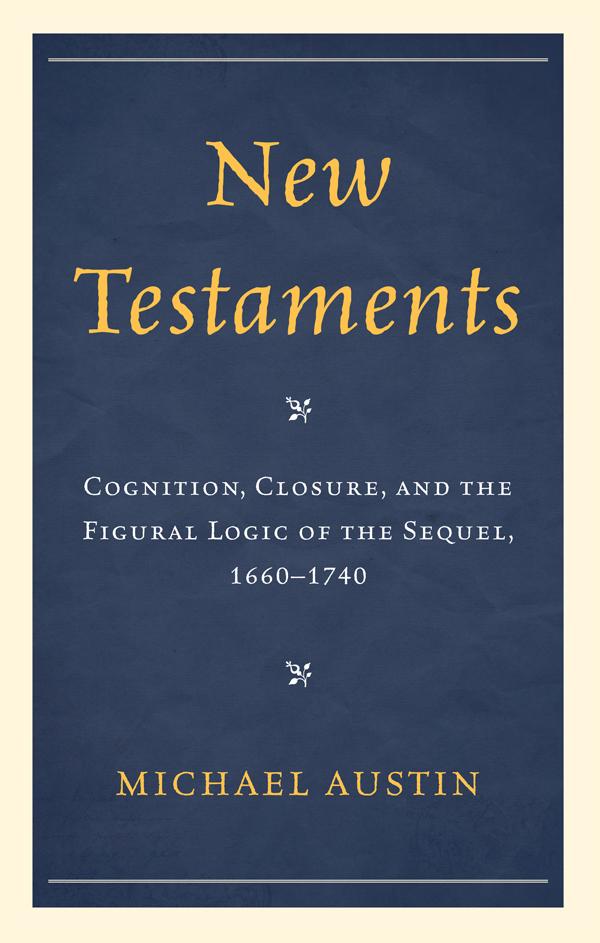
In the seventeenth and eighteenth centuries, popular works of literature attracted—as they attract today—sequels, prequels, franchises, continuations, and parodies. Sequels of all kinds demonstrate the economic realities of the literary marketplace. This represents something fundamental about the way human beings process narrative information. We crave narrative closure, but we also resist its finality, making such closure both inevitable and inadequate in human narratives. Many cultures incorporate this fundamental ambiguity towards closure in the mythic frameworks that fuel their narrative imaginations. New Testaments: Cognition, Closure and the Figural Logic of the Sequel, 1660-1740 examines both the inevitability and the inadequacy of closure in the sequels to four major works of literature written in England between 1660 and 1740: Paradise Lost, The Pilgrim’s Progress, Robinson Crusoe, and Pamela. Each of these works spawned sequels, which—while often different from the original works—connected themselves through rhetorical strategies that can be loosely defined as figural. Such strategies came directly from the culture’s two dominant religious narratives: the Old and New Testaments of the Christian Bible—two vastly dissimilar works seen universally as complementary parts of a unified and coherent narrative.
Pages: 192
Catégorie: Religion & Teologi
e-ISBN: 9781611493658
Poids d'expédition: 1.2 kg
Expédié sous: 1-2 jours
Payez facilement par carte, Klarna, Apple Pay ou Google Pay. Pas satisfait ? Vous avez toujours une garantie de remboursement de 14 jours. En savoir plus dans nos conditions. Si vous avez des questions, envoyez-nous un e-mail à hello@memmo.org.
Memmo facilite tes études, où que tu sois dans le monde. On rassemble tes manuels de cours et des outils d'étude intelligents au même endroit : résumés, quiz, podcasts et flashcards. Et il y a Ted, ton compagnon d'étude qui répond à toutes tes questions. Plus de 50 000 étudiants étudient déjà ici – conçu pour t'aider à apprendre plus vite et à moins stresser.