
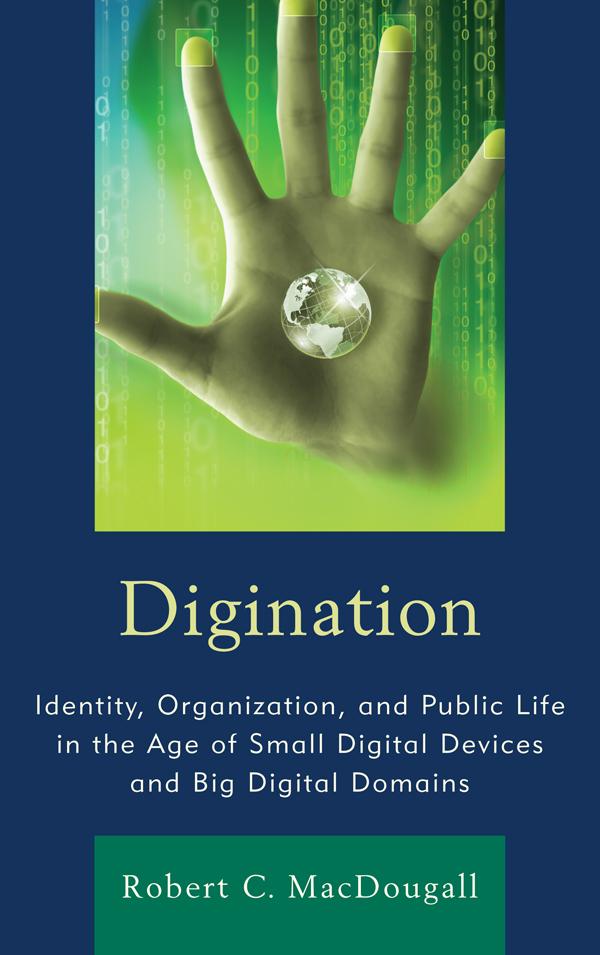
The shift from orality to literacy that began with the invention of the phonetic alphabet, and which went into high-gear with Gutenberg’s printing press more than 500 years ago, helped make the modern world. Some commentators have argued that this shift from orality to literacy marked a much broader, cultural shift of cataclysmic proportions. Today, with everything from e-mail to blogs, iPods and podcasts, through Google, Yahoo, eBay, and with cutting-edge smart phones, we find ourselves developing relationships with these newest communication tools that aren’t simply allowing us to communicate faster, farther and with more ease than ever before. We aren’t just moving around ideas, data, and information at unimaginable speed and scale. Our interminglings and fusions with digital communication technologies are also altering both individual and group consciousness in fundamental ways—how we form and sustain relationships, how we think and perceive, what it means to see and to feel. We are remaking human identity once more, and manufacturing a new kind of culture along the way. The processes bound up in our digination may well be consequential to the trajectory of human evolution.
That time-honored trope: the notion that technology is not the problem, rather, it’s how people use technology that’s the problem is shown to be wanting. Highlighting Marshall McLuhan’s “tetrads” or laws of media as a primary tool of analysis, R.C. MacDougall argues in line with other media ecologists that it’s not so much how we use certain tools that matters, it’s that we use them. More than any other technological form perhaps, communication technologies play particularly powerful and systemic roles in our culture, or any culture for that matter. Late adopters and even abstainers are not exempt from the psychological, social and cultural effects (and side-effects) of modern digital communication technology. While there are certainly varying degrees of immersion—that is to say, while some of us live in the high-rise downtown district, some at the city limits, and still others out in the proverbial “woods"—we all live in Digination today.
That time-honored trope: the notion that technology is not the problem, rather, it’s how people use technology that’s the problem is shown to be wanting. Highlighting Marshall McLuhan’s “tetrads” or laws of media as a primary tool of analysis, R.C. MacDougall argues in line with other media ecologists that it’s not so much how we use certain tools that matters, it’s that we use them. More than any other technological form perhaps, communication technologies play particularly powerful and systemic roles in our culture, or any culture for that matter. Late adopters and even abstainers are not exempt from the psychological, social and cultural effects (and side-effects) of modern digital communication technology. While there are certainly varying degrees of immersion—that is to say, while some of us live in the high-rise downtown district, some at the city limits, and still others out in the proverbial “woods"—we all live in Digination today.
Pages: 304
Catégorie: Film- & Medievetenskap
e-ISBN: 9781611474404
Poids d'expédition: 1.2 kg
Expédié sous: 1-2 jours
Payez facilement par carte, Klarna, Apple Pay ou Google Pay. Pas satisfait ? Vous avez toujours une garantie de remboursement de 14 jours. En savoir plus dans nos conditions. Si vous avez des questions, envoyez-nous un e-mail à hello@memmo.org.
Memmo facilite tes études, où que tu sois dans le monde. On rassemble tes manuels de cours et des outils d'étude intelligents au même endroit : résumés, quiz, podcasts et flashcards. Et il y a Ted, ton compagnon d'étude qui répond à toutes tes questions. Plus de 50 000 étudiants étudient déjà ici – conçu pour t'aider à apprendre plus vite et à moins stresser.