
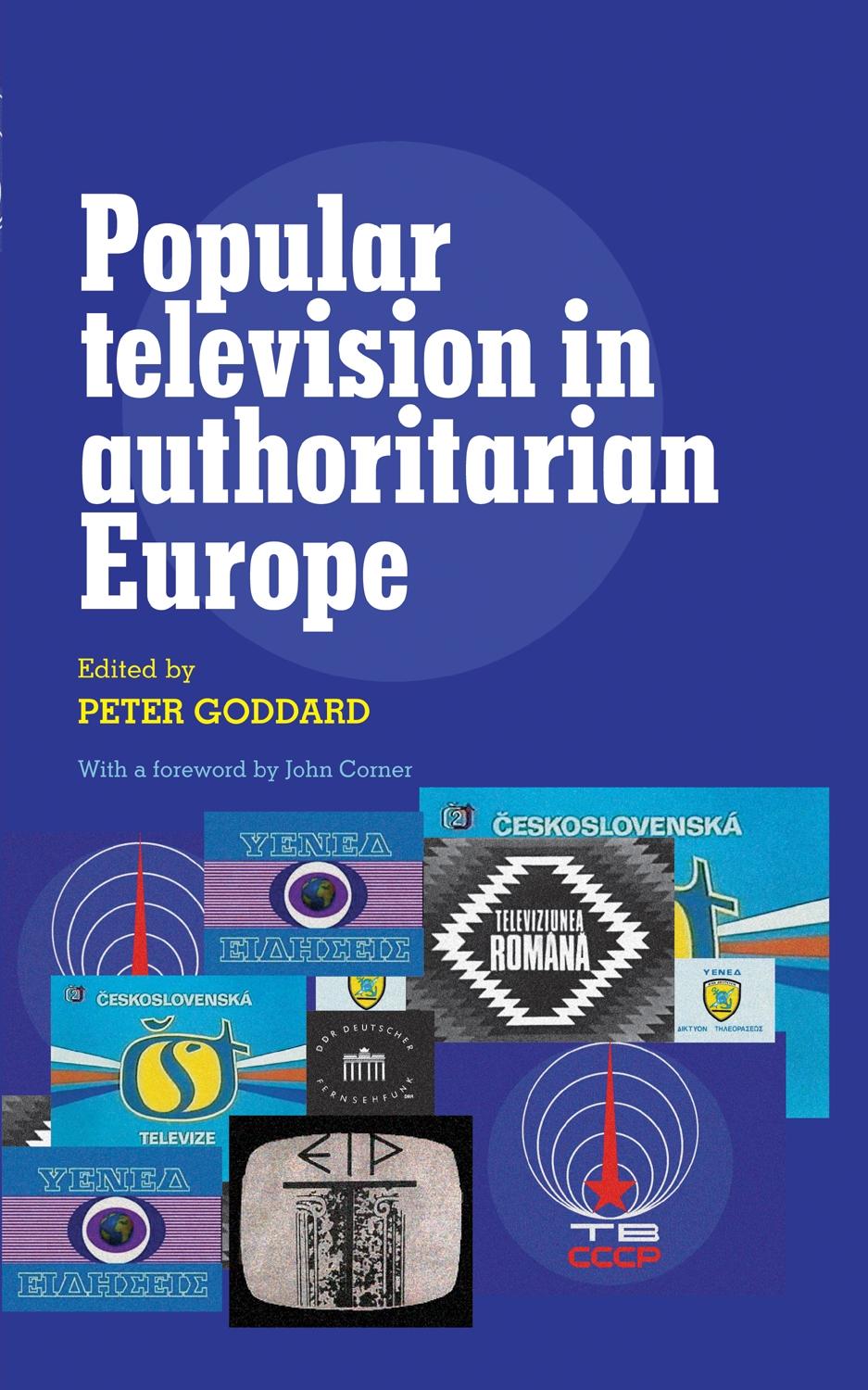
This lively and ground-breaking collection brings together work on forms of popular television within the authoritarian regimes of Europe after World War Two. Ten chapters based on new and original research examine approaches to programming and individual programmes in Spain, Greece, Czechoslovakia, Romania, the USSR and the GDR at a time when they were governed as dictatorships or one-party states. Drawing on surviving archives, scripts and production records, contemporary publications, YouTube clips and interviews with producers and performers, its chapters recover examples of television programming history unknown beyond national borders and often preserved largely in the memories of the audiences who lived with them.
The introduction examines how television can be considered ‘popular’ in circumstances where audience appeal is often secondary to the need for state control. Published in English, Popular television in authoritarian Europe represents a significant intervention in transnational television studies, making these histories available to scholars for the first time, encouraging comparative enquiry and extending the reach – intellectually and geographically – of European television history.
There is a foreword by John Corner and an informative timeline of events in the history of television in the countries covered.
Payez facilement par carte, Klarna, Apple Pay ou Google Pay. Pas satisfait ? Vous avez toujours une garantie de remboursement de 14 jours. En savoir plus dans nos conditions. Si vous avez des questions, envoyez-nous un e-mail à hello@memmo.org.
Memmo facilite tes études, où que tu sois dans le monde. On rassemble tes manuels de cours et des outils d'étude intelligents au même endroit : résumés, quiz, podcasts et flashcards. Et il y a Ted, ton compagnon d'étude qui répond à toutes tes questions. Plus de 50 000 étudiants étudient déjà ici – conçu pour t'aider à apprendre plus vite et à moins stresser.