
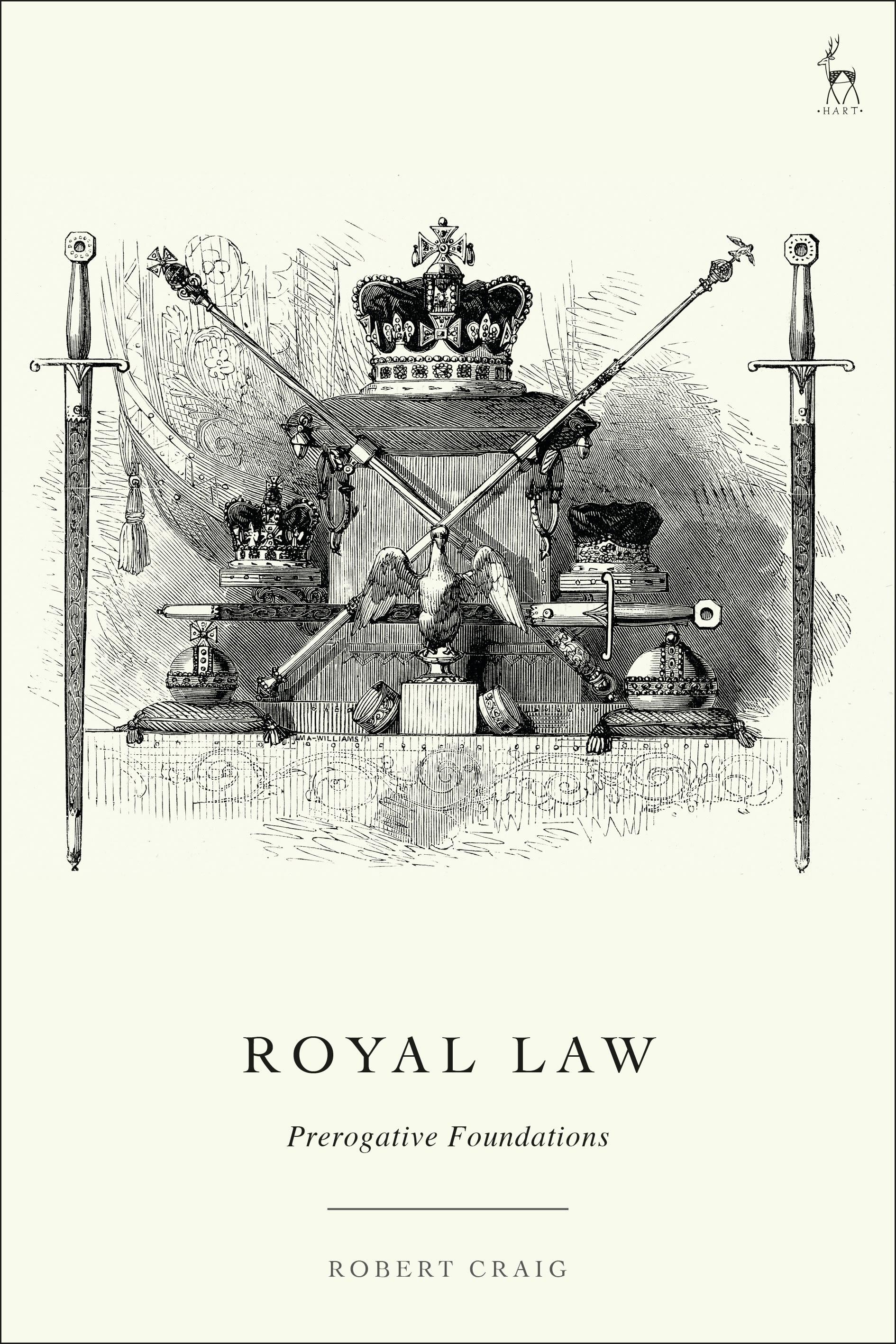
This book argues that prerogative powers encompass all the non-statutory powers of the Crown. Hence the Crown has no 'third source' powers, common law powers or 'Ram doctrine' style freedoms.
Royal Law builds on Dicey's definition of the prerogative, arguing that it comprises all residual non-statutory rights, powers, duties, and immunities historically ascribed to the Crown. However, it contends that Blackstone's alternative definition, that prerogative powers are only those powers exclusive to the Crown, is also correct. The book explains how Dicey and Blackstone can be reconciled.
The prerogative of justice is suggested as the original source of legal authority and legitimacy of common law judicial decisions. Common law is, or was, royal law. Defined as a putative non-statutory, non-prerogative third source of judicial legitimacy, authority or jurisdiction, 'common law' does not exist. There are only two ultimate sources of jurisdictional authority: statute and prerogative.
The book further argues that Wade was mistaken to contend that the Crown has 'common law powers'. It also has no 'third source freedoms', as suggested by Harris, or in the 'Ram Doctrine'. The book therefore reframes the relevant case law as examples of judicial regulation of prerogative powers, crucially including the largely-forgotten prerogative power to administer the realm. Hence the book concludes that legal powers such as a minister's power to enter contracts or make ex gratia payments of public money, are directly or indirectly grounded in prerogative power.
Royal Law builds on Dicey's definition of the prerogative, arguing that it comprises all residual non-statutory rights, powers, duties, and immunities historically ascribed to the Crown. However, it contends that Blackstone's alternative definition, that prerogative powers are only those powers exclusive to the Crown, is also correct. The book explains how Dicey and Blackstone can be reconciled.
The prerogative of justice is suggested as the original source of legal authority and legitimacy of common law judicial decisions. Common law is, or was, royal law. Defined as a putative non-statutory, non-prerogative third source of judicial legitimacy, authority or jurisdiction, 'common law' does not exist. There are only two ultimate sources of jurisdictional authority: statute and prerogative.
The book further argues that Wade was mistaken to contend that the Crown has 'common law powers'. It also has no 'third source freedoms', as suggested by Harris, or in the 'Ram Doctrine'. The book therefore reframes the relevant case law as examples of judicial regulation of prerogative powers, crucially including the largely-forgotten prerogative power to administer the realm. Hence the book concludes that legal powers such as a minister's power to enter contracts or make ex gratia payments of public money, are directly or indirectly grounded in prerogative power.
Pages: 288
Catégorie: Religion & Teologi
e-ISBN: 9781509965960
Poids d'expédition: 1.2 kg
Expédié sous: 1-2 jours
Payez facilement par carte, Klarna, Apple Pay ou Google Pay. Pas satisfait ? Vous avez toujours une garantie de remboursement de 14 jours. En savoir plus dans nos conditions. Si vous avez des questions, envoyez-nous un e-mail à hello@memmo.org.
Memmo facilite tes études, où que tu sois dans le monde. On rassemble tes manuels de cours et des outils d'étude intelligents au même endroit : résumés, quiz, podcasts et flashcards. Et il y a Ted, ton compagnon d'étude qui répond à toutes tes questions. Plus de 50 000 étudiants étudient déjà ici – conçu pour t'aider à apprendre plus vite et à moins stresser.