
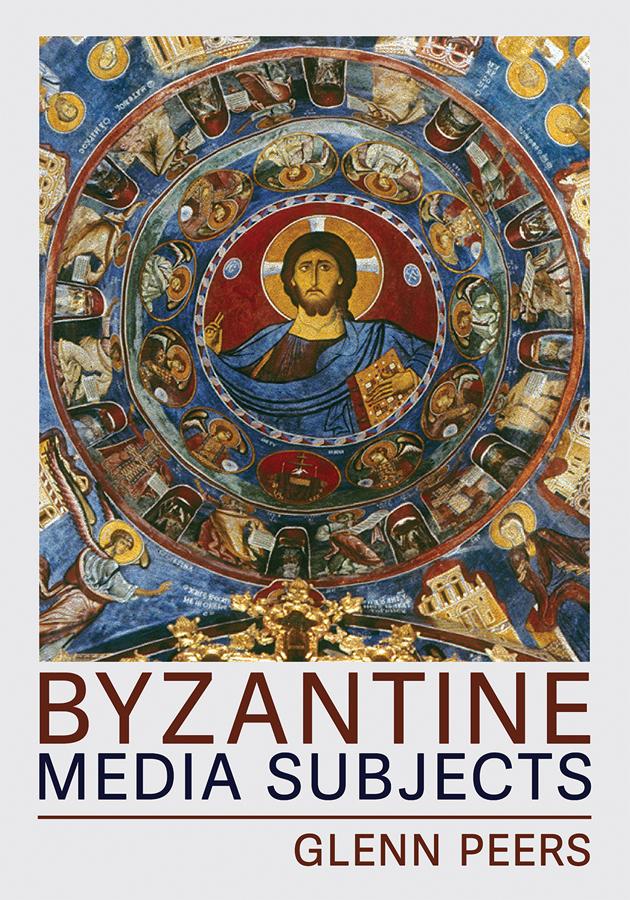
Byzantine Media Subjects invites readers into a world replete with images—icons, frescoes, and mosaics filling places of worship, politics, and community. Glenn Peers asks readers to think themselves into a world where representation reigned and humans followed, and indeed were formed. Interrogating the fundamental role of representation in the making of the Byzantine human, Peers argues that Byzantine culture was (already) posthuman.
The Byzantine experience reveals the extent to which media like icons, manuscripts, music, animals, and mirrors fundamentally determine humans. In the Byzantine world, representation as such was deeply persuasive, even coercive; it had the power to affect human relationships, produce conflict, and form self-perception. Media studies has made its subject the modern world, but this book argues for media having made historical subjects. Here, it is shown that media long ago also made Byzantine humans, defining them, molding them, mediating their relationship to time, to nature, to God, and to themselves.
Payez facilement par carte, Klarna, Apple Pay ou Google Pay. Pas satisfait ? Vous avez toujours une garantie de remboursement de 14 jours. En savoir plus dans nos conditions. Si vous avez des questions, envoyez-nous un e-mail à hello@memmo.org.
Memmo facilite tes études, où que tu sois dans le monde. On rassemble tes manuels de cours et des outils d'étude intelligents au même endroit : résumés, quiz, podcasts et flashcards. Et il y a Ted, ton compagnon d'étude qui répond à toutes tes questions. Plus de 50 000 étudiants étudient déjà ici – conçu pour t'aider à apprendre plus vite et à moins stresser.