
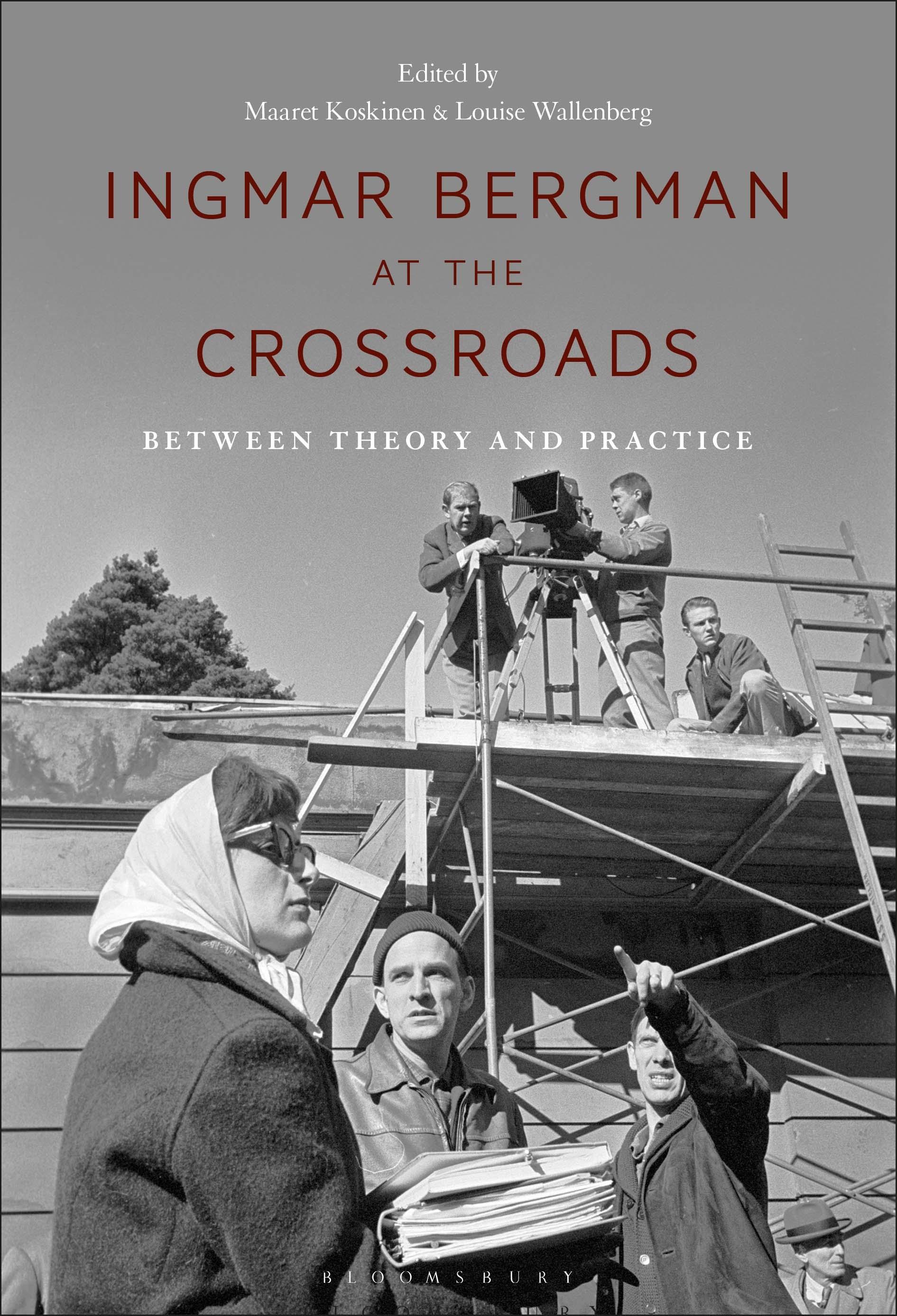
This collection offers new and insightful perspectives on Ingmar Bergman's work as a film and theatre director as well as writer of fiction.
Ingmar Bergman's rich legacy as a film director and writer of classics such as The Seventh Seal, Scenes From a Marriage, and Fanny and Alexander has attracted scholars not only in film studies but also of literature, theater, gender, philosophy, religion, sociology, musicology, and more. Less known, however, is Bergman from the perspective of production studies, including all the choices, practices, and routines involved in what goes on behind the scenes. For instance, what about Bergman's collaborations and conflicts with film producers? What about his work with musicians at the opera, technicians in the television studio, and actors on the film set? What about Bergman and MeToo?
In order to throw light on these issues, art practitioners such as film directors Ang Lee and Margarethe von Trotta, film and opera director Atom Egoyan, and film producer and screenwriter James Schamus are brought together with academics such as philosopher and film scholar Paisley Livingston, musicologist Alexis Luko, and playwright and performance studies scholar Allan Havis to discuss Bergman's work from their unique perspectives. In addition, Ingmar Bergman at the Crossroads provides, for the first time, in-depth interviews with Bergman's longtime collaborators Katinka Faragó and Måns Reuterswärd, who both have first-hand experience of working intimately as producers in film and television with Bergman, covering more than 5 decades. In an open exchange between individual and institutional perspectives, this book bridges the often-rigid boundaries between theoreticians and practitioners, in turn pointing Bergman's studies in new directions.
Ingmar Bergman's rich legacy as a film director and writer of classics such as The Seventh Seal, Scenes From a Marriage, and Fanny and Alexander has attracted scholars not only in film studies but also of literature, theater, gender, philosophy, religion, sociology, musicology, and more. Less known, however, is Bergman from the perspective of production studies, including all the choices, practices, and routines involved in what goes on behind the scenes. For instance, what about Bergman's collaborations and conflicts with film producers? What about his work with musicians at the opera, technicians in the television studio, and actors on the film set? What about Bergman and MeToo?
In order to throw light on these issues, art practitioners such as film directors Ang Lee and Margarethe von Trotta, film and opera director Atom Egoyan, and film producer and screenwriter James Schamus are brought together with academics such as philosopher and film scholar Paisley Livingston, musicologist Alexis Luko, and playwright and performance studies scholar Allan Havis to discuss Bergman's work from their unique perspectives. In addition, Ingmar Bergman at the Crossroads provides, for the first time, in-depth interviews with Bergman's longtime collaborators Katinka Faragó and Måns Reuterswärd, who both have first-hand experience of working intimately as producers in film and television with Bergman, covering more than 5 decades. In an open exchange between individual and institutional perspectives, this book bridges the often-rigid boundaries between theoreticians and practitioners, in turn pointing Bergman's studies in new directions.
Payez facilement par carte, Klarna, Apple Pay ou Google Pay. Pas satisfait ? Vous avez toujours une garantie de remboursement de 14 jours. En savoir plus dans nos conditions. Si vous avez des questions, envoyez-nous un e-mail à hello@memmo.org.
Memmo facilite tes études, où que tu sois dans le monde. On rassemble tes manuels de cours et des outils d'étude intelligents au même endroit : résumés, quiz, podcasts et flashcards. Et il y a Ted, ton compagnon d'étude qui répond à toutes tes questions. Plus de 50 000 étudiants étudient déjà ici – conçu pour t'aider à apprendre plus vite et à moins stresser.