
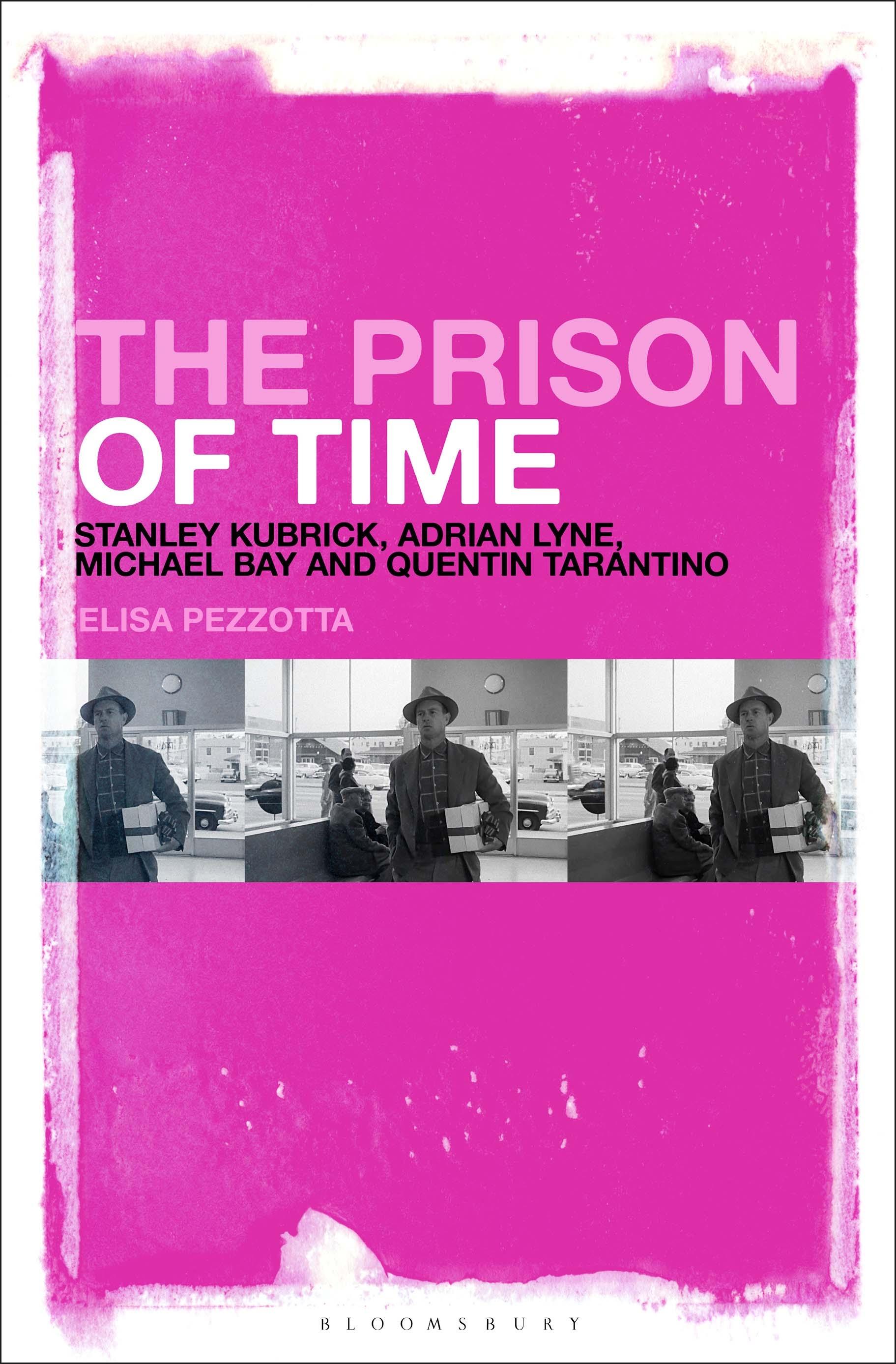
We are imprisoned in circadian rhythms, as well as in our life reviews that follow chronological and causal links. For the majority of us our lives are vectors directed toward aims that we strive to reach and delimited by our birth and death. Nevertheless, we can still experience fleeting moments during which we forget the past and the future, as well as the very flow of time. During these intense emotions, we burst out laughing or crying, or we scream with pleasure, or we are mesmerized by a work of art or just by eyes staring at us.
Similarly, when we watch a film, the screening time has a well defined beginning and end, and screening and diegetic time and their relations, together with narrative and stylistic techniques, determine a time within the time of our life with its own rules and exceptions. Through the close analysis of Stanley Kubrick's, Adrian Lyne's, Michael Bay's and Quentin Tarantino's oeuvres, this book discusses the overall 'dominating' time of their films and the moments during which this 'ruling' time is disrupted and we momentarily forget the run toward the diegetic future – suspense – or the past – curiosity and surprise. It is in these very moments, as well as in our own lives, that the prison of time, through which the film is constructed and that is constructed by the film itself, crumbles displaying our role as spectators, our deepest relations with the film.
Similarly, when we watch a film, the screening time has a well defined beginning and end, and screening and diegetic time and their relations, together with narrative and stylistic techniques, determine a time within the time of our life with its own rules and exceptions. Through the close analysis of Stanley Kubrick's, Adrian Lyne's, Michael Bay's and Quentin Tarantino's oeuvres, this book discusses the overall 'dominating' time of their films and the moments during which this 'ruling' time is disrupted and we momentarily forget the run toward the diegetic future – suspense – or the past – curiosity and surprise. It is in these very moments, as well as in our own lives, that the prison of time, through which the film is constructed and that is constructed by the film itself, crumbles displaying our role as spectators, our deepest relations with the film.
Payez facilement par carte, Klarna, Apple Pay ou Google Pay. Pas satisfait ? Vous avez toujours une garantie de remboursement de 14 jours. En savoir plus dans nos conditions. Si vous avez des questions, envoyez-nous un e-mail à hello@memmo.org.
Memmo facilite tes études, où que tu sois dans le monde. On rassemble tes manuels de cours et des outils d'étude intelligents au même endroit : résumés, quiz, podcasts et flashcards. Et il y a Ted, ton compagnon d'étude qui répond à toutes tes questions. Plus de 50 000 étudiants étudient déjà ici – conçu pour t'aider à apprendre plus vite et à moins stresser.