
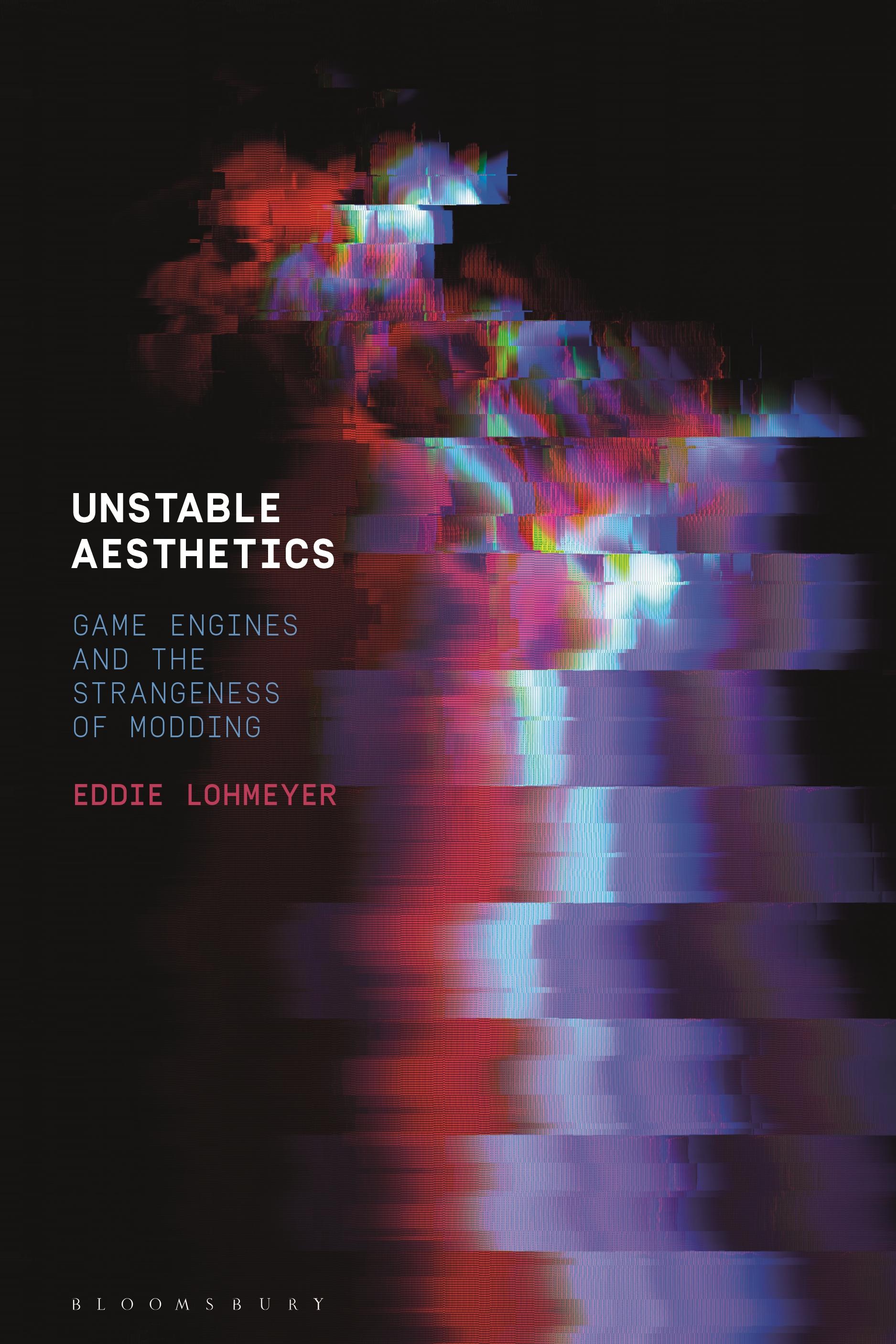
Throughout the 1990s, artists experimented with game engine technologies to disrupt our habitual relationships to video games. They hacked, glitched, and dismantled popular first-person shooters such as Doom (1993) and Quake (1996) to engage players in new kinds of embodied activity. In Unstable Aesthetics: Game Engines and the Strangeness of Art Modding, Eddie Lohmeyer investigates historical episodes of art modding practices-the alteration of a game system's existing code or hardware to generate abstract spaces-situated around a recent archaeology of the game engine: software for rendering two and three-dimensional gameworlds.
The contemporary artists highlighted throughout this book-Cory Arcangel, JODI, Julian Oliver, Krista Hoefle, and Brent Watanabe, among others –- were attracted to the architectures of engines because they allowed them to explore vital relationships among abstraction, technology, and the body. Artists employed a range of modding techniques-hacking the ROM chips on Nintendo cartridges to produce experimental video, deconstructing source code to generate psychedelic glitch patterns, and collaging together surreal gameworlds-to intentionally dissect the engine's operations and unveil illusions of movement within algorithmic spaces. Through key moments in game engine history, Lohmeyer formulates a rich phenomenology of video games by focusing on the liminal spaces of interaction among system and body, or rather the strangeness of art modding.
The contemporary artists highlighted throughout this book-Cory Arcangel, JODI, Julian Oliver, Krista Hoefle, and Brent Watanabe, among others –- were attracted to the architectures of engines because they allowed them to explore vital relationships among abstraction, technology, and the body. Artists employed a range of modding techniques-hacking the ROM chips on Nintendo cartridges to produce experimental video, deconstructing source code to generate psychedelic glitch patterns, and collaging together surreal gameworlds-to intentionally dissect the engine's operations and unveil illusions of movement within algorithmic spaces. Through key moments in game engine history, Lohmeyer formulates a rich phenomenology of video games by focusing on the liminal spaces of interaction among system and body, or rather the strangeness of art modding.
Pages: 216
Catégorie: Film- & Medievetenskap
e-ISBN: 9781501364891
Poids d'expédition: 1.2 kg
Expédié sous: 1-2 jours
Payez facilement par carte, Klarna, Apple Pay ou Google Pay. Pas satisfait ? Vous avez toujours une garantie de remboursement de 14 jours. En savoir plus dans nos conditions. Si vous avez des questions, envoyez-nous un e-mail à hello@memmo.org.
Memmo facilite tes études, où que tu sois dans le monde. On rassemble tes manuels de cours et des outils d'étude intelligents au même endroit : résumés, quiz, podcasts et flashcards. Et il y a Ted, ton compagnon d'étude qui répond à toutes tes questions. Plus de 50 000 étudiants étudient déjà ici – conçu pour t'aider à apprendre plus vite et à moins stresser.