
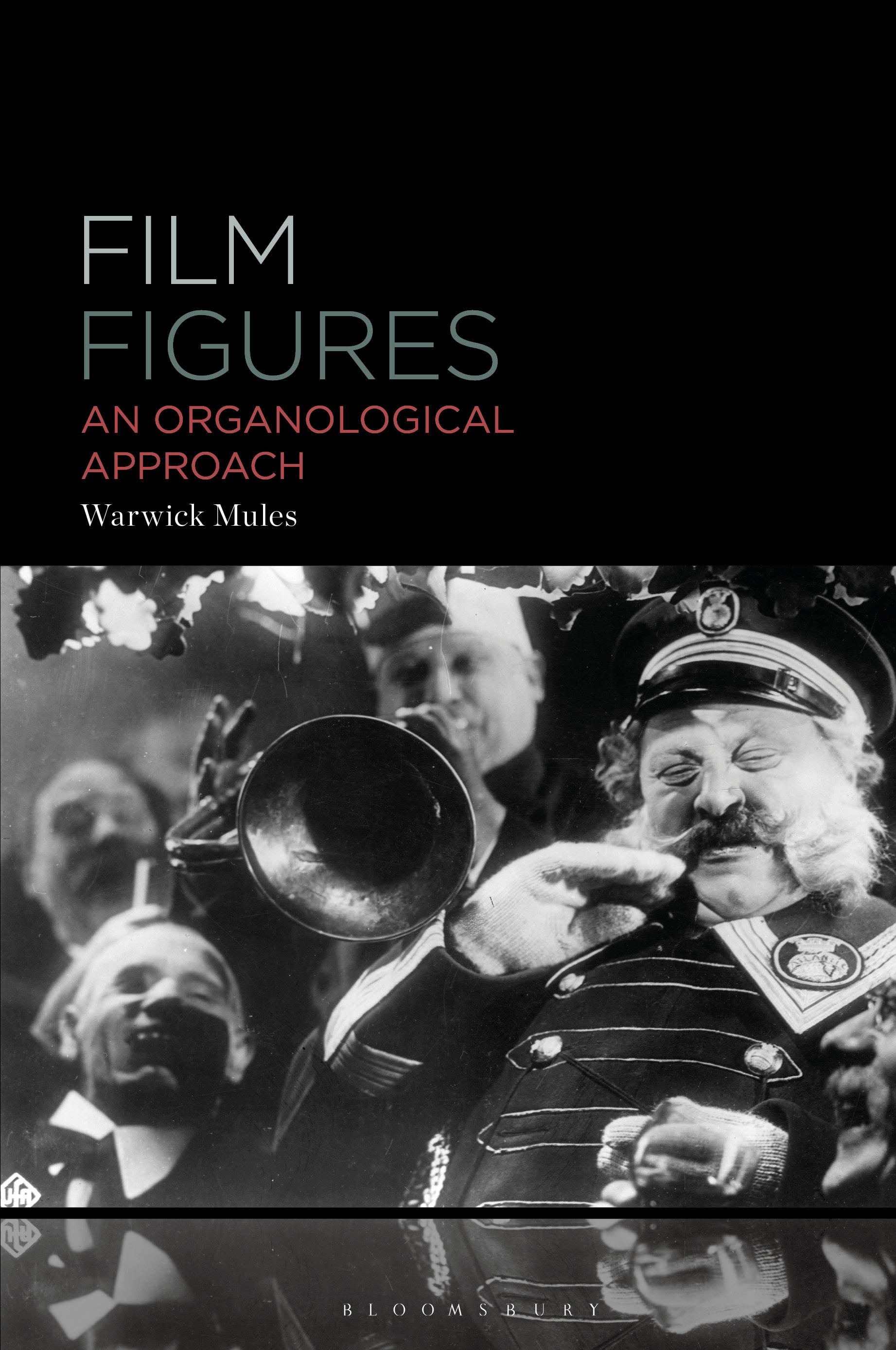
Film Figures develops a figural account of the memory structure of films.
Employing theoretical concepts drawn from a range of sources, including French post-humanist philosophy and German Idealism, the book undertakes an organology of film guided by the work of Bernard Stiegler whose philosophy of mnemotechnesis provides the framework of analysis. Situating films in the quantum field of spacetime relativity as a field of cosmic views, inquiry into film figures begins with disturbances in the experience of films themselves, posing questions of the relation between the dead past and the living future in film story-telling. By breaking the façade of the continuing present through self-questioning, we open films to their figural dimensions in the counter-movement of drive as negentropic resistance. Following the back-movement of drive switches our perception to the figural register in which characters become figures probing blindly for what the film will have been in another time – a time yet to be lived. By following the anterior possibilities of this other time, we open films to the archival future in which a new future comes forth.
This book provides theoretical and analytical concepts as well as strategies for taking a step into this future, guided by questions of the right path to take given the relativity of views in which the film can be experienced. Films analysed include Murnau's The Last Laugh, Capra's It's a Wonderful Life, Hitchcock's Rear Window, Welles's The Lady from Shanghai, Fellini's Intervista, Antonioni's L'Eclisse, Bresson's Une Femme Douce, and Zeller's The Father.
Employing theoretical concepts drawn from a range of sources, including French post-humanist philosophy and German Idealism, the book undertakes an organology of film guided by the work of Bernard Stiegler whose philosophy of mnemotechnesis provides the framework of analysis. Situating films in the quantum field of spacetime relativity as a field of cosmic views, inquiry into film figures begins with disturbances in the experience of films themselves, posing questions of the relation between the dead past and the living future in film story-telling. By breaking the façade of the continuing present through self-questioning, we open films to their figural dimensions in the counter-movement of drive as negentropic resistance. Following the back-movement of drive switches our perception to the figural register in which characters become figures probing blindly for what the film will have been in another time – a time yet to be lived. By following the anterior possibilities of this other time, we open films to the archival future in which a new future comes forth.
This book provides theoretical and analytical concepts as well as strategies for taking a step into this future, guided by questions of the right path to take given the relativity of views in which the film can be experienced. Films analysed include Murnau's The Last Laugh, Capra's It's a Wonderful Life, Hitchcock's Rear Window, Welles's The Lady from Shanghai, Fellini's Intervista, Antonioni's L'Eclisse, Bresson's Une Femme Douce, and Zeller's The Father.
Payez facilement par carte, Klarna, Apple Pay ou Google Pay. Pas satisfait ? Vous avez toujours une garantie de remboursement de 14 jours. En savoir plus dans nos conditions. Si vous avez des questions, envoyez-nous un e-mail à hello@memmo.org.
Memmo facilite tes études, où que tu sois dans le monde. On rassemble tes manuels de cours et des outils d'étude intelligents au même endroit : résumés, quiz, podcasts et flashcards. Et il y a Ted, ton compagnon d'étude qui répond à toutes tes questions. Plus de 50 000 étudiants étudient déjà ici – conçu pour t'aider à apprendre plus vite et à moins stresser.