
Contributions by Julien Achemchame, Julie Assouly, David Church, Suzanne Desrocher-Romero, Hélène Frazik, Pierre Jailloux, Nicolas Labarre, Sophie Lécole-Solnychkine, Janice Loreck, Stella Louis, Kingsley Marshall, Krista Mitchell, Karen D. Thornton, and Arnaud Widendaële
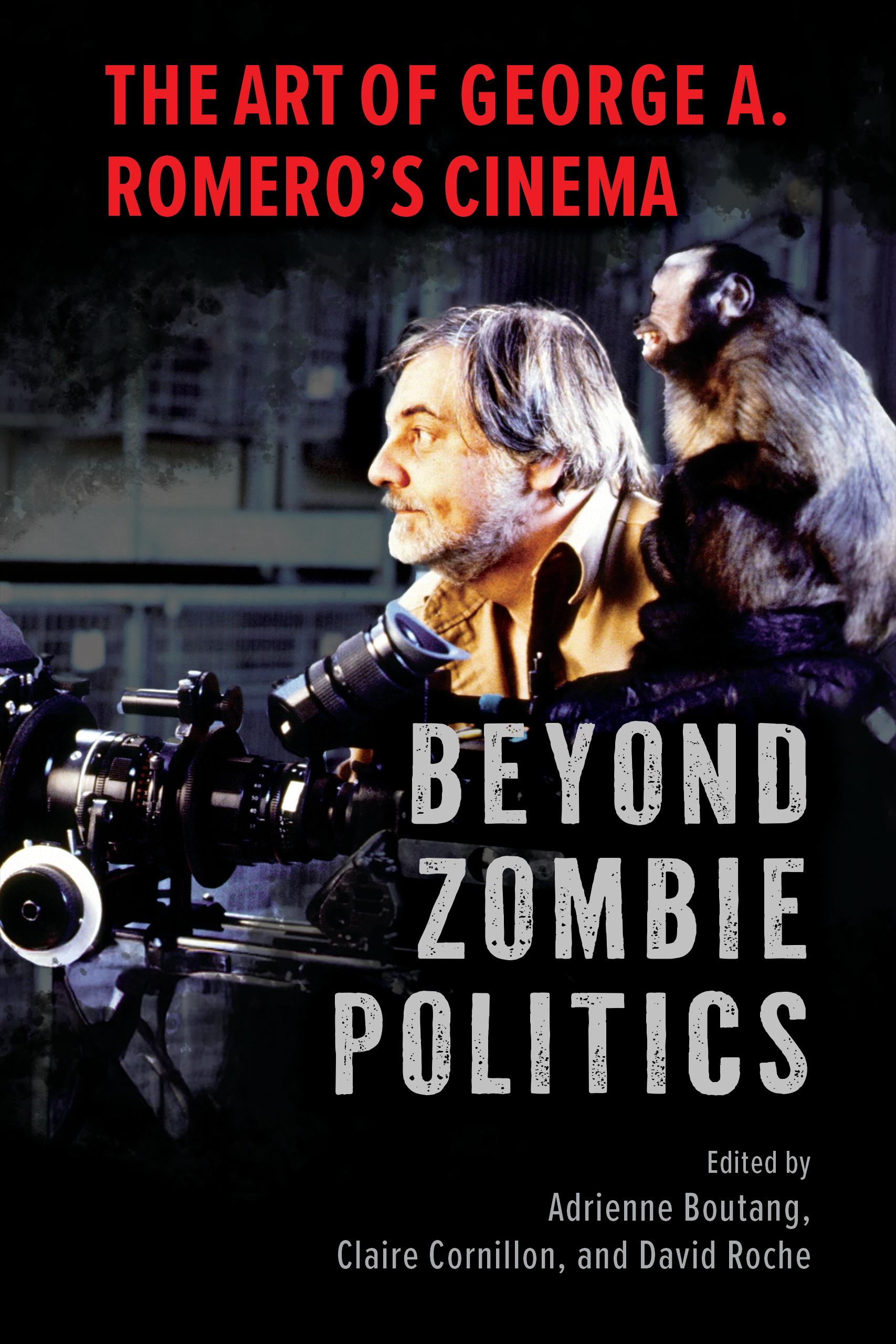
Best known for Night of the Living Dead (1968) and its sequels, George A. Romero (1940–2017) was a writer, editor, director, producer, and influential pioneer of the horror film genre. Beyond Zombie Politics: The Art of George A. Romero’s Cinema gathers a group of contributors to explore Romero’s work beyond the Living Dead films with two parallel but complementary tendencies within twenty-first-century film studies: the renewed interest in horror aesthetics and the emphasis on filmmaking as a collaborative practice.
Opening with an original interview with Suzanne Desrocher-Romero, who shares her views on the late director’s craft and influence, the anthology is divided into three sections that deal with genre, musical motifs, and the (re)creative process. Each chapter adopts fresh methodologies to focus on an area that has received little academic study. Contributors investigate the films’ relation to subgenres like the counterculture movie or the witchcraft film; their debt to slapstick comedy or the recurrence of specific visual motifs like hands; the editing and the handling of space; the use of makeup and music; the films’ relation to comics; and their adaptation into other media. Authored by established and up-and-coming experts of horror and the Fantastic, the chapters in Beyond Zombie Politics aim to offer fresh insights into an important body of work, to contribute to current studies of the evolution of horror aesthetics, and to map the borders between exploitation, independent, and mainstream film.
Best known for Night of the Living Dead (1968) and its sequels, George A. Romero (1940–2017) was a writer, editor, director, producer, and influential pioneer of the horror film genre. Beyond Zombie Politics: The Art of George A. Romero’s Cinema gathers a group of contributors to explore Romero’s work beyond the Living Dead films with two parallel but complementary tendencies within twenty-first-century film studies: the renewed interest in horror aesthetics and the emphasis on filmmaking as a collaborative practice.
Opening with an original interview with Suzanne Desrocher-Romero, who shares her views on the late director’s craft and influence, the anthology is divided into three sections that deal with genre, musical motifs, and the (re)creative process. Each chapter adopts fresh methodologies to focus on an area that has received little academic study. Contributors investigate the films’ relation to subgenres like the counterculture movie or the witchcraft film; their debt to slapstick comedy or the recurrence of specific visual motifs like hands; the editing and the handling of space; the use of makeup and music; the films’ relation to comics; and their adaptation into other media. Authored by established and up-and-coming experts of horror and the Fantastic, the chapters in Beyond Zombie Politics aim to offer fresh insights into an important body of work, to contribute to current studies of the evolution of horror aesthetics, and to map the borders between exploitation, independent, and mainstream film.
Pages: 288
Catégorie: Film- & Medievetenskap
e-ISBN: 9781496860286
Poids d'expédition: 1.2 kg
Expédié sous: 1-2 jours
Payez facilement par carte, Klarna, Apple Pay ou Google Pay. Pas satisfait ? Vous avez toujours une garantie de remboursement de 14 jours. En savoir plus dans nos conditions. Si vous avez des questions, envoyez-nous un e-mail à hello@memmo.org.
Memmo facilite tes études, où que tu sois dans le monde. On rassemble tes manuels de cours et des outils d'étude intelligents au même endroit : résumés, quiz, podcasts et flashcards. Et il y a Ted, ton compagnon d'étude qui répond à toutes tes questions. Plus de 50 000 étudiants étudient déjà ici – conçu pour t'aider à apprendre plus vite et à moins stresser.
Tu pourrais aussi aimer
Acheter le livre0