
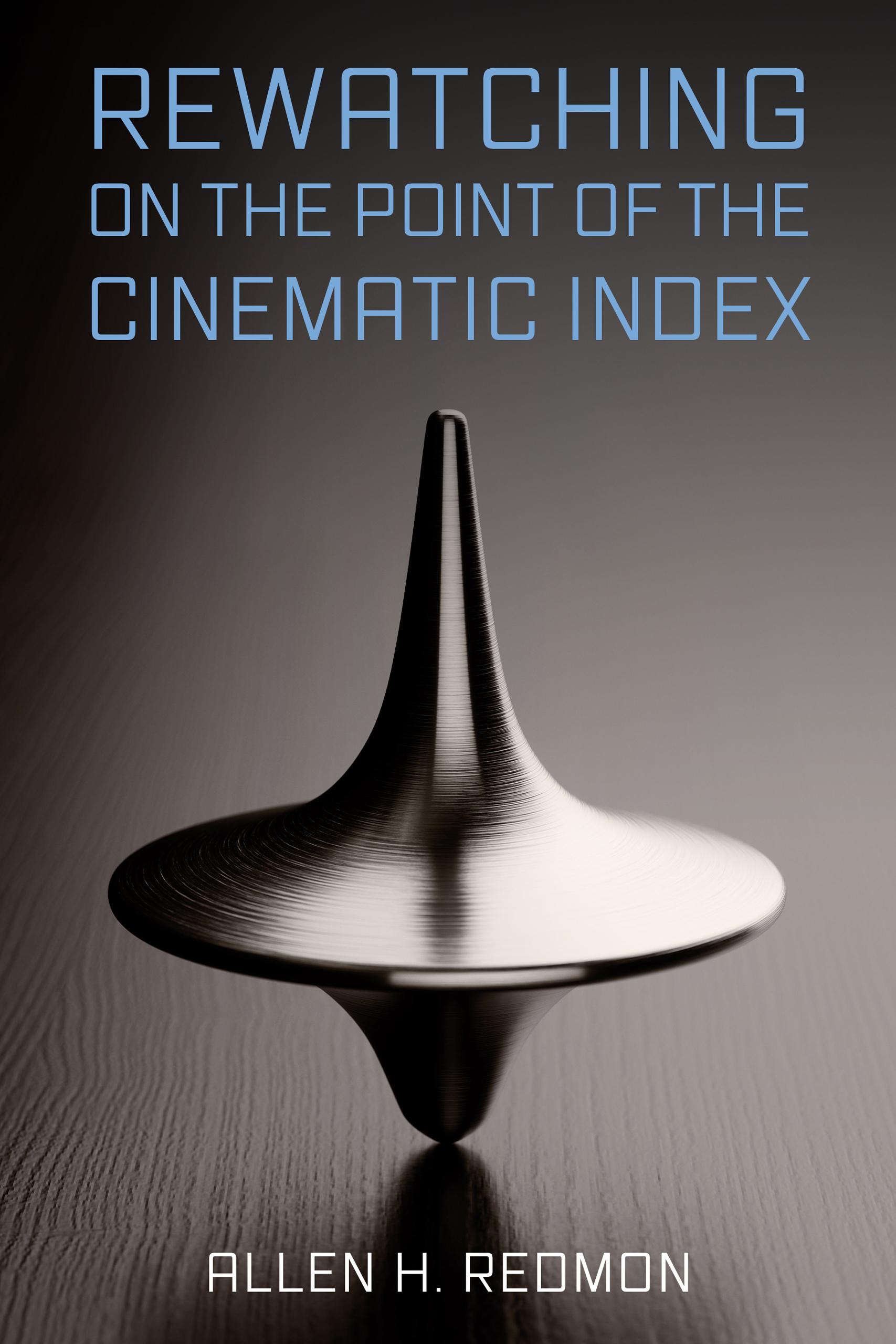
Rewatching on the Point of the Cinematic Index offers a reassessment of the cinematic index as it sits at the intersection of film studies, trauma studies, and adaptation studies. Author Allen H. Redmon argues that far too often scholars imagine the cinematic index to be nothing more than an acknowledgment that the lens-based camera captures and brings to the screen a reality that existed before the camera. When cinema’s indexicality is so narrowly defined, the entire nature of film is called into question the moment film no longer relies on a lens-based camera. The presence of digital technologies seemingly strips cinema of its indexical standing.
This volume pushes for a broader understanding of the cinematic index by returning to the early discussions of the index in film studies and the more recent discussions of the index in other digital arts. Bolstered by the insights these discussions can offer, the volume looks to replace what might be best deemed a diminished concept of the cinematic index with a series of more complex cinematic indices, the impoverished index, the indefinite index, the intertextual index, and the imaginative index. The central argument of this book is that these more complex indices encourage spectators to enter a process of ongoing adaptation of the reality they see on the screen, and that it is on the point of these indices that the most significant instances of rewatching movies occur.
Examining such films as John Lee Hancock’s Saving Mr. Banks (2013); Richard Linklater’s oeuvre; Paul Greengrass’s United 93 (2006); Oliver Stone’s World Trade Center (2006); Stephen Daldry’s Extremely Loud and Incredibly Close (2011); and Christopher Nolan’s Dunkirk (2017), Inception (2010), and Memento (2000), Redmon demonstrates that the cinematic index invites spectators to enter a process of ongoing adaptation.
This volume pushes for a broader understanding of the cinematic index by returning to the early discussions of the index in film studies and the more recent discussions of the index in other digital arts. Bolstered by the insights these discussions can offer, the volume looks to replace what might be best deemed a diminished concept of the cinematic index with a series of more complex cinematic indices, the impoverished index, the indefinite index, the intertextual index, and the imaginative index. The central argument of this book is that these more complex indices encourage spectators to enter a process of ongoing adaptation of the reality they see on the screen, and that it is on the point of these indices that the most significant instances of rewatching movies occur.
Examining such films as John Lee Hancock’s Saving Mr. Banks (2013); Richard Linklater’s oeuvre; Paul Greengrass’s United 93 (2006); Oliver Stone’s World Trade Center (2006); Stephen Daldry’s Extremely Loud and Incredibly Close (2011); and Christopher Nolan’s Dunkirk (2017), Inception (2010), and Memento (2000), Redmon demonstrates that the cinematic index invites spectators to enter a process of ongoing adaptation.
Pages: 216
Catégorie: Film- & Medievetenskap
e-ISBN: 9781496841834
Poids d'expédition: 1.2 kg
Expédié sous: 1-2 jours
Payez facilement par carte, Klarna, Apple Pay ou Google Pay. Pas satisfait ? Vous avez toujours une garantie de remboursement de 14 jours. En savoir plus dans nos conditions. Si vous avez des questions, envoyez-nous un e-mail à hello@memmo.org.
Memmo facilite tes études, où que tu sois dans le monde. On rassemble tes manuels de cours et des outils d'étude intelligents au même endroit : résumés, quiz, podcasts et flashcards. Et il y a Ted, ton compagnon d'étude qui répond à toutes tes questions. Plus de 50 000 étudiants étudient déjà ici – conçu pour t'aider à apprendre plus vite et à moins stresser.
Tu pourrais aussi aimer
Acheter le livre0