
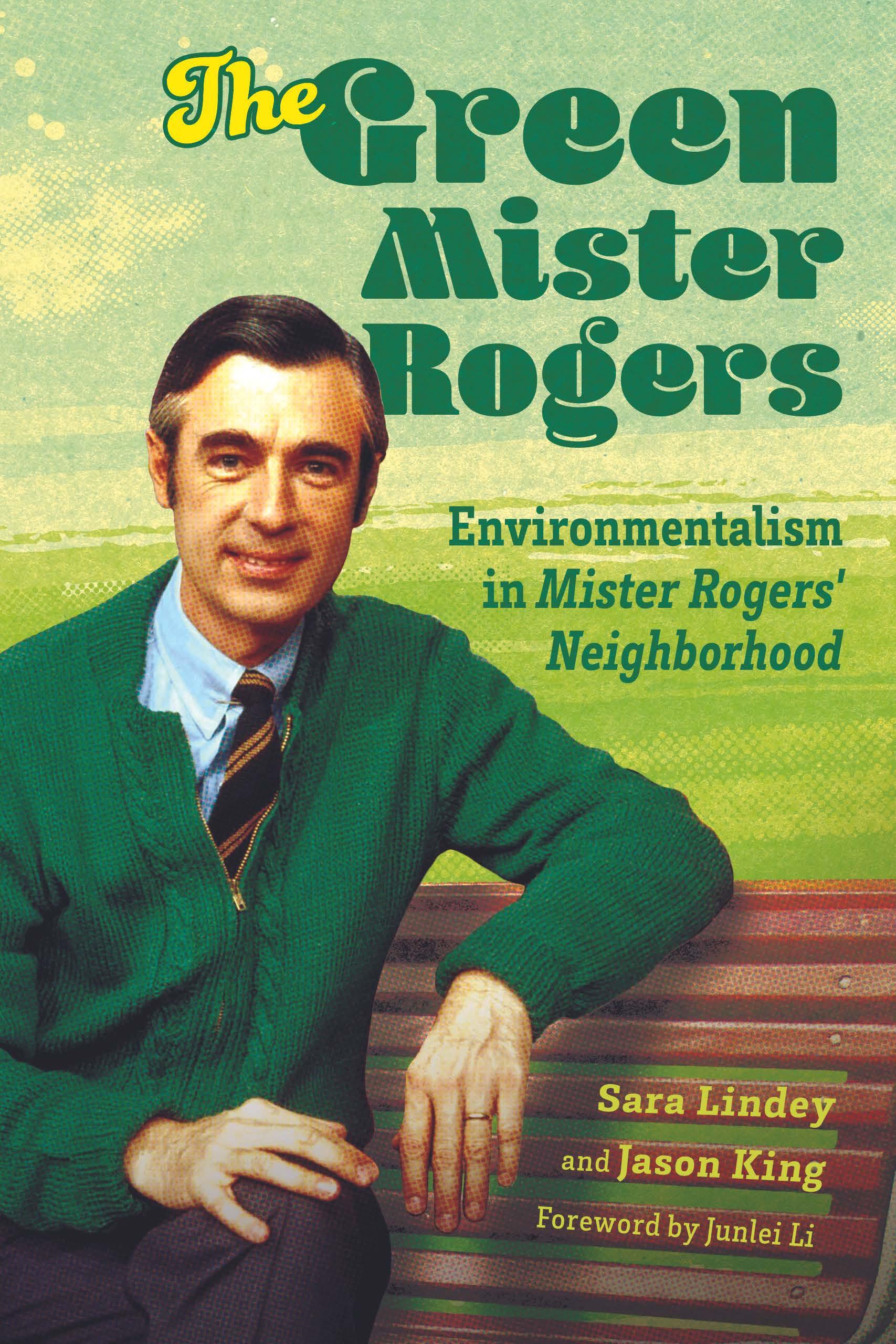
Fred Rogers was an international celebrity. He was a pioneer in children’s television, an advocate for families, and a multimedia artist and performer. He wrote the television scripts and music, performed puppetry, sang, hosted, and directed Mister Rogers’ Neighborhood for more than thirty years. In his almost nine hundred episodes, Rogers pursued dramatic topics: divorce, death, war, sibling rivalry, disabilities, racism. Rogers’ direct, slow, gentle, and empathic approach is supported by his superior emotional strength, his intellectual and creative courage, and his joyful spiritual confidence.
The Green Mister Rogers: Environmentalism in “Mister Rogers’ Neighborhood” centers on the show’s environmentalism, primarily expressed through his themed week “Caring for the Environment,” produced in 1990 in coordination with the twentieth anniversary of Earth Day. Unfolding against a trash catastrophe in the Neighborhood of Make-Believe, Rogers advances an environmentalism for children that secures children in their family homes while extending their perspective to faraway places, from the local recycling center to Florida’s coral reef. Rogers depicts animal wisdom and uses puppets to voice anxiety and hope and shows an interconnected world where each part of creation is valued, and love is circulated in networks of care. Ultimately, Rogers cultivates a practical wisdom that provides a way for children to confront the environmental crisis through action and hope and, in doing so, develop into adults who possess greater care for the environment and a capacious imagination for solving the ecological problems we face.
The Green Mister Rogers: Environmentalism in “Mister Rogers’ Neighborhood” centers on the show’s environmentalism, primarily expressed through his themed week “Caring for the Environment,” produced in 1990 in coordination with the twentieth anniversary of Earth Day. Unfolding against a trash catastrophe in the Neighborhood of Make-Believe, Rogers advances an environmentalism for children that secures children in their family homes while extending their perspective to faraway places, from the local recycling center to Florida’s coral reef. Rogers depicts animal wisdom and uses puppets to voice anxiety and hope and shows an interconnected world where each part of creation is valued, and love is circulated in networks of care. Ultimately, Rogers cultivates a practical wisdom that provides a way for children to confront the environmental crisis through action and hope and, in doing so, develop into adults who possess greater care for the environment and a capacious imagination for solving the ecological problems we face.
Pages: 188
Catégorie: Film- & Medievetenskap
e-ISBN: 9781496838681
Poids d'expédition: 1.2 kg
Expédié sous: 1-2 jours
Payez facilement par carte, Klarna, Apple Pay ou Google Pay. Pas satisfait ? Vous avez toujours une garantie de remboursement de 14 jours. En savoir plus dans nos conditions. Si vous avez des questions, envoyez-nous un e-mail à hello@memmo.org.
Memmo facilite tes études, où que tu sois dans le monde. On rassemble tes manuels de cours et des outils d'étude intelligents au même endroit : résumés, quiz, podcasts et flashcards. Et il y a Ted, ton compagnon d'étude qui répond à toutes tes questions. Plus de 50 000 étudiants étudient déjà ici – conçu pour t'aider à apprendre plus vite et à moins stresser.
Tu pourrais aussi aimer
Acheter le livre0