
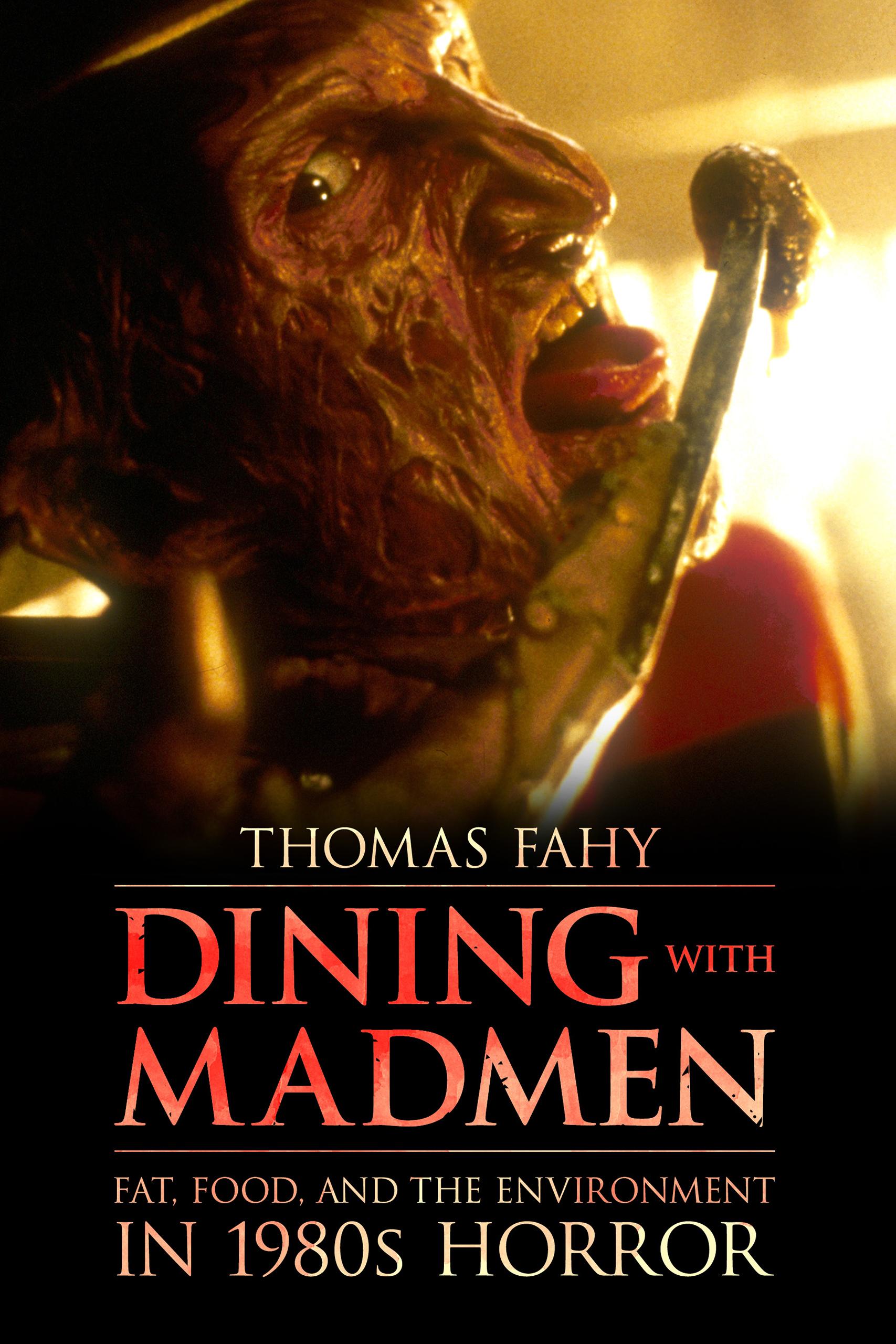
In Dining with Madmen: Fat, Food, and the Environment in 1980s Horror, author Thomas Fahy explores America’s preoccupation with body weight, processed foods, and pollution through the lens of horror. Conspicuous consumption may have communicated success in the eighties, but only if it did not become visible on the body. American society had come to view fatness as a horrifying transformation—it exposed the potential harm of junk food, gave life to the promises of workout and diet culture, and represented the country’s worst consumer impulses, inviting questions about the personal and environmental consequences of excess.
While changing into a vampire or a zombie often represented widespread fears about addiction and overeating, it also played into concerns about pollution. Ozone depletion, acid rain, and toxic waste already demonstrated the irrevocable harm being done to the planet. The horror genre—from A Nightmare on Elm Street to American Psycho—responded by presenting this damage as an urgent problem, and, through the sudden violence of killers, vampires, and zombies, it depicted the consequences of inaction as terrifying.
Whether through Hannibal Lecter’s cannibalism, a vampire’s thirst for blood in The Queen of the Damned and The Lost Boys, or an overwhelming number of zombies in George Romero’s Day of the Dead, 1980s horror uses out-of-control hunger to capture deep-seated concerns about the physical and material consequences of unchecked consumption. Its presentation of American appetites resonated powerfully for audiences preoccupied with body size, food choices, and pollution. And its use of bodily change, alongside the bloodlust of killers and the desolate landscapes of apocalyptic fiction, demanded a recognition of the potentially horrifying impact of consumerism on nature, society, and the self.
While changing into a vampire or a zombie often represented widespread fears about addiction and overeating, it also played into concerns about pollution. Ozone depletion, acid rain, and toxic waste already demonstrated the irrevocable harm being done to the planet. The horror genre—from A Nightmare on Elm Street to American Psycho—responded by presenting this damage as an urgent problem, and, through the sudden violence of killers, vampires, and zombies, it depicted the consequences of inaction as terrifying.
Whether through Hannibal Lecter’s cannibalism, a vampire’s thirst for blood in The Queen of the Damned and The Lost Boys, or an overwhelming number of zombies in George Romero’s Day of the Dead, 1980s horror uses out-of-control hunger to capture deep-seated concerns about the physical and material consequences of unchecked consumption. Its presentation of American appetites resonated powerfully for audiences preoccupied with body size, food choices, and pollution. And its use of bodily change, alongside the bloodlust of killers and the desolate landscapes of apocalyptic fiction, demanded a recognition of the potentially horrifying impact of consumerism on nature, society, and the self.
Pages: 250
Catégorie: Film- & Medievetenskap
e-ISBN: 9781496821553
Poids d'expédition: 1.2 kg
Expédié sous: 1-2 jours
Payez facilement par carte, Klarna, Apple Pay ou Google Pay. Pas satisfait ? Vous avez toujours une garantie de remboursement de 14 jours. En savoir plus dans nos conditions. Si vous avez des questions, envoyez-nous un e-mail à hello@memmo.org.
Memmo facilite tes études, où que tu sois dans le monde. On rassemble tes manuels de cours et des outils d'étude intelligents au même endroit : résumés, quiz, podcasts et flashcards. Et il y a Ted, ton compagnon d'étude qui répond à toutes tes questions. Plus de 50 000 étudiants étudient déjà ici – conçu pour t'aider à apprendre plus vite et à moins stresser.
Tu pourrais aussi aimer
Acheter le livre0