
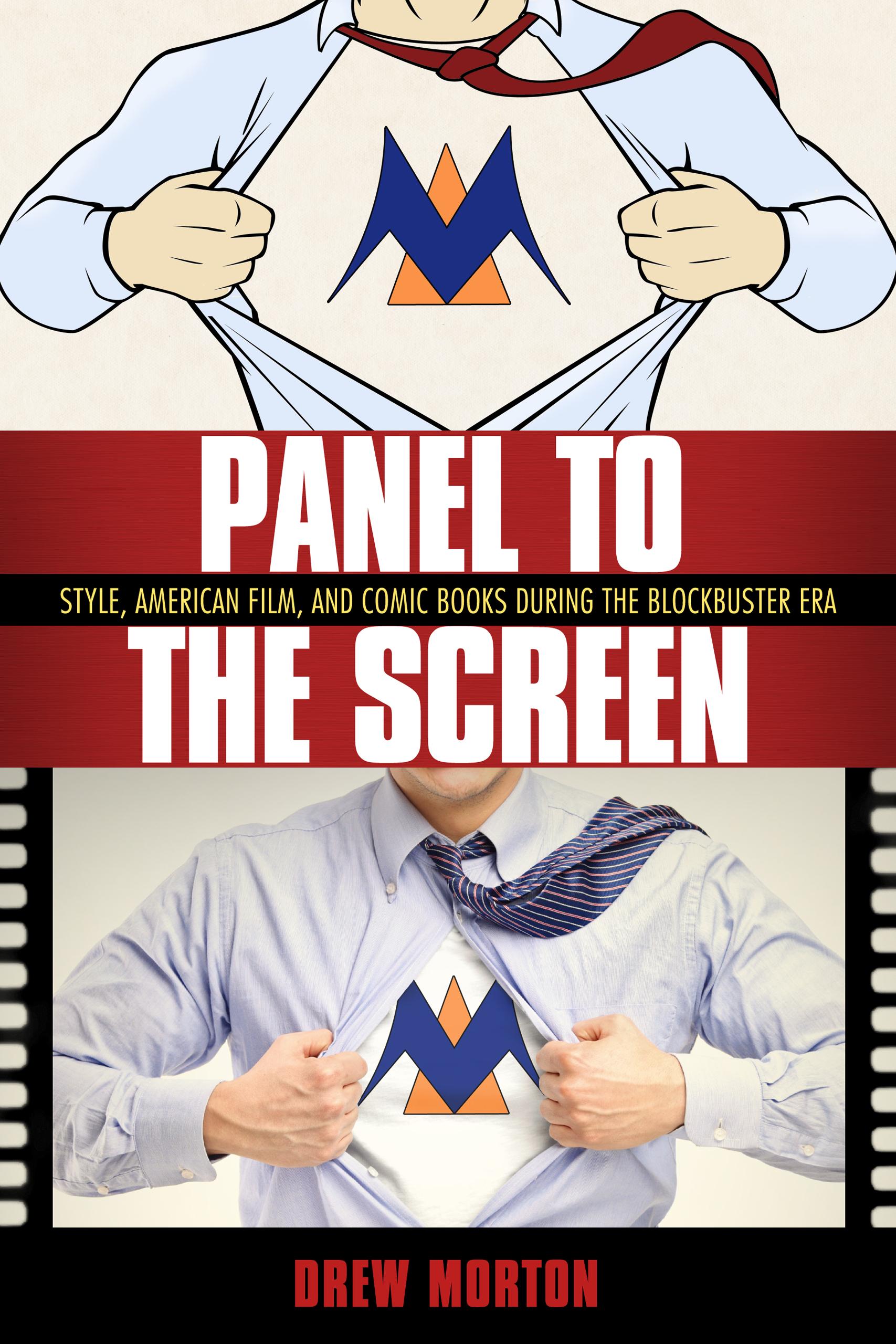
Over the past forty years, American film has entered into a formal interaction with the comic book. Such comic book adaptations as Sin City, 300, and Scott Pilgrim vs. the World have adopted components of their source materials' visual style. The screen has been fractured into panels, the photographic has given way to the graphic, and the steady rhythm of cinematic time has evolved into a far more malleable element. In other words, films have begun to look like comics.
Yet, this interplay also occurs in the other direction. In order to retain cultural relevancy, comic books have begun to look like films. Frank Miller's original Sin City comics are indebted to film noir while Stephen King's The Dark Tower series could be a Sergio Leone spaghetti western translated onto paper. Film and comic books continuously lean on one another to reimagine their formal attributes and stylistic possibilities.
In Panel to the Screen, Drew Morton examines this dialogue in its intersecting and rapidly changing cultural, technological, and industrial contexts. Early on, many questioned the prospect of a "low" art form suited for children translating into “high” art material capable of drawing colossal box office takes. Now the naysayers are as quiet as the queued crowds at Comic-Cons are massive. Morton provides a nuanced account of this phenomenon by using formal analysis of the texts in a real-world context of studio budgets, grosses, and audience reception.
Yet, this interplay also occurs in the other direction. In order to retain cultural relevancy, comic books have begun to look like films. Frank Miller's original Sin City comics are indebted to film noir while Stephen King's The Dark Tower series could be a Sergio Leone spaghetti western translated onto paper. Film and comic books continuously lean on one another to reimagine their formal attributes and stylistic possibilities.
In Panel to the Screen, Drew Morton examines this dialogue in its intersecting and rapidly changing cultural, technological, and industrial contexts. Early on, many questioned the prospect of a "low" art form suited for children translating into “high” art material capable of drawing colossal box office takes. Now the naysayers are as quiet as the queued crowds at Comic-Cons are massive. Morton provides a nuanced account of this phenomenon by using formal analysis of the texts in a real-world context of studio budgets, grosses, and audience reception.
Pages: 208
Catégorie: Film- & Medievetenskap
e-ISBN: 9781496809797
Poids d'expédition: 1.2 kg
Expédié sous: 1-2 jours
Payez facilement par carte, Klarna, Apple Pay ou Google Pay. Pas satisfait ? Vous avez toujours une garantie de remboursement de 14 jours. En savoir plus dans nos conditions. Si vous avez des questions, envoyez-nous un e-mail à hello@memmo.org.
Memmo facilite tes études, où que tu sois dans le monde. On rassemble tes manuels de cours et des outils d'étude intelligents au même endroit : résumés, quiz, podcasts et flashcards. Et il y a Ted, ton compagnon d'étude qui répond à toutes tes questions. Plus de 50 000 étudiants étudient déjà ici – conçu pour t'aider à apprendre plus vite et à moins stresser.
Tu pourrais aussi aimer
Acheter le livre0