
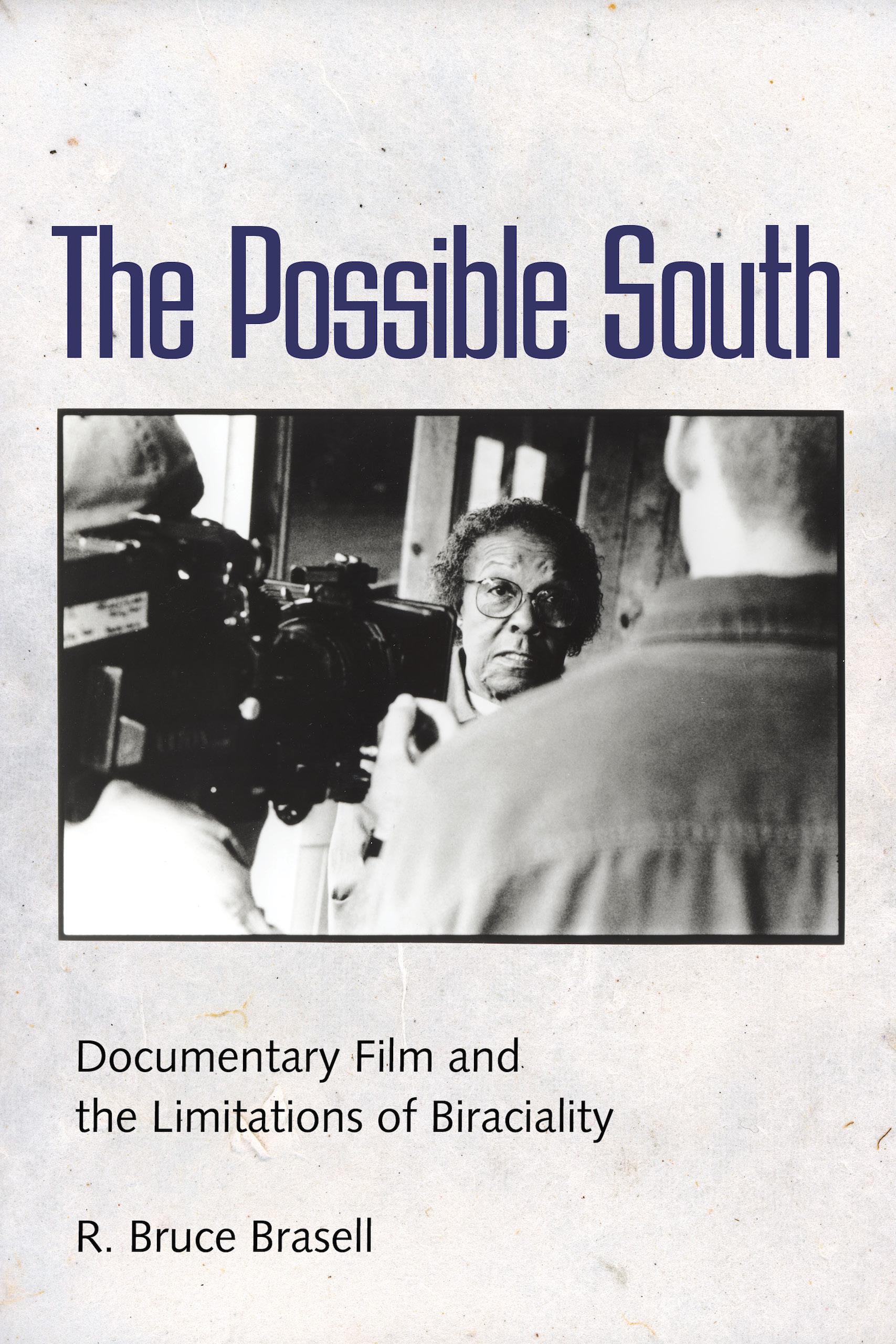
Using cultural theory, author R. Bruce Brasell investigates issues surrounding the discursive presentation of the American South as biracial and explores its manifestation in documentary films, including such works as Tell about the South, bro•ken/ground, and Family Name. After considering the emergence of the region’s biraciality through a consideration of the concepts of racial citizenry and racial performativity, Brasell examines two problems associated with this framework. First, the framework assumes racial purity, and, second, it assumes that two races exist. In other words, biraciality enacts two denials, first, the existence of miscegenation in the region and, second, the existence of other races and ethnicities.
Brasell considers bodily miscegenation, discussing the racial closet and the southeastern expatriate road film. Then he examines cultural miscegenation through the lens of racial poaching and 1970s southeastern documentaries that use redemptive ethnography. In the subsequent chapters, using specific documentary films, he considers the racial in-betweenness of Spanish-speaking ethnicities (Mosquitoes and High Water, Living in America, Nuestra Communidad), probes issues related to the process of racial negotiation experienced by Asian Americans as they seek a racial position beyond the black and white binary (Mississippi Triangle), and engages the problem of racial legitimacy confronted by federally nonrecognized Native groups as they attempt the same feat (Real Indian).
Brasell considers bodily miscegenation, discussing the racial closet and the southeastern expatriate road film. Then he examines cultural miscegenation through the lens of racial poaching and 1970s southeastern documentaries that use redemptive ethnography. In the subsequent chapters, using specific documentary films, he considers the racial in-betweenness of Spanish-speaking ethnicities (Mosquitoes and High Water, Living in America, Nuestra Communidad), probes issues related to the process of racial negotiation experienced by Asian Americans as they seek a racial position beyond the black and white binary (Mississippi Triangle), and engages the problem of racial legitimacy confronted by federally nonrecognized Native groups as they attempt the same feat (Real Indian).
Payez facilement par carte, Klarna, Apple Pay ou Google Pay. Pas satisfait ? Vous avez toujours une garantie de remboursement de 14 jours. En savoir plus dans nos conditions. Si vous avez des questions, envoyez-nous un e-mail à hello@memmo.org.
Memmo facilite tes études, où que tu sois dans le monde. On rassemble tes manuels de cours et des outils d'étude intelligents au même endroit : résumés, quiz, podcasts et flashcards. Et il y a Ted, ton compagnon d'étude qui répond à toutes tes questions. Plus de 50 000 étudiants étudient déjà ici – conçu pour t'aider à apprendre plus vite et à moins stresser.
Tu pourrais aussi aimer
Acheter le livre0