
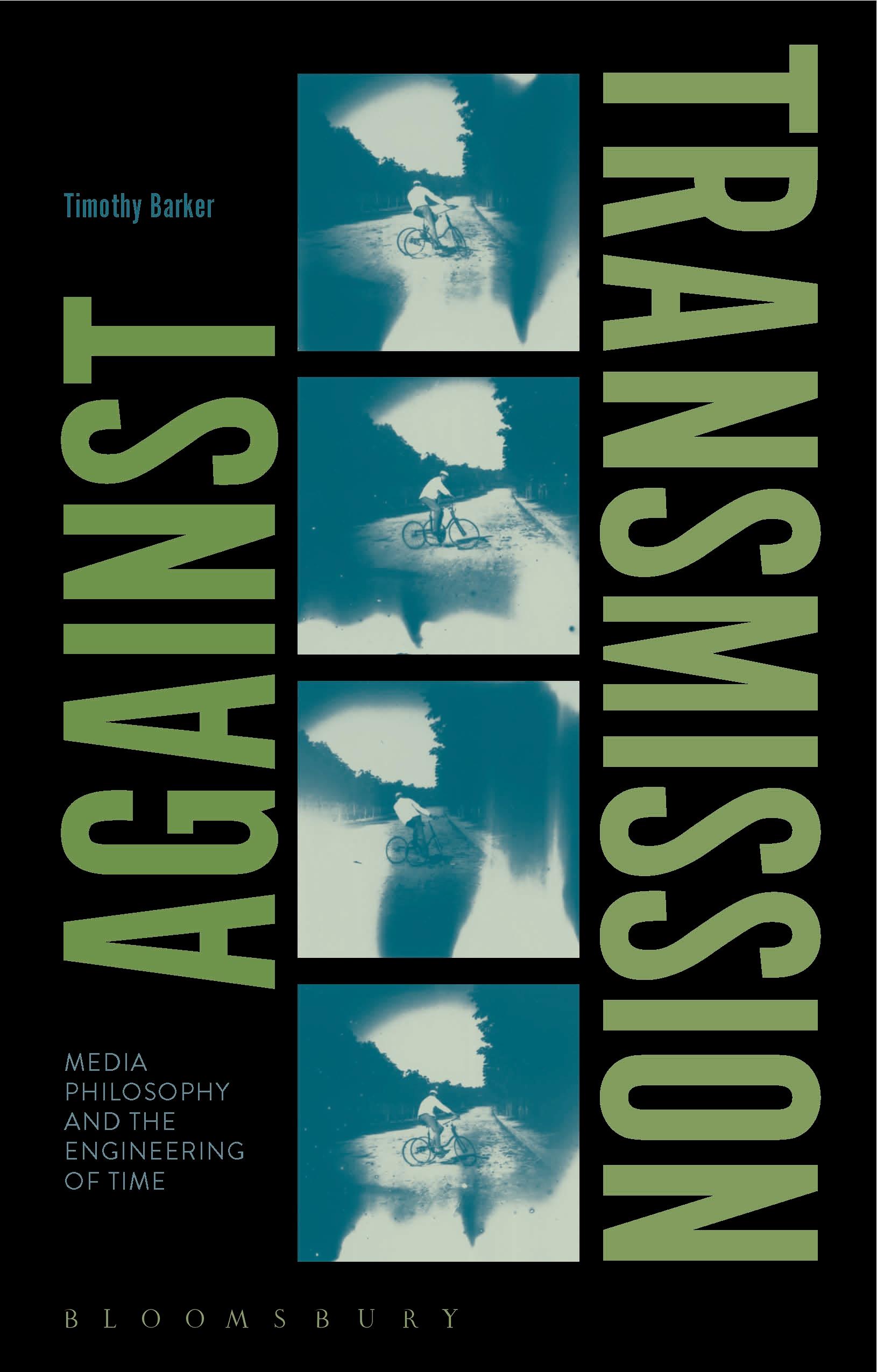
In Against Transmission Barker rethinks the history of audio-visual media as a history of analytical instruments. Rather than viewing media history as the commonly told story of synthetic media (media that make a new whole from connecting separate parts), by focusing on the analytical function of mediation Against Transmission is able to focus on the way that media that have historically been used to count, measure and analyse experience still continue to provide the condition for contemporary life. By studying the engineering of transmission, transduction and storage through the prism of process philosophy, the book interrogates how the understanding of media-as-machine may offer new ways to describe a particular phenomenological relationship to the world, asking: what can the hardware of machines that segment information into very small elements tell us about experiences of time, memory and history?
This book investigates the technical architecture of media such as television, computers, cameras, and cinematography. It achieves this through in-depth archive research into the history of the development of media technology, including innovative readings of key concepts from philosophers of media such as Harold A. Innis, Marshall McLuhan, Friedrich Kittler, Siegfried Zielinski and Wolfgang Ernst.
Teaming philosophical inquiry with thorough technical and historical analysis, in a broad range of international case studies, from early experimental cinema and television to contemporary media art and innovative hardware developments, Barker shows how the technical discoveries made in these contexts have engineered the experiences of time in contemporary media culture.
This book investigates the technical architecture of media such as television, computers, cameras, and cinematography. It achieves this through in-depth archive research into the history of the development of media technology, including innovative readings of key concepts from philosophers of media such as Harold A. Innis, Marshall McLuhan, Friedrich Kittler, Siegfried Zielinski and Wolfgang Ernst.
Teaming philosophical inquiry with thorough technical and historical analysis, in a broad range of international case studies, from early experimental cinema and television to contemporary media art and innovative hardware developments, Barker shows how the technical discoveries made in these contexts have engineered the experiences of time in contemporary media culture.
Pages: 240
Catégorie: Film- & Medievetenskap
e-ISBN: 9781474293112
Poids d'expédition: 1.2 kg
Expédié sous: 1-2 jours
Payez facilement par carte, Klarna, Apple Pay ou Google Pay. Pas satisfait ? Vous avez toujours une garantie de remboursement de 14 jours. En savoir plus dans nos conditions. Si vous avez des questions, envoyez-nous un e-mail à hello@memmo.org.
Memmo facilite tes études, où que tu sois dans le monde. On rassemble tes manuels de cours et des outils d'étude intelligents au même endroit : résumés, quiz, podcasts et flashcards. Et il y a Ted, ton compagnon d'étude qui répond à toutes tes questions. Plus de 50 000 étudiants étudient déjà ici – conçu pour t'aider à apprendre plus vite et à moins stresser.