
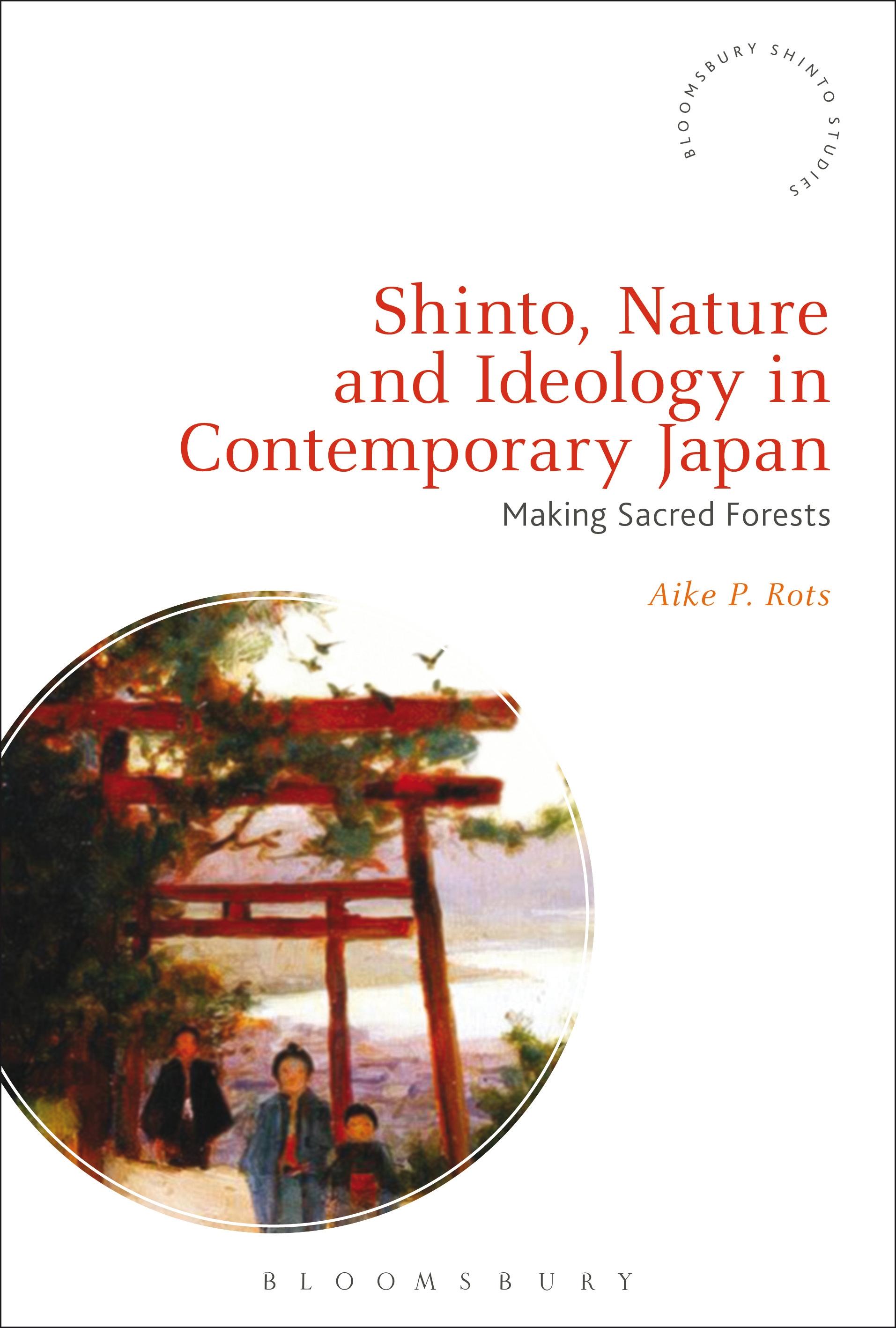
Shinto, Nature and Ideology in Contemporary Japan is the first systematic study of Shinto's environmental turn. The book traces the development in recent decades of the idea of Shinto as an 'ancient nature religion,' and a resource for overcoming environmental problems. The volume shows how these ideas gradually achieved popularity among scientists, priests, Shinto-related new religious movements and, eventually, the conservative shrine establishment.
Aike P. Rots argues that central to this development is the notion of chinju no mori: the sacred groves surrounding many Shinto shrines. Although initially used to refer to remaining areas of primary or secondary forest, today the term has come to be extended to any sort of shrine land, signifying not only historical and ecological continuity but also abstract values such as community spirit, patriotism and traditional culture.
The book shows how Shinto's environmental turn has also provided legitimacy internationally: influenced by the global discourse on religion and ecology, in recent years the Shinto establishment has actively engaged with international organizations devoted to the conservation of sacred sites. Shinto sacred forests thus carry significance locally as well as nationally and internationally, and figure prominently in attempts to reposition Shinto in the centre of public space.
Aike P. Rots argues that central to this development is the notion of chinju no mori: the sacred groves surrounding many Shinto shrines. Although initially used to refer to remaining areas of primary or secondary forest, today the term has come to be extended to any sort of shrine land, signifying not only historical and ecological continuity but also abstract values such as community spirit, patriotism and traditional culture.
The book shows how Shinto's environmental turn has also provided legitimacy internationally: influenced by the global discourse on religion and ecology, in recent years the Shinto establishment has actively engaged with international organizations devoted to the conservation of sacred sites. Shinto sacred forests thus carry significance locally as well as nationally and internationally, and figure prominently in attempts to reposition Shinto in the centre of public space.
Payez facilement par carte, Klarna, Apple Pay ou Google Pay. Pas satisfait ? Vous avez toujours une garantie de remboursement de 14 jours. En savoir plus dans nos conditions. Si vous avez des questions, envoyez-nous un e-mail à hello@memmo.org.
Memmo facilite tes études, où que tu sois dans le monde. On rassemble tes manuels de cours et des outils d'étude intelligents au même endroit : résumés, quiz, podcasts et flashcards. Et il y a Ted, ton compagnon d'étude qui répond à toutes tes questions. Plus de 50 000 étudiants étudient déjà ici – conçu pour t'aider à apprendre plus vite et à moins stresser.