
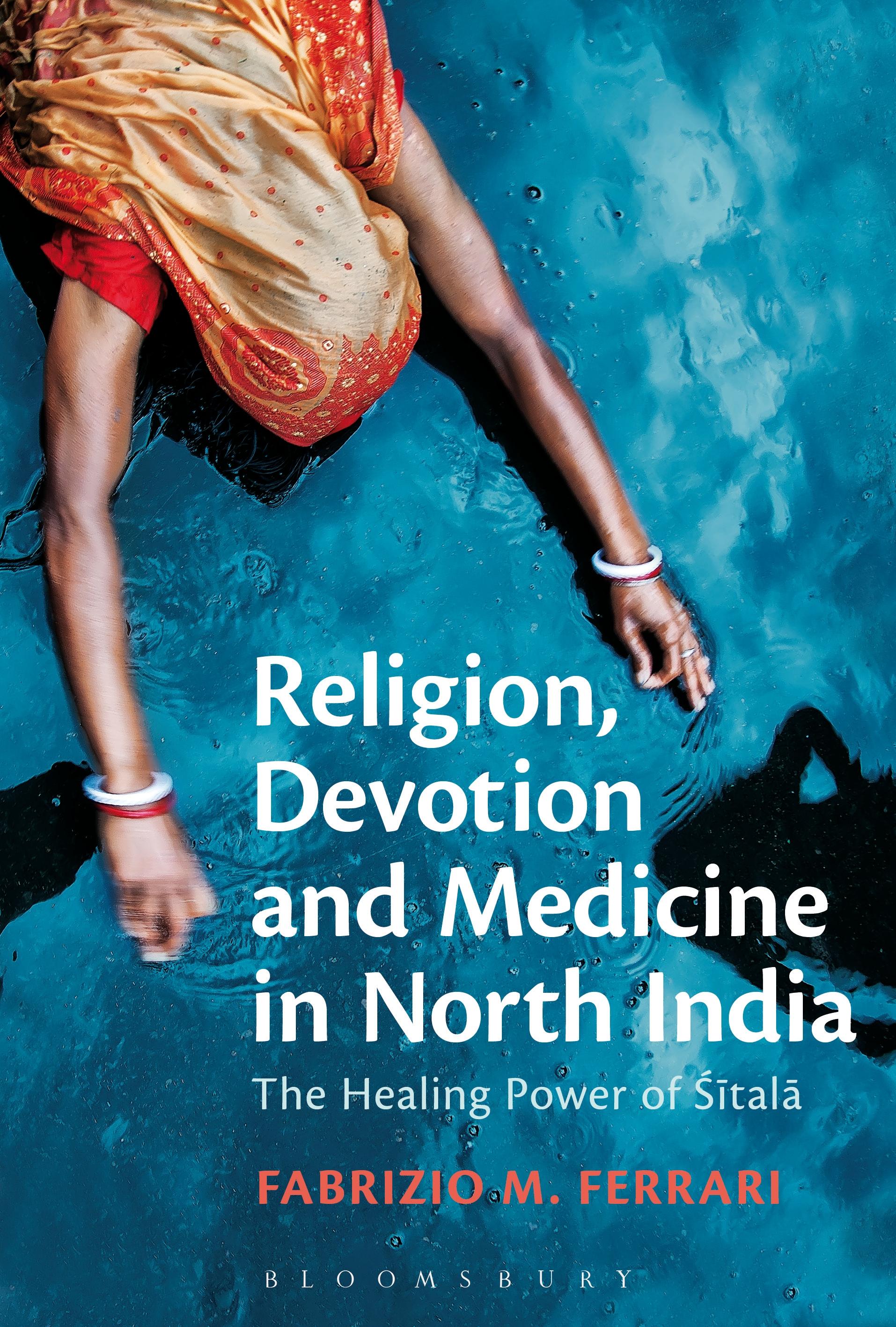
This volume examines notions of health and illness in North Indian devotional culture, with particular attention paid to the worship of the goddess Sitala, the Cold Lady. Consistently portrayed in colonial and postcolonial literature as the ambiguous 'smallpox goddess', Sitala is here discussed as a protector of children and women, a portrayal that emerges from textual sources as well as material culture.
The eradication of smallpox did not pose a threat to Sitala and her worship. She continues to be an extremely popular goddess. Religion, Devotion and Medicine in North India critically examines the rise and affirmation of the 'smallpox myth' in India and beyond, and explains how Indian narratives, ritual texts and devotional songs have celebrated Sitala as a loving mother who protects her children from the effects, and the fear, of poxes, fevers and infantile disorders but also all sorts of new threats (such as global pandemics, addictions and environmental catastrophes). The book explores a wide range of ritual and devotional practices, including scheduled festivals, songs, vows, pageants, austerities, possession, animal sacrifices and various forms of offering.
Built on extensive fieldwork and a close textual analysis of sources in Sanskrit and vernacular languages (Hindi, Bhojpuri and Bengali) as well as on a rich bibliography on the struggle against smallpox in colonial and post-colonial India, the book reflects on the ambiguous nature of Sitala as a phenomenon largely dependent on the enduring fascination with the exotic, and the horrific, that has pervaded public renditions of Indian culture in indigenous fiction, colonial reports, medical literature and now global culture.
To aid study, the volume includes images, web links, appendixes and a filmography.
The eradication of smallpox did not pose a threat to Sitala and her worship. She continues to be an extremely popular goddess. Religion, Devotion and Medicine in North India critically examines the rise and affirmation of the 'smallpox myth' in India and beyond, and explains how Indian narratives, ritual texts and devotional songs have celebrated Sitala as a loving mother who protects her children from the effects, and the fear, of poxes, fevers and infantile disorders but also all sorts of new threats (such as global pandemics, addictions and environmental catastrophes). The book explores a wide range of ritual and devotional practices, including scheduled festivals, songs, vows, pageants, austerities, possession, animal sacrifices and various forms of offering.
Built on extensive fieldwork and a close textual analysis of sources in Sanskrit and vernacular languages (Hindi, Bhojpuri and Bengali) as well as on a rich bibliography on the struggle against smallpox in colonial and post-colonial India, the book reflects on the ambiguous nature of Sitala as a phenomenon largely dependent on the enduring fascination with the exotic, and the horrific, that has pervaded public renditions of Indian culture in indigenous fiction, colonial reports, medical literature and now global culture.
To aid study, the volume includes images, web links, appendixes and a filmography.
Pages: 256
Catégorie: Religion & Teologi
e-ISBN: 9781472598721
Poids d'expédition: 1.2 kg
Expédié sous: 1-2 jours
Payez facilement par carte, Klarna, Apple Pay ou Google Pay. Pas satisfait ? Vous avez toujours une garantie de remboursement de 14 jours. En savoir plus dans nos conditions. Si vous avez des questions, envoyez-nous un e-mail à hello@memmo.org.
Memmo facilite tes études, où que tu sois dans le monde. On rassemble tes manuels de cours et des outils d'étude intelligents au même endroit : résumés, quiz, podcasts et flashcards. Et il y a Ted, ton compagnon d'étude qui répond à toutes tes questions. Plus de 50 000 étudiants étudient déjà ici – conçu pour t'aider à apprendre plus vite et à moins stresser.