
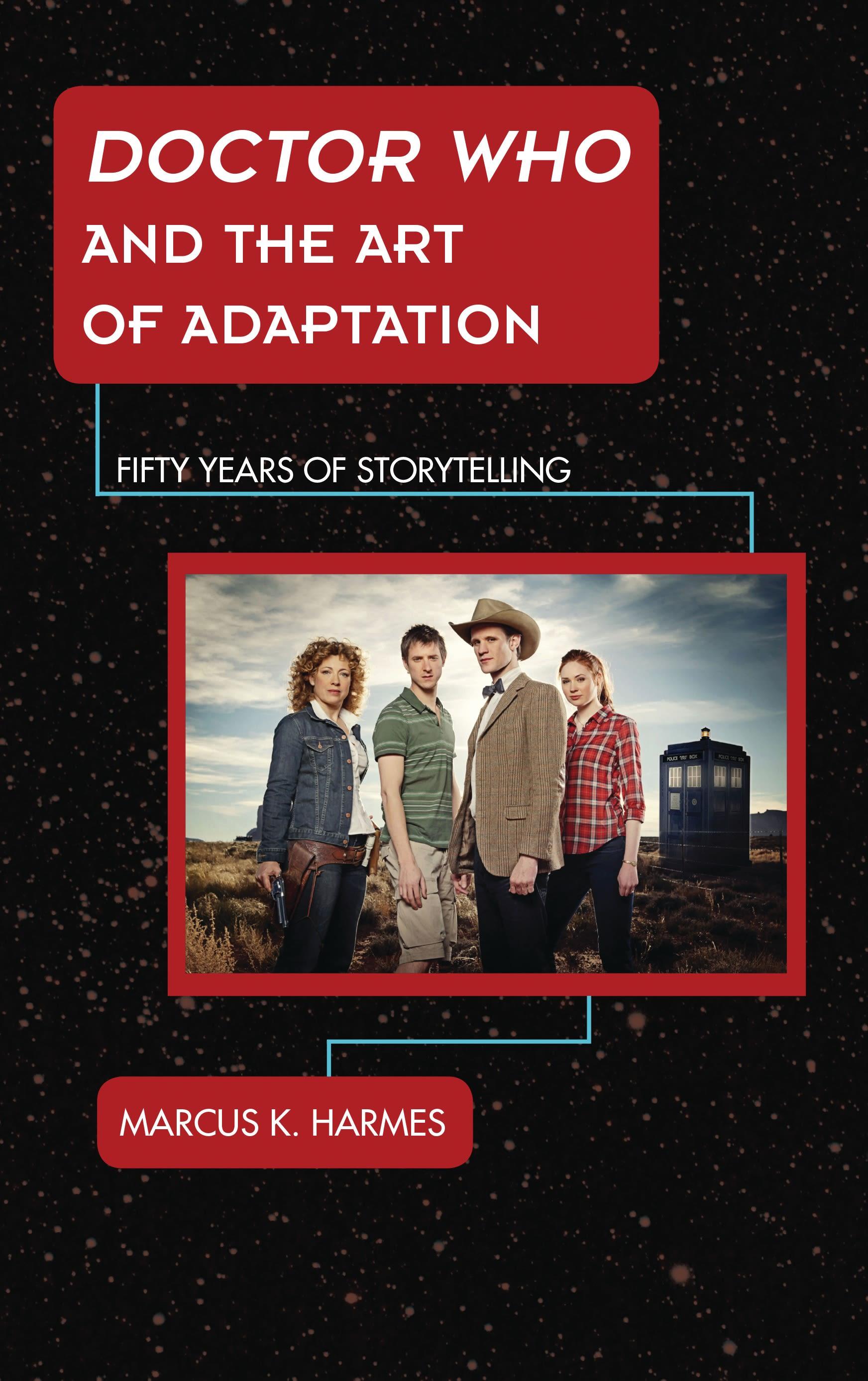
Although it started as a British television show with a small but devoted fan base, Doctor Who has grown in popularity and now appeals to audiences around the world. In the fifty-year history of the program, Doctor Who’s producers and scriptwriters have drawn on a dizzying array of literary sources and inspirations. Elements from Homer, classic literature, gothic horror, swashbucklers, Jacobean revenge tragedies, Orwellian dystopias, Westerns, and the novels of Agatha Christie and Evelyn Waugh have all been woven into the fabric of the series. One famous storyline from the mid-1970s was rooted in the Victoriana of authors like H. Rider Haggard and Arthur Conan Doyle, and another was a virtual remake of Anthony Hope’s The Prisoner of Zenda—with robots!
In Doctor Who and the Art of Adaptation: Fifty Years of Storytelling, Marcus Harmes looks at the show’s frequent exploration of other sources to create memorable episodes. Harmes observes that adaptation in Doctor Who is not just a matter of transferring literary works to the screen, but of bringing a diversity of texts into dialogue with the established mythology of the series as well as with longstanding science fiction tropes. In this process, original stories are not just resituated, but transformed into new works. Harmes considers what this approach reveals about adaptation, television production, the art of storytelling, and the long-term success and cultural resonance enjoyed by Doctor Who.
Doctor Who and the Art of Adaptation will be of interest to students of literature and television alike, and to scholars interested in adaptation studies. It will also appeal to fans of the series interested in tracing the deep cultural roots of television’s longest-running and most literate science-fiction adventure.
In Doctor Who and the Art of Adaptation: Fifty Years of Storytelling, Marcus Harmes looks at the show’s frequent exploration of other sources to create memorable episodes. Harmes observes that adaptation in Doctor Who is not just a matter of transferring literary works to the screen, but of bringing a diversity of texts into dialogue with the established mythology of the series as well as with longstanding science fiction tropes. In this process, original stories are not just resituated, but transformed into new works. Harmes considers what this approach reveals about adaptation, television production, the art of storytelling, and the long-term success and cultural resonance enjoyed by Doctor Who.
Doctor Who and the Art of Adaptation will be of interest to students of literature and television alike, and to scholars interested in adaptation studies. It will also appeal to fans of the series interested in tracing the deep cultural roots of television’s longest-running and most literate science-fiction adventure.
Payez facilement par carte, Klarna, Apple Pay ou Google Pay. Pas satisfait ? Vous avez toujours une garantie de remboursement de 14 jours. En savoir plus dans nos conditions. Si vous avez des questions, envoyez-nous un e-mail à hello@memmo.org.
Memmo facilite tes études, où que tu sois dans le monde. On rassemble tes manuels de cours et des outils d'étude intelligents au même endroit : résumés, quiz, podcasts et flashcards. Et il y a Ted, ton compagnon d'étude qui répond à toutes tes questions. Plus de 50 000 étudiants étudient déjà ici – conçu pour t'aider à apprendre plus vite et à moins stresser.