
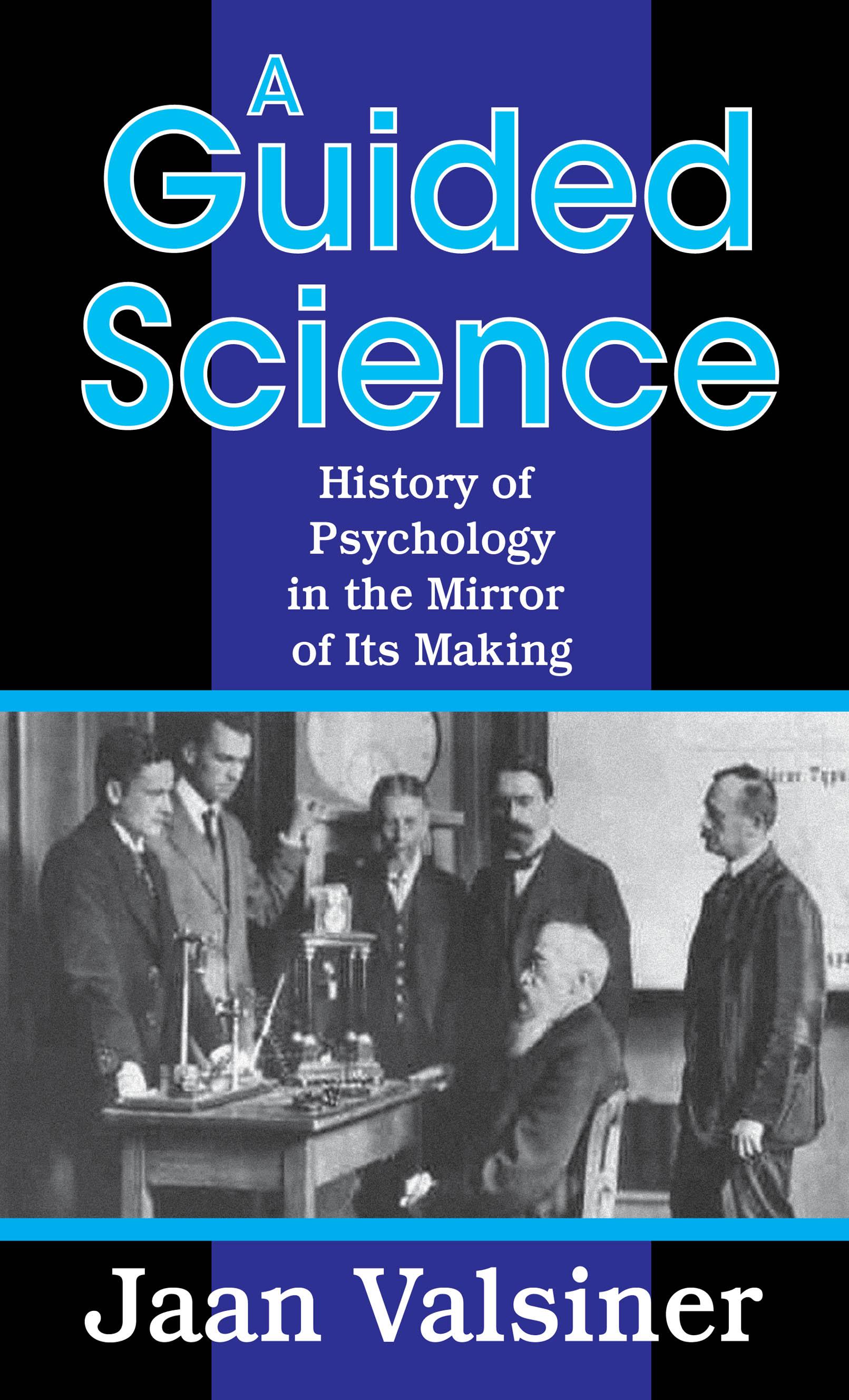
That sciences are guided by explicit and implicit ties to their surrounding social world is not new. Jaan Valsiner fills in the wide background of scholarship on the history of science, the recent focus on social studies of sciences, and the cultural and cognitive analyses of knowledge making. The theoretical scheme that he uses to explain the phenomena of social guidance of science comes from his thinking about processes of development in general--his theory of bounded indeterminacy--and on the relations of human beings with their culturally organized environments. Valsiner examines reasons for the slow and nonlinear progress of ideas in psychology as a science at the border of natural and social sciences. Why is that intellectual progress occurs in different countries at different times? Most responses are self-serving blinders for presenting science as a given rather than understanding it as a deeply human experience. For Valsiner, scientific knowledge is cultural at its core. Major changes have occurred in contemporary sciences--collective authorship, fragmentation of knowledge into small, quickly published (and equally quickly retractable) journal articles, and the counting of numbers of such articles by institutions as if that is a measure of "scientific productivity." Scientists are inherently ambivalent about the benefit of these changes for the actual development of knowledge. There is a gradual "takeover" of the domain of scientific knowledge creation by other social institutions with vested interests in defending and promoting knowledge that serves their social interests. Sciences are entering into a new form of social servitude.
Payez facilement par carte, Klarna, Apple Pay ou Google Pay. Pas satisfait ? Vous avez toujours une garantie de remboursement de 14 jours. En savoir plus dans nos conditions. Si vous avez des questions, envoyez-nous un e-mail à hello@memmo.org.
Memmo facilite tes études, où que tu sois dans le monde. On rassemble tes manuels de cours et des outils d'étude intelligents au même endroit : résumés, quiz, podcasts et flashcards. Et il y a Ted, ton compagnon d'étude qui répond à toutes tes questions. Plus de 50 000 étudiants étudient déjà ici – conçu pour t'aider à apprendre plus vite et à moins stresser.
Tu pourrais aussi aimer
Acheter le livre0