
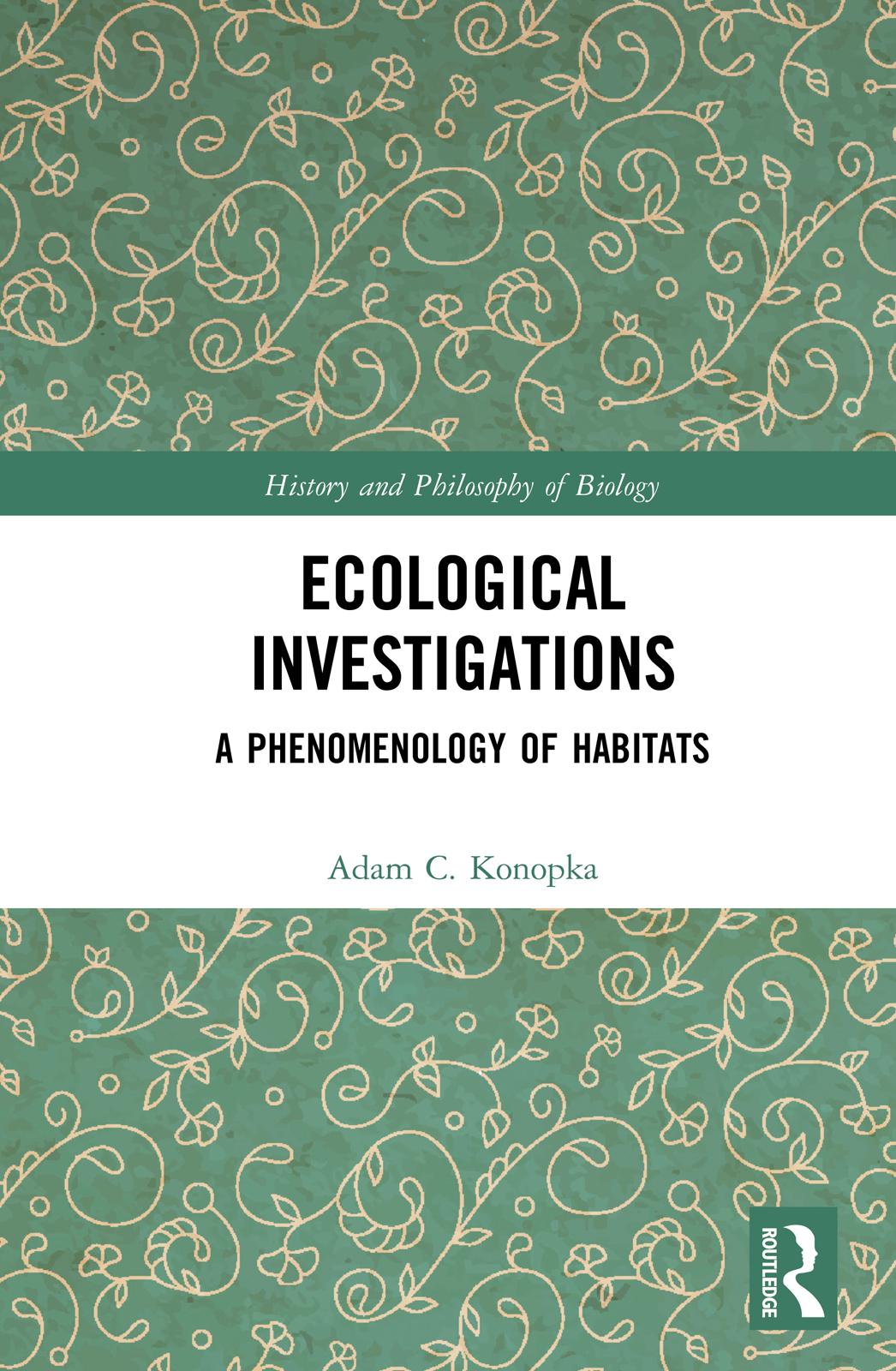
These investigations identify and clarify some basic assumptions and methodological principles involved in ecological explanations of plant associations. How are plants geographically distributed into characteristic groups? What are the basic conditions that organize groups of interspecific plant populations that are characteristic of particular kinds of habitats? Answers to these questions concerning the geographical distribution of plants in late 19th century European plant geography and early 20th century American plant ecology can be distinguished according to differing logical assumptions concerning the habitats of plant associations. Through an analysis of several significant case studies in the early history of plant ecology, Konopka distinguishes a logic of habitats that conceives of plant associations in an analogy to individual organisms with a logic that conceives of plant associations in a reciprocal relation to habitat physiography. He argues that a phenomenological conception of the logical attributes of habitats can philosophically complement the physiographic tradition in early plant ecology and provide an attractive alternative to standard reductionism and holism debates that persist today. This wide ranging and original analysis will be valuable for readers interested in the history and philosophy of ecology.
Payez facilement par carte, Klarna, Apple Pay ou Google Pay. Pas satisfait ? Vous avez toujours une garantie de remboursement de 14 jours. En savoir plus dans nos conditions. Si vous avez des questions, envoyez-nous un e-mail à hello@memmo.org.
Memmo facilite tes études, où que tu sois dans le monde. On rassemble tes manuels de cours et des outils d'étude intelligents au même endroit : résumés, quiz, podcasts et flashcards. Et il y a Ted, ton compagnon d'étude qui répond à toutes tes questions. Plus de 50 000 étudiants étudient déjà ici – conçu pour t'aider à apprendre plus vite et à moins stresser.